(Ibn Arabi expressed a view of the structure of reality; his views are presented at the end of this essay to allow a comparison.)
Overarching Dichotomised Transcendent Evolution of Knowledge
Overarching (embracing or overshadowing everything)
Dichotomised (a separation into two divisions that contradict each other)
Transcendent (being above or outside all known categories)
Evolution (being the gradual development of something into a more complex form)
Knowledge (meaning the underlying constitution of all, being, pure truth, or knowledge)
Transfinite (Beyond infinity)
When considering this essay, remember that all the laws of physics within our reality are manifest; that means they only apply to the manifest reality, not to the emanating reality, so bear in mind that our physical universe is generated from an underlying manifold of fluidic space, which functions under completely different parameters.
The following is an explanation of the underlying structure of all realities; a…
In our physical universe some conceive distanceand the space it spans to be infinite, and some conceive time to be infinite; this is the concept of unlimitedness. In effect this means that the idea of infinity is simply always larger than any imposed value or boundary – a view of something boundless.
In one aspect a circle is a form of infinity having no beginning and no end; this is a contained infinity, the simplest form and the most limited.
You will always have higher levels of infinity without end, because there is in fact only one infinity – the infinite aspect of Allah (Not God), (which is AHAD, SAMAD AND LAM YULAD). AHAD:Means ALLAH is the infinite and limitless (eternal) ONE who is unbroken and undivided into fragments or particles. SAMED: Means that which has no gap, which is in perfect condition, is whole…
For Black History month this seems like a great place to start, considering the more accurate narrative of who Muhammad was and what happened to his family is steadily getting away from us. But first let’s deal with the nonsense, which, in this day and time, we must. Reflexively, people say, “why does it matter what color Muhammad was? Race or color doesn’t matter. What matters most are the prayers, the wisdom and the spiritual connection with the divine in Islam and in Muhammad’s teachings.” That is absolutely true, those aspects are more important, but that does not mean other aspects do not matter at all. Because one matters it does not automatically mean the other doesn’t. That’s a logical fallacy.
As many say, race has no real biological significance, it is largely a social construct. But that construct matters. Because of that construct certain groups of people amass immense power, wealth and influence which they exert over others who are mistreated, exploited, impoverished and marginalized.
Nine times out of ten, the people who say race doesn’t matter are the ones to whom it matters most. It’s the same as if two men walk into a room and find it full of stacks of cash and coins, and one man hits the other over the head, knocks him out and moves all the the coins and cash over to his side of the room. When the second man comes to he says, “hey let’s divide the money up fairly”, but the first man refuses. Then after several requests the first man replies, “it’s always money with you! Money doesn’t matter. That’s all you ever talk about. It doesn’t matter. Come on, let’s go watch the football game.”
“Everything matters. Time is Precious.” ~ Jessica Hagedorn.
So let’s get into it, plain and simple. The (vague) perception we have of Muahmmad is that he was a pale/white arab similar to the Saudi we currently see today. But below is what is rarely mentioned. If you choose to casually mention Muhammad was black, you can always refer to this article, feel free:
The original Arabs are the same as Africans. The Prophet Muhammad was a black man from the Quraysh tribe.
Key keeper of the Kaaba from the Banu Shayba tribe/family (photo,1880). A subset of the Quraysh, the Shayba had been guardians of the Kaaba since before Muhammad’s time.
Robert F. Spencer remarked: “It is said that the Quraysh explained their short stature and dark skin by the fact that they always carefully adhered to endogamy.” (Endogamy is the practice of marrying within a specific ethnic group, class, or social group.) Robert F. Spencer, “The Arabian Matriarchate: An Old Controversy,” Southwestern Journal of Anthropology 8 (Winter, 1952) 488.
Bertram Thomas, Cambridge educated historian and Finance Minister, reported in his work ‘The Arabs (New York, Doubleday 1937): “The original inhabitants of Arabia…were not the familiar Arabs of our time but a very much darker people. A proto-‘negroid’ belt of mankind stretched across the ancient world from Africa to Malaya. This belt…(gave) rise to the Hamitic peoples of Africa, to the Dravidian peoples of India, and to an intermediate dark people inhabiting the Arabian peninsula. In the course of time two big migrations of fair-skinned peoples came from the north.”Also, “Where the grammar of the Arabic, now spoken by the ‘pure’ Arabs, differs from that of the north, it approaches to or coincides with the Ethiopians. The general habits of the people,-given to sedentary rather than nomad occupations, fond of village life, of society, of dance and music; good cultivators of the soil, tolerable traders, moderate artisans, have much more in common with those of the inhabitants of the African than with those of the western Asiatic continent.
Ibn Mandhor (1232-1311 A.D.) says in his book Lisan El-Arab: “Non-kinky hair is the kind of hair that most non-Arabs like the Romans and Persians have while kinky hair is the kind of hair that most Arabs have.”
“To the Cushite race belongs the oldest and purest Arabian blood, and also that great and very ancient civilization whose ruins abound in almost every district of the country. ..The south Arabs represent a residue of hamitic populations which at one time occupied the whole of Arabia.” John Baldwin, from ‘Pre-historic Nations Or Inquiries Concerning Some of the Great Peoples and Civilizations of Antiquity.’ Harpers (1869).
It should be understood that many of the names of Cushitic speaking tribes today in the horn of Africa – Somalia, Djibouti and Ethiopia/Eritrea – were also known in early Arabia. In Somalia such clans as the Yahar, Darood, the Mahra of Somalia and the Yemen, Makhar, Bin Sama’al or Somali(or Sam’al and El Sama of Yemen), Rahawein (ancient Rahawiyyin or Ru’ayn or Rahawi of Yemen) and smith clans such the Hubir (Heber), Yubir, Sabi, Tumal and Wubar (or Wabar) are mentioned in ancient times and through the early Islamic period as Himyarite and Sabaean tribes in South Arabian inscriptions. ~ “When Arabia Was Eastern Ethiopia”, Dana Marniche.
“Abd al-Muttalib, “fathered ten Lords, Black as the night and magnificent. One of these men was Abdallah, the father of Muhammad.” Al-Jahiz (b. 776 A.D.)
The prophet’s great, great grandmother was from the jet-black Banū Sulaym. Ḥāshim, the great grandfather, bore with Salmā bint ‘Amrū ’l-Khazrajī the prophet’s grandfather, ‘Abd al-Muṭṭalib. This means that his paternal great grandmother was from the black Medinese tribe Banū Khazraj. Daniel Martin Varisco, “Metaphors and Sacred History: The Genealogy of Muhammad and the Arab ‘Tribe’,” Anthropological Quarterly 68 (1995): 139-156, esp. 148-150.
“The Black Arabs kept close to their African Ethiopian roots. Trade and cultural exchanges were routine and marriage was contracted and conducted with the easiest of facility between Africans and Yemenis since there were no caste feelings between them.” ~ Ogu Eji Ofo Anu.
Al-Tirmidhī (d. 279/892) in his Jami’ al-Ṣāḥīḥ reports on the authority of the famous Companion of the Prophet, Anas b. Malik: “The Messenger of Allah was of medium stature, neither tall nor short, [with] a beautiful, dark brown-complexioned body (ḥasan al-jism asmar al-lawn). His hair was neither curly nor completely straight and when he walked he leant forward.” (VI:69 no. 1754) We have been told in codified hadith (narratives) that he was white, some of them are here:
According to Sahih Bukhari Anas bin Malik (RA) reported that when a person inquired the companions about the Holy Prophet –peace and blessings of Allah be upon him- they pointed towards him saying; هَذَا الرَّجُلُ الأَبْيَضُ المُتَّكِئُ “This white man (rajul al-abyad) reclining on his arm.“ Ibn Sa’d in his Tabaqat al-Kubra narrates from Abu Umamah that he described about the Messenger of Allah, peace and blessings be upon him, as: رَجُلًا أَبْيَضَ تَعْلُوهُ حُمْرَةٌ “A man of white complexion with red tinge in it (abyad ta’luhu humrah).”
Yemeni Children
However, in the context of human complexions, the term ‘abyad’ means ‘black’. In Classical Arabic there are several distinct ‘shades of blackness’ as noted by al-Tha‘labīb in his Fiqh al-lugha [82-82] Abyad/bayad is a particular shade or ‘type’ of blackness. According to the important Syrian hadith scholar and historian of Islam, Shāms al-Dīn al-Dhahabī in his Siyar a’lām al-nubalā’ [II:168]:
“When Arabs say, ‘so-and-so is white (abyad),’ they mean a golden brown complexion with a black appearance.” Al-Dhahbi wrote: إِنَّ العَرَبَ إِذَا قَالَتْ: فُلاَنٌ أَبْيَضُ، فَإِنَّهُمْ يُرِيْدُوْنَ الحِنْطِيَّ اللَّوْنِ بِحِلْيَةٍ سَوْدَاءَ، فَإِنْ كَانَ فِي لَوْنِ أَهْلِ الهِنْدِ، قَالُوا: أَسْمَرُ، وَآدَمُ، وَإِنْ كَانَ فِي سَوَادِ التِّكْرُوْرِ، قَالُوا: أَسْوَدُ وَكَذَا كُلُّ مَنْ غَلَبَ عَلَيْهِ السَّوَادُ، قَالُوا: أَسْوَدُ أَوْ شَدِيْدُ الأُدْمَةِ “When Arabs say; So and so is ‘abyad’, they mean a wheatish complexion with slight darkness (hintiy al-lawn bi-hilyatin sawda). And if it is the complexion the People of India they say, ‘asmar’ and ‘adam’. And if it is of Toucouleur Negroes (sawad al-Takrur) they say ‘aswad’ and likewise everyone whose complexion is overwhelmingly black; they call, ‘aswad’ or ‘shadid-ul-udmah’.” (Siyar ‘Alam al-Nubula 1/39 & 3/448, Darul Hadith, Cairo 2006)
Ibn Man ūr (d. 1311), author of the most authoritative classical Arabic lexicon, Lisān alarab, notes the opinion that the phrase aswad al-jilda, ‘Blackskinned,’ idiomatically meant khāli al arab, “the pure Arabs,” “because the color of most of the Arabs is dark (al- udma).”In other words, darkness of skin among the Arabs suggested purity. The Syrian scholar and historian al-Dhahabī (d. 1348) too reported that Abd Allah ibn Abbas, Prophet Muhammad’s first cousin, and his son, Alī ibn AbdAllah, were “very dark-skinned.”Al-Dhahabī, Siyar, V:253.
Alī ibn Abu Talib, first cousin of the Prophet and future fourth caliph, is described by al-Suyuti and others as “husky, bald…pot-bellied, large-bearded…and jet-black (shadīd al-udma).” Al-Suyåãī, Tārikh al-khulafā (Cairo: Dar al-Fikr al-Arabi, 1975) 186.
Al-Mubarrad (d. 898), the leading figure in the Basran grammatical tradition: “The Arabs used to take pride in their brown and black complexion (al-sumra wa al-sawād) and they had a distaste for a white and fair complexion (al-ḥumra waal-shaqra), and they used to say that such was the complexion of the non-Arabs.” Ali’s son, Abu Jaffa , according to Bin Sad’s (d. 845), described Ali thusly: “He was a black-skinned man with big, heavy eyes, pot-bellied, bald, and kind of short.” Abd Allah ibn Abbas was very black and tall. Those of Abu Talibs’s family, who are the most noble of men, are dark skinned, black and tall (sud).” In discussing the appearance of the Sharifs, I believe that it is appropriate for me to begin with the father of the Sharifs- Ali ibn Abi Talib (RAA). In his book Tarikh Al-Khulafaa (The History of the Caliphs), Imam Al-Suyuti described Ali ibn Abi Talib as follows: و كان علي شيخا سمينا أصلع كثير الشعر ربعة إلى القصر عظيم البطن عظيم اللحية جدا قد ملأت ما بين منكبيه بيضاء كأنها قطن آدم شديد الأدمة Ali was a heavyset, bald, hairy man of average height which leaned toward shortness. He had a large stomach and a large beard which filled all that was between his shoulders. His beard was white as if it was cotton and he was a black-skinned man.
Muhammad Ahmad Al Mahdi
There are certain names that we usually hear when the Sharifs or Sayyids – the family of the Prophet Muhammad (SAWS) are mentioned. We have all probably heard of Ali Zayn Al-Abadiyn the son of ِAl-Husayn the son of Ali the son of Abu Talib. Though his mother was Persian, he is described as dark-skinned. Where did he get his dark complexion from?
From his father’s side of the family, of course. This Ali Zayn Al-Abadiyn, the son of ِ Al-Husayn, the son of Ali, the son of Abu Talib married Fatima the daughter of Al-Hasan the son of Ali the son of Abi Talib.
Muhammad Al-Baqiyr- another name we hear when there is mention of the Sharifs, the family of the Prophet Muhammad (SAWS) – was the eldest son of Ali Zayn Al-Abadiyn and Fatima the daughter of Al-Hasan. He was nicknamed “He Who Resembles” because he looked so much like the Prophet Muhammad (SAWS).
Lawrence Olivier
He was described as dark-skinned, kinky-haired, and of average height. Muhamad Al-Baqir married Umm Farwa, the great granddaughter of Abu Bakr Al-Saddiq and they had Jaafar Al-Saadiq. Jaafar Al-Saadiq is another name frequently heard when speaking of the family of the Prophet Mohamed (SAWS). He was described as black-skinned, kinky-haired, and average height. Among the Prophet Muhammad’s direct descendants was Muhammad Ahmad Al-Mahdi (b. 1845).
He is considered the father of modern Sudan, having established an independent state- throwing off British rule in 1885. A movie was made of him, “Khartoum” (1966), starring Charlton Heston as his British rival, Charles Gordon.
The Hollywood Version of Muhammad Ahmad (lol)
Above is an example of how if we are not careful perceptions of certain historical figures can gradually be co-opted and changed. Muhammad Ahmad was portrayed as a pale arab by the English actor Laurence Olivier.
However, Muhammad Ahmad was Sudanese, a black man, clearly.
Abdur-Rahman Al Mahdi, son of Muhammad Ahmad Al Mahdi
Finally, we have to keep in mind that Mecca during the time of Muhammad was part of the Empire and cultural sphere of the Ethiopian kingdom of Aksum.
“And certainly we did create man out of clay, from black mud fashioned into shape.” ~ Qur’an 15:26
We’ve heard it referenced since Malcolm X left the Nation of Islam. Orthodox Islam is repeatedly referenced as True Islam, but how did Orthodox or Sunni Islam come about? What is it true to? Is it true to what’s in the Qur’an? Does it differ from what Muhammad taught? Is Orthodox Islam really ‘true Islam?’
If you want to save some time, sadly, the answer is… no, it is not. Orthodox Sunni Islam cannot honestly or truthfully call itself ‘true Islam.’
The explanation is in the article below, along with all of the evidence. 1. The Take Over
In order to understand how we ended up with something called Orthodox or Sunni Islam we have to first look at a very important series of events surrounding the prophet Muhammad’s death. As we know, Seventh Century Arabian society had a deep kinship and tribal structure. Muhammad was able to transcend the deep tribal rivalries based on his message of the Oneness of the Creator and the oneness of people in particular. When he was nearing death he made clear who was to succeed him, explain the Qur’an and give spiritual guidance to the community. Mainstream historians and Orthodox Muslims claim that Muhammad didn’t name or leave a successor but they can only make this claim by ignoring or obscuring overwhelming evidence to the contrary. Most histories currently negotiate the succession of the prophet by noting on one side what Sunnis say and on the other what the what Shia believe. But that’s an odd way to discuss an historical event. Why not simply discuss what happened and draw conclusions from the evidence available? Especially considering there were no Sunni or Shia Muslims until over 100 years after this incident took place.
Why would their views dominate the narrative? Much of the information that exposes and rebuts the current Sunni view is right in Sunni sources but is ignored or explained away with weak illogical arguments. Most of the information directly below will be coming from (hadith) narratives that are widely and independently corroborated. I’ll discuss the over reliance on hadith later, but I will use some now in order to help ascertain what happened and also because many of these narratives which have been passed down don’t necessarily support Sunni beliefs, which tend to make them somewhat more reliable.
Through out his life as prophet, Muhammad had a son, a brother, a son in law, a cousin, a defender, a right hand man, a student and a protege at his side. His name was Ali Ibn Abu Talib. Muhammad also had a daughter, Fatima, whom he cherished. She was from his longtime, beloved wife, Khadijah. Muhammad made it clear how he viewed Fatima. He is related to have said: “Fatima is the head of the women of Paradise.”1 “Fatima is part of me. Whatever harms her, harms me and whatever is against her is against me.” 2 The Prophet (s) said, “Fatima is the joy of my heart, and her sons are the fruit of my soul.”3 Of course, many men asked for her hand in marriage when she came of age but Muhammad would give her away to no one, except Ali. The Prophet said, “Verily Allah married Ali to Fatima.” 4
Thus, Ali and Fatima, the beloved daughter of the prophet were married and they had two sons, Hasan and Husayn. This family is regarded as Ahl Bayt (the Family of the House). They were closest to Muhammad in terms of blood as well as spirit. Throughout his life Muhammad referred to Ali as his successor. This began at the start of his mission. When Muhammad brought 30 or more of his family members to a feast and invited them to accept Islam and request support, they were all silent except fourteen year old Ali, who stood up and said that he would support the Messenger and share the burden of his work. Muhammad asked Ali to sit down as he sought older members of his clan to support him. After two more unsuccessful attempts Ali stood up again and expressed his unwavering support for Muhammad. This time Muhammad embraced him and declared Ali to be his brother, his heir and his successor.5
The following are various quotes Muhammad made about Ali throughout his career.
“What do you want from ‘Ali? ‘Ali is from me, and I am from ‘Ali, and he is the ‘Master of every believer after me.” 6
“I am the city of wisdom and ‘Ali is its gate.” 7
“Ali is with the Qur’an, and the Qur’an is with ‘Ali. They shall not separate from each other ’till they both return to me by the Pool (of Paradise).”8
[To Ali] “Are you not satisfied to be to me like Aaron was to Moses except that there shall be no Prophet after me?” 9
“Loving ‘Ali is believing, hating ‘Ali is hypocrisy.”10
And finally, after returning from Mecca during a pilgrimage Muhammad stopped over 20,000 of his followers near a pond called Ghadir Khumm, he delivered a sermon in which he said “”O Muslims! I am a mortal like any of you, and I may soon be summoned into the presence of my Lord. My most precious legacy to you is the Book of Allah and the members of my family, as I have told you before. Now listen to this with attention that I am the Master of all of you – of all Believers.
All those men and women who acknowledge me as their Master, I want them to acknowledge (at this point he held Ali’s hand and lifted it high over his head) Ali also as their Master. Ali is the Master of all those men and women whose Master I am.”11
No Muslim scholar could ever cast any doubt in the documentation of the tradition of Ghadir Khum, for it has been narrated with as much as 150 authentic chains of transmitters by the Sunnis alone. So Sunni muslims either ignore this event or they try to trivialize it by interpreting ‘mawla’ as meaning ‘friend’. They mention that Mawla has over 20 different meanings, then settle on friend even though most meanings have to do with the position of leadership and guardianship. Only in one instance it could mean a friend. And even then it has a quality of authority and responsibility attached to it, as opposed to the idea of a ‘buddy’ or ‘pal’ as in the English language.
But rather than squabble over the meaning of a word, we can do what is necessary to understand the event which is to look at its context. The first thing to note is that once Muhammad decided to stop at Ghadir Khum, he called for all those who had gone ahead to come back and he waited for those trailing behind him to catch up. He then had a pulpit made of camel saddles. In addition to raising Ali’s hand in front of the crowd, after his declaration, Muhammad also took off his turban and gave it to Ali. Afterward Muhammad and Ali went to Ali’s tent and there, on Muhammad’s orders, Ali received the congratulations of the Muslims who acclaimed him as Amir al-Mu’minin (Commander of the Faithful).
Among these well-wishers was Umar b. Khattab who said, “Well done Ibn Abi Talib! Today you became the leader (mawla) of all believing men and women.”13 But most importantly how did Ali himself view this event? Obviously it was clearly of import and meant to express some authority as he reminded others of the declaration at Ghadir at various times over the years. The most remarkable of these was Yawm al-Ruḥba (Arabic: يَوْم الرُحْبَة) the day in which Imam Ali (a) asked those people in al-Ruhba in Kufa who had witnessed the Event of Ghadir to testify about what Muhammad had declared. A number of the Prophet’s companions and companions of Imam Ali (a)—between twelve to thirty people—stood up and testified that they had heard the declaration at al-Ghadir from Muhammad.14
Muhammad’s hope was that this young man, Ali who he had groomed since he was a child, and personally taught not only the apparent meaning of each revelation of the Qur’an, but the esoteric meaning as well, would be a living repository of knowledge and guidance in the generations to come. It was undisputed that besides Muhammad, no one knew and understood the Qur’an better than Ali Ibn Talib. This understanding was also bourn out in the nobility, generosity and charity of his manners and behavior. But some of Muhammad’s followers didn’t share his vision or listen to his direction. Many were jealous of Ali and some hated him because of his earnestness in exacting justice and truth. In fact the sermon at Ghadir was partially prompted by an incident where a number of soldiers under Ali’s command in Yemen were angry at him and criticized and complained about him to Muhammad regarding the distribution of the spoils of that expedition.
Even after the speech at Ghadir it is narrated that Muhammad was approached by one of his followers, Harith Ibn Nu’man al-Fahri who said to him: “You commanded us to testify that there is no deity but Allah and that you are the Messenger of Allah. We obeyed you. You ordered us to perform the prayers five times a day and we obeyed. You ordered us to observe fasts during the month of Ramadhan and we obeyed. Then you commanded us to offer pilgrimage to Mecca and we obeyed. But you are not satisfied with all this and you raised your cousin by your hand and imposed him upon us as our master by saying `’Ali is the mawla of whom I am mawla.’ Is this imposition from Allah or from You?”The Prophet (S) said: “By Allah who is alone in his oneness! This is from Allah, Mighty and the Exalted!”15
Muhammad was aware of the presence of a strong undercurrent of opposition among his companions against Ali. He must have sensed that a transfer of guidance and authority to Ali would be problematic because shortly before his death he ordered the mobilization of a large army to Syria under the leadership of 18 year old Usama Ibn Zayd (to avenge the murder of an emissary and the killing of his father Zayd Ibn Harithah three years earlier.) He then ordered all his companions, with the exception of Ali and other members of Banu Hashim (his family), to report for duty to Usama, and to serve under him. These companions included the oldest, the wealthiest and the most powerful men of Quraysh such as Abu Bakr, Umar, Abdur Rahman bin Auf, Abu Obaida ibn al-Jarrah, Sa’ad bin Abi Waqqas, Talha, Zubayr, Khalid bin al-Walid, and many others. Many of the leading companions complained to Muhammad about Usama’s young age, but Muhammad insisted they leave Medina with him. 16 Then Muhammad fell ill.
The appointment of Usama as general was not, however, the only reason why some of the companions did not want to go to Syria. There were some other reasons also why they believed it was absolutely essential for them to stay in Medina, regardless of the orders of the Messenger of Allah. Usama asked the Prophet if it would not be better to defer the invasion of Syria until his recovery from fever. But the Prophet said: “No. I want you to leave this very moment!” Whenever the Prophet felt slight relief from his fever and headache, he questioned those present if Usama’s army had left for Syria. He kept urging them, ‘Send off the army of Usama immediately.’ There is even a narrative that at one time Muhammad entered the masjid with his head still bandaged and cursed anyone who did not leave with Usama’s army. Yet, most of the senior companions lingered in the city;some to hear the news of Muhammad’s health. One historian notes: “They stayed in the city out of their “love” for the Prophet since they did not have the “heart” to leave him at a time when he was critically ill.But these protestations of “love” and “solicitude” for his welfare did not impress the Prophet himself. The touchstone of their love for him was their obedience to his commands. He ordered them to leave for Syria but they did not. They disobeyed him during the last days of his life.”17
The Calamity of Thursday
At one point, Muhammad was on his deathbed. He opened his eyes and saw a group of people in his house, many of whom were supposed to have left with Usama’s army, including Abu Bakr and Umar. Decidedly he requested writing materials and said, “[c]ome near, let me write for you a writing after which you will never go astray.” Umar prevented others from complying with Muhammad’s wish and suggested, “possibly The Prophet is delirious. We have the Quran, and the Book of Allah is sufficient for us.” The people objected to Umar. Some of them demanded that pen and paper be given to the Prophet, while others supported Umar. When the noise increased, the Prophet instructed the people to leave him alone. And nothing was ever written. He died several days later. This is a well documented event. It was narrated by Bukhari, Tabari, Ibn Kathir among others. 18 The following is the typical narrative you’ll find as to what happened after the prophet Muhammad’s death. “The Prophet Muhammad, who died in 632, did not leave a definite successor. When the news of the Prophet’s death came out, many Muslims were confused and stunned. ‘Umar himself was so overcome with emotion that he drew his sword and declared, “If anyone says that the Messenger of Allah is dead, I will cut off his head.” Muslims stayed in such a state until Abu Bakr arrived and gave his famous address: “O People! If anyone among you worshipped Muhammad, let him know that Muhammad is dead. But those who worshipped Allah, let them know that He lives and will never die. He quoted a verse from the Qur’an 3:144 “And Muhammad is no more than a messenger; the messengers have already passed away before him; if then he dies or is killed will you turn back upon your heels?”
Having shrugged off the shocking news of the Prophet’s death, Muslims realized that they need someone to fill the position of leadership amongst them. The two main groups amongst Muslims were Muhajirun (refugees from Makkah), and Ansar (the people of Madinah). The Ansar gathered at the Thaqifah Bani Saydah their meeting place. Sa’ad ibn Abadah, the Ansar leader, suggested that the Caliph should be from amongst them. Although many refused saying that the Muhajirun in right have a better claim to Khilafah. When the news reached Abu Bakr, he quickly went to their gathering, fearing that confusion might spread once again, and said, “Both Muhajirun and Ansar have done great service to Islam. But the former were the first to accept Islam, they were always very close to the Messenger of Allah. So, O Ansar, let the Caliph be from amongst them.” After a short discussion, the Ansar agreed that they should choose the Caliph from amongst the Muhajirun, being from the tribe of Quraysh and being the first to accept Islam. Abu Bakr then asked people to choose between ‘Umar ibn al-Khattab and Abu ‘Ubaydah ibn al-Jarrah. Hearing this, both men jumped to their feet and exclaimed “O Siddiq, how can that be? How can anyone else fill this position as long as you are among us? You are the top man amongst he Muhajirun. Thus, Abu Bakr became accepted as al-Amir al-Muminun (leader of the believers), which later would be called the “caliphate.” Many narratives are also sure to include that Muhammad in his last days asked Abu Bakr to lead the prayers at the mosque, which is considered a signal for his succeeding the prophet.
This is from SunnahOnline.com, for example: “During his last illness, the Prophet could no longer lead the prayers, he was too weak to go to the mosque, he therefore had to choose someone to fill such high position after him. Abu Bakr was the one who was honored to be chosen by the Prophet for such a task. Thus in the lifetime of the Prophet, Abu Bakr came to fill the highest position under Islam (leading prayers).” 19
Under somewhat closer scrutiny, this narrative that has been told for hundreds of years barely holds up and is misleading at best. The first aspect of this narrative that Muhammad didn’t choose a successor is completely false based on the information we’ve already seen above. Many won’t accept this as true because it means that the highly venerated companions of the Prophet usurped authority from Ali Ibn Talib. But the truth is, this seems to be exactly what happened. The assumption has been, that Umar refused to believe Muhammad was dead was a sign of grief and trauma at upon the news of his passing out of a deep love for his prophet. But he also actively kept others from believing Muhammad was dead as well. Some have commented that this was done to stall until Abu Bakr arrived and they could figure out how to proceed before any institutional, authoritative policies could be made by Ali who was busy during this time tending to the body of the prophet. Abu Bakr was just outside of Medina in a town named Sunh. Most narratives relate that when he heard the news he arrived a few hours later, so it’s safe to assume that a messenger was sent to give him the word. (Who sent this messenger?)
No one can definitively declare what was on Umar’s mind but upon Abu Bakr’s arrival Umar’s grief evaporated rather quickly, which makes any assertions of real trauma unconvincing.
Most narratives will make it seem that the issue was between the Ansars (helpers from Medina) and the Muhajarun (those who emigrated from Mecca with Muhammad). The truth is that somehow Umar found out about a meeting the Ansars were having to decide who would lead them upon the contingency that there would be political unrest after Muhammad’s death and in case the authority transferred to Ali was ignored. And the truth is the Muhajirun were not present to assert any possible claims because Umar told only Abu Bakr and Abu Hurayrah about this meeting and no one else. The meeting was private and confidential until Umar and Abu Bakr invaded it and refused to allow the Ansar to choose their own leader. None of the other leading men among Muhammad’s companions were present and especially not his family, the Hashimites. So one has to wonder why not choose the leader of the Muslims by consensus among the whole community? Some say there was no time; but a final decision could have been delayed and reached the next day or later when the whole community of the believers were present or if nothing else, after the Prophet was buried.
Many wonder if Abu Bakr wasn’t chosen by consensus why did so many accept his leadership? The answer is complicated but we can consider this for now: 1) Among the Ansar there was an old rivalry between the Banu (tribe) Aws and the Banu Khazraj, (which is another primary reason they were meeting – to determine how they would govern themselves now that Muhammad was no longer leader of the city. When Umar presented Abu Bakr as caliph (successor), Bashir ibn Sa’d, the leader of the Aws, also took Abu Bakr’s hand as caliph. This was because the Aws feared that if any of the Khazraj were elected they would remain in power and mistreat them (the Aws). 2) Umar then took charge of securing the pledge of allegiance in the streets of Medina with the help of the Banu Aslam a fierce, loyal tribe who also supported Muhammad. So with the domineering personality of Umar, backed by the Ansar and Banu Aslam -many pledged allegiance to Abu Bakr. 3) There were many who refused to give bayah (allegiance) to Abu Bakr. Sa’ad Ibn Ubaydah, the elderly leader of the Khazraj refused to pledge loyalty to Abu Bakr. Umar pressed Abu Bakr to get the pledge by force, but after a discussion with other Ansar it was decided to leave him alone. He was assassinated in Syria soon after Umar became Caliph in 637.
The historian Al-Yaqubi mentions in Tarikh al-Yaqubi: “A number of migrants and the helpers(Ansar) refused to swear allegiance to Abu Bakr, inclined as they were to favor Ali ibn Abi Talib. Al Abbas bin Abd al-Muttalib, Al-Fadi bin Al-Abbas, Al-Zubayr ibn Al-Awwam, Khalid bin Said, Al Miqdad, Salman the Persian, Abu Zar Ghaffari, Ammar ibn Yasir, Al-Bara’a, Ubayy bin Ka’b were part of this group”. 20 Also among this list were many of the Ansar who specifically said they would only give allegiance to Ali Talib. 21 Muhammad’s daughter Fatima did not recognize Abu Bakr as caliph and refused to speak to him until her death. Umar actually threatened to burn her house down if she did not comply with his demands.
‘Ali and his group came to know about Saqifa after what had happened there. At this point, his supporters gathered in Fatimah’s house. Abu Bakr and Umar, fully aware of ‘Ali’s claims and fearing a serious threat from his supporters, summoned him to the mosque to swear the oath of allegiance. ‘Ali refused, and so the house was surrounded by an armed band led by Abu Bakr and Umar, who threatened to set it on fire if ‘Ali and his supporters refused to come out and swear allegiance to Abu Bakr. The scene grew violent and Fatimah was furious. 22
Other historians record that Umar declared: “O’ daughter of the Prophet! I didn’t love anyone as much as I loved your father, nor anyone after him is more loving to me as you are. But I swear by Allah that if these people assemble here with you, then this love of mine would not prevent me from setting your house on fire.” 23
Bilal, the renowned first Muw’adhin (one who calls to prayer) also refused to give allegiance to Abu Bakr. It is documented that when Bilal did not give bay’ah to Abu Bakr, Umar ibn al-Khattab grabbed him by his clothes and asked, “Is this the reward of Abu Bakr; he emancipated you and you are now refusing to pay allegiance to him? Bilal replied, “If Abu Bakr had emancipated me for the pleasure of Allah then let him leave me alone for Allah; and if he had emancipated me for his service, then I am ready to render him the services required. But I am not going to pay allegiance to a person whom the Messenger of God had not appointed as his caliph.” 24
Finally, with regard to Abu Bakr being asked to lead the prayers by Muhammad, it is not clear that a direct order was ever given to Abu Bakr to lead prayer. There are a number of hadith about the subject and many of them conflict. In the oldest version of the story, Muhammad asked “someone” to lead the prayers and when Umar was chosen, Muhammad heard his loud voice, said “No, no no!” and asked “where’s Abu Bakr?”
Although many mainstream narratives will suggest how important leading the prayer is in this case, the truth is that there is a long standing tradition that any believing man can lead others in prayer. It is no exalted position of honor. For example, Abu Hurayra reports that the Apostle of God said that: “Prayer is a mandatory duty for you, and you can offer it behind any Muslim even if he is a fasiq (even if he commits major sins).” 24
According to this “tradition” a fasiq (sinner) is just as well qualified to be an Imam (prayer-leader) as a saint. So even if it’s true that Muhammad chose Abu Bakr to lead the prayer, it is only speculative that this indicated that he wanted Abu Bakr to lead Islam after his death. In fact, if this was such a decisive argument as is currently asserted, we have to wonder, why it was never considered or mentioned at Saqifah when arguing for leadership with the Ansaar? Also we have to acknowledge that this was never considered an important indicator for any future caliph. In fact, Umar never lead the prayers during Abu Bakr’s reign as caliph and he assigned someone else to lead the prayers during his own reign (this person was never considered in the selection of the next caliph.)
From the point Abu Bakr took charge of the community of the faithful, the nature of Islam changed. It was well known that Abu Bakr understood the tribes of Arabia and had a keen political mind. The mainstream narrative suggests that various tribes, became ‘apostates’ and broke out in rebellion against “Islam” forcing Abu Bakr to put down this rebellion militarily -these were called the Ridda Wars (the Wars of Apostasy). But the truth is, most of the tribes involved wanted to meet and evaluate this new ‘ruler’ and negotiate their tax arrangementas they had done with Muhammad. They were still believers and had no problems being Muslim but had not made any arrangements with this new ‘Saqifah government’ which Muhammad did not appoint. One example was Malik Ibn Nuwayrah, who was a distinguished companion of Muhammad and was appointed by him to collect taxes for his tribe, the Bani Yarbu. Malik was also known for having a wife, Layla bint Minhal, who was one of the most beautiful and desired women on the Arabian peninsula. Upon hearing what had happened in Medina following the death of Muhammad, he gave back all the tax to his tribesmen, saying that “I will only pay taxes to the man chosen at Ghadeer” (Ali ibn Abu Taleb).25
According to both major accounts, Abu Bakr, infuriated by Malik’s evident refusal to recognize him as the legitimate successor of Muhammad, instructed Khalid to kill him if he could lay his hands on him. Khalid declared Malik a rebel apostate and ordered his execution.Khalid bin Walid killed Malik ibn Nuwayra and married his wife, Layla bint al-Minhal. Tabari writes in his History that when Khalid and his troops entered the Banu Yerbo territory, they said to the tribesmen: “We are Muslims.” They said: “We are also Muslims.” Khalid’s men asked: “If you are Muslims, why are you bearing arms? There is no war between us. Lay down your weapons so that we may all offer our prayers.”
The tribesmen put down their weapons. But no sooner they had done so, than Khalid’s warriors seized them, bound them, and let them to shiver in the cold night. On the following morning, they were all put to death. Khalid then plundered their houses, captured their women and children, and brought them as prisoners of war to Medina. Abu Bakr went on to subdue the majority of the tribes of Arabia and bring most of Arabia under the control of his government by military force.
Shrewdly, Abu Bakr knew that the bedouin tribes of Arabia were independent and fierce warriors so with every victory over a tribe he conscripted them into his growing army as they attacked any tribe who refused to pay allegiance to him. It cannot be overstated that this was a radical change from Muhammad’s practices and the principles of the Qur’an. Abu Bakr justified his actions by claiming it was his duty as Muhammad’s ‘successor’ to follow his path and demand the Arab tribes pay the taxes. However, during Muhammad’s lifetime, initially, only a few loyal tribes were asked to pay the taxes. And as noted by Wilfred Madelung: “The enforcement of the alms-tax was probably also handled with caution and discretion on the part of Muhammad during the following, last, year of his life. There are no reports of any force used against tribes failing to pay, of which there must have been more than a few.”26
Yet Abu Bakr went way beyond this, going to war with all of the Arab tribes who didn’t pay the tax. Most importantly this goes completely against the teachings of the Qur’an revealed by Muhammad. To be clear, there is no verse in Qur’an calling upon a Muslim government to kill those Muslims who do not pay zakat. There is no tradition of the Prophet of Islam stating that the penalty for refusal to pay zakat is death. The Qur’an teaches fighting is only for self defense or during a battle where the faithful are not aggressors.
Many have wondered why if the Qur’an teaches self defense, how is it possible that Islam spread so widely through conquest. Abu Bakr was the catalyst. For political reasons, Abu Bakr, sought the support of the Meccan ruling elite who had fought Muhammad during his entire career and had only embraced Islam a year before his death, subsequent to the fall of Mecca. Although, in the interests of peace and forgiveness Muhammad never punished those Meccans who accepted Islam and generously gave some of them leadership positions. Abu Bakr went much further. Under him,’ the Islamic state was henceforth to be based on the rule of Quraysh over all Arabs. Their right to rule in the name of Islam derived from the claim that the Arabs would not obey anyone else.’ 27
Many have blamed the third caliph Uthman for putting too many of his kinsmen the Umayyad (a sub-clan of the larger Quraysh) in power positions, laying out the groundwork for the controversial Umayyad dynasty, but this began with Abu Bakr. With their support he firmly held his position as caliph and with his support the Umayad family were able to spread their rule to a vast territory covering much of the Arabian Peninsula and beyond. While Muhammad only maintained a loyal federation of Arab tribes surrounding Mecca and Medina, Abu Bakr by force had conquered the fiercely independent, militant arabs. And Abu Bakr knew that in order to keep these tribes under control he had to keep them busy. So with each new tribe added to his force they, in turn, were recruited to subdue the next tribe (with the promise of wealth and booty).
This was the fuel to the rapid growth of the “Islamic” state. Meanwhile keep in mind that as pointed out by Maulana Wahiduddin Khan, “Muhammad in fact did battle only three times in his entire life and the period of his involvement in these battles did not total more than one and a half days. He fought, let it be said, in self defense when hemmed in by aggressors, where he simply had no option.” 28 This also explains why the expansion of Islam was not an expansion of the faith, which usually came 100 years or so later spread by scholars and Sufi (mystics). The early Arab conquerors were political men in search of wealth and power, most of whom had only converted to Islam nominally, and only a year before Muhammad’s death. “Most of the Arabs who went out of Arabia, after the death of the Prophet, were not Islam’s missionaries. They were plain conquerors. Most of them lacked the knowledge of Islam, and they lacked interest in spreading Islam. Most of them were born and bred in the pagan tradition, and they had been fighting against the Muslims only two or three years earlier.”
What is clear is that Muhammad’s nearest family the Hashimites were excluded from any positions of authority. This is no secret or conspiracy; it not only bears out in the facts of history but Umar himself acknowledged it. When discussing the honor, nobility of descent, and virtues of a particular clan with Ibn Abbas, Umar stated, “I do not know any other clan among the Quraysh to whom these verses can be better applied than the Banu Hashim, because of their relationship and superior claims to the Prophet, but the people did not like to allow both the Prophethood and the caliphate to be combined in your family, for with this you would feel arrogant and rejoice.” 29 And this is the crux of the whole matter, Muhammad wanted a man he groomed from childhood- Ali, and his grandsons Hasan and Husayn to carry the tradition of honor, wisdom, faith, honesty forward amongst the faithful, “but the people didn’t like it.”
Muhammad made it clear: “”Indeed I am leaving two things among you, to which if you hold yourself, you will never go astray: the book of Allah (Qur’an) and my Ahl Al Bayt (household, my family). [Muhammad’s family refers to Ali ibn Abi Talib, Fatimah bint Muhammad (the daughter of Muhammad), their children and descendants.] 30
Ali Ibn Talib was by all accounts the man who knew the Qur’an best besides Muhammad. Muhammad’s mission was to reveal the message of the Qur’an- who better to preserve his message and purpose than the man he groomed to understand Quran essentially as well as he did? (For more on Ali’s unrivaled wisdom and scholarship see note 31.)31 But Abu Bakr, Umar and those with them felt “the people, the Quraysh” wouldn’t like it, and took over Muhammad’s legacy for themselves and the Orthodox Sunnis will support this until their death. They even refuse to acknowledge that Muhammad left the Qur’an and his Family for guidance, rather (without authenticity) they claim Muhammad said he left “two weighty things, The Qur’an and my sunnah.” The foundation of their whole doctrine is based on this. But it has little, if any, credible support.
Anything related to Muhammad’s clear instructions to look to Ali in order to understand Islam has been dismissed as Shia nonsense, although the whole narrative above -including the quote about the two weighty things- all come from so called ‘authentic’ Sunni sources. Hundreds of thousands of hadith have been fabricated, we will discuss this in detail in the following part of this article, but I used the hadith and sira (biographical history) about these events because they have been attested to by a number of independent sources and because they go against the interests of the Sunni narrative and therefore tend to be more credible.32
Muhammad may have not appointed a caliph in the sense that we understand it today, a political ruler who presides over a consolidated empire or the temporal body of Muslims, called the Ummah, rather he wanted to insure there was an insightful, knowledgeable, sincere dedicated guide to teach Islam as Muhammad understood it, a spiritual state of Oneness and Peace. But how were Muhammad’s family treated? Fatimah’s house was attacked by Umar and she was disinherited by Abu Bakr of land Muhammad left her (Fadak); Ali was marginalized and eventually killed during a civil war with an Ummayyad governor who refused to acknowledge his authority, Hasan Muhammad’s grandson was forced to resign from any claims of leadership and later poisoned, and Husayn, Muhammad’s other grandson was killed attempting to assert his position by an Ummayyad caliph.
So by rejecting Muhammad’s direction to look toward his family as the guides preserving his message and legacy, Orthodox Islam instead took to relying on a growing and often fabricated body of Muhammad’s alleged sayings and practices (hadith) to define their own version of ‘Islam’, eventually even raising the hadith to the level of Qur’an, and ultimately higher. [This is not to say that the Hadith cannot be used as history or as pieces of evidence from which to draw a reliable picture of history together. (History being defined as what probably or most likely happened in the past.) If nothing else, hadith can give insight to what the people who actually wrote them, or fabricated them, were thinking. They should fall under the same scrutiny as other evidences of history which would include analyzing the text, checking it for its relationship to science, other artifacts of history, probability and reality. And we should always keep in mind that hadith fall under the broad category of hearsay. Hearsay is not allowed in court except under a few exceptions because it is by nature unreliable and cannot be verified by the person initially making the statement.]
This will be discussed in Part Two.
Part 2. Raising the Hadith to the level of Qur’an
“Memories grow dim, stories are changed in the telling, and not all who record them are truthful.” ~ Albert Hourani
Anyone somewhat familiar with mainstream Orthodox Sunni Islam will hear about the Qur’an and Sunnah as the basis of the religion of Islam. The Qur’an is the revelation sent to Muhammad and the “Sunnah”, as it is currently used, relates to the statements, actions, approvals (and disapprovals) of the Prophet Muhammad. Also currently hadith is used interchangeably with the concept of the Sunnah. In this sense Sunnah is defined as “anything narrated from or about the prophet.” Here’s a current example of the attitude of Sunni Muslims towards the Qur’an from the Islam Q&A site: https://islamqa.info/en/answers/93111/if-the-quran-is-perfect-and-complete-and-contains-everything-needed-for-the-laws-and-regulations-of-shareeah-what-need-is-there-for-the-sunnah
“[T]he Qur’an needs the Sunnah more than the Sunnah needs the Qur’an. As Imam al-Awzaa‘i (may Allah have mercy on him) said:The Book needs the Sunnah more than the Sunnah needs the Book. Al-Bahr Al-Muhiyt by az-Zarkashi (6/11); quoted by Ibn al-Muflih al-Hanbali in al-Aadaab ash-Shar‘iyyah (2/307) from the Taabi‘i Makhul.”
What are Hadith? Hadith originally meant, any “story”, “narrative” “speech” or “news.” But the term “hadith” has acquired, due to Islamic scholars, the very specific meaning of reports about what the Prophet Muhammad said, or did. Most think the Qur’an and Sunnah go together as part of the religion. This is because of mainstream Orthodox Sunni teachings. But this wasn’t always the case. Sunni muslims began as a small group of hadith collectors almost 200 years after the prophet’s death. They claim authority now because they are in the majority but as we shall see, that position din’t come from the natural practices of earlier Muslims or the strength of their arguments but because of the circumstances of the time and their political realities. Before then, hadith were rarely ever used and definitely did not enjoy the status they have today- amongst Sunni Muslims – as binding revelations and sources of law along with the Qur’an.
When the Qur’an mentions hadith it is never in way that explicitly or implicitly refers to them as a source of law, or as guidance to follow. In fact, the Qur’an makes it clear that it is the only ‘hadith’ to be followed.
[Qur’an 7:185] “Do they not consider the realm of the heavens and the earth and whatever things Allah has created, and that may be their doom shall have drawn nigh; what hadith would they then believe in after this?”
[Qur’an 45:6] “These are the verses of Allah which We recite to you in truth. Then in what hadith after Allah and His verses will they believe?”
[Qur’an 31:6] “And of men is he who buys baseless hadith to lead astray from Allah’s path without knowledge, and to take it for a mockery; these shall have an abasing chastisement.”
[Qur’an 39:23] “Allah has revealed herein the best hadith, a book consistent in its various parts, repeating, whereat do shudder the skins of those who fear their Lord, then their skins and their hearts become pliant to the remembrance of Allah; this is Allah’s guidance, He guides with it whom He pleases; and (as for) him whom Allah makes err, there is no guide for him.”
If this isn’t clear enough as to the position of hadith in relation to the Qur’an, even the hadith themselves show how Muhammad felt about them. Abu Said Khudri: I requested permission from the holy Prophet to write down his Hadiths but he denied me such permission. Reference: Taqyid al-‘ilm P 36. Said Abu Khudri that Messenger of Allah said: “Do not write down from me any thing except Holy Quran, and if someone has already written down from me in addition to Quran, he must erase it”. Reference: Musanad Ahmad Bin Hanbal Vol: 5/14, No.11175, and also No.11101. Note: Please note, these two reports are given in almost all hadith books and are graded as Sahih.
“Do not write anything from me except Quran. Anyone who wrote anything other than the Quran shall erase it.” [Ahmed, Vol. 1, Page 171, and Sahih Muslim, Zuhd, Book 42, Number 7147]
It is narrated from abu Hurayrah who has said, “The holy Prophet (S) came to us when we were writing down Hadith. He asked us, ‘ what is this you are writing?’ We replied, “These are the matters that we have heard from you.” He then said, “Do you want a book other than the book of Allah? The nations before you were destroyed only for what they had written along with the book of Allah.” Reference: Taqyid al-‘ilm P 34.
In the famous book, “Taq-yeed Al-Ilm”, Abu Hurayra said, the Messenger of God was informed that some people are writing his hadiths. He took to the pulpit of the mosque and said, “What are these books that I heard you wrote? I am just a human being. Anyone who has any of these writings should bring it here.” Abu Hurayra said we collected all these and burned them in fire.
[Qur’an 6:114] “Shall I then seek a judge other than Allah? And He it is Who has revealed to you the Book (which is) made plain; and those whom We have given the Book know that it is revealed by your Lord with truth, therefore you should not be of the disputers.”
[Qur’an 5:48] “And We have revealed to you the Book with the truth, verifying what is before it of the Book and a guardian over it, therefore judge between them by what Allah has revealed, and do not follow their low desires (to turn away) from the truth that has come to you…” And what has Allah revealed?
Qur’an 4:105 “Indeed, We have revealed to you, [O Muhammad], the Book in truth so you may judge between the people by that which Allah has shown you. And do not be for the deceitful an advocate.”
One would think that would settle the matter but, over the years, hadith were still transmitted among a small portion of people. However, it was never a widespread practice. The same goes for following the Sunnah of the Prophet. According to the scholars Harald Motzki and Daniel W. Brown the earliest Islamic legal reasonings that have come down to us were “virtually hadith-free”, but gradually, over the course of second century A.H. “the infiltration and incorporation of Prophetic hadiths into Islamic jurisprudence” took place. 1
Although, the Qur’an mentions ‘Sunna’ fourteen times it never uses the term “sunna” in the sense of the way or practice of Prophet Muhammad. The phrases `the prophet’s hadith’ or the `the prophet’s sunna’ are never used in the Quran. This shows that these concepts did not exist in Arab society at the time of the Prophet. On the other hand, the phrases `tribal sunna’ or `the sunna of the people’ to mean `customs’, were in vogue. It is this concept of ‘sunna’ that was later transformed to mean the Prophet’s practice.
In pre-Islamic Arabia, the term sunnah referred to precedents established by tribal ancestors, accepted as normative and practiced by the entire community. It is important to note that what later orthodox Sunnis would take or assume to be divine law or practices of Muhammad were simply the local customs of the people of his time whether they were Jewish, Christian, Pagan or even enemies of the faithful during Muhammad’s time.
As noted by Ali Asghar Enigneer, the adaat (customs and traditions) of Arabs were used in the development of the sharia, and form an important part of it. They are very much not divine or immutable, and have no more legal justification to be part of the sharia than the adaat of Muslims living beyond the home of the original Muslim in the Arab Hejaz.
This was pointed out by author, Kassim Ahmad: “It is unreasonable and unthinkable that Allah would ask the Muslims to follow the prophet’s personal mode of behavior, because a person’s mode of behavior is determined by many different factors, such as customs, his education, personal upbringing and personal inclinations. The prophet’s mode of eating, of dress and indeed of general behavior cannot be different from that of other Arabs, including Jews and Christians, of that time, except regarding matters which Islam prohibited. If the Prophet had been born a Malay, he would have dressed and eaten like a Malay. This is a cultural and a personal trait which has nothing to do with one’s religion. So were the methods of the Prophet’s wars and his administration of the Medina city-state. The weapons he used, such as swords, spears, arrows and shields, were in accordance with the prevailing technology. Today, with the development of modern weapons, the Muslims obviously cannot fight with the medieval weapons used by the Prophet, although they must emulate his staunch faith in God and complete adherence to God’s teachings.” The early Muslims did not immediately concur on what constituted their Sunnah. Some looked to the people of Medina for an example, and others followed the behavior of the companions of the Prophet Muhammad.
In al-Ṭabarī‘s history of early Islam, the term “Sunnah of the Prophet” is not only used “surprisingly infrequently”, but used to refer to “political oaths or slogans used by rebels”, or “a general standard of justice and right conduct”, and not “to specific precedents set by Muhammad”, let alone hadith.
And one can see in the practice of the early Qadis, that the widespread use of hadith as a source of law was not in practice. (A qadi is a judge responsible for the application of Islamic positive law (fiqh). The office originated under the rule of the first Umayyad caliphs (AH 40–85/661–705 CE), when the provincial governors of the newly created Islamic empire, unable to adjudicate the many disputes that arose among Muslims living within their territories, began to delegate this function to others.)
In this early period of Islamic history, no body of Islamic positive law had yet come into existence, and the first qadis therefore decided cases on the basis of the only guidelines available to them: Arab customary law, the laws of the conquered territories, the general precepts of the Qurʾān, and their own sense of equity. This is exactly what the Qur’an advises.
[Qur’an 57:25] “Certainly We sent Our apostles with clear arguments, and sent down with them the Book and the balance that men may conduct themselves with equity.”
The early Islamic empire expanded into the heart of civilization itself. Islamic civilization is actually the civilization of all the peoples who became part of the new society. It had its roots in all the pre-Islamic civilizations of the same area. Islam and Arabic, Syriac, Persian, Indian, Egyptian and Greek cultural elements, formed the ancestral traditions of most of the Muslim population. The Umayyad rulers did not disrupt daily life in the conquered areas. The civil administration was maintained, the crafts, trades, industries and agriculture continued as before.
During this early period, the interest of the early rational scientists and their patrons, the Caliphs, was partly practical; medical skill was in demand, and control of the natural forces could bring power and success. There was also a wide intellectual curiosity.
There are around 750 verses in the Quran dealing with natural phenomena. Many verses of the Quran ask mankind to study nature, and this has been interpreted to mean an encouragement for scientific inquiry, and the investigation of the truth. Historical Islamic scientists like Al-Biruni and Al-Battani derived their inspiration from verses of the Quran. Mohammad Hashim Kamali has stated that “scientific observation, experimental knowledge and rationality” are the primary tools with which humanity can achieve the goals laid out for it in the Quran.
The Qur’an urges muslims to use their intellect and reason to understand Allah and his creation. Qur’an 13:4 “And within the land are neighboring plots and gardens of grapevines and crops and palm trees, [growing] several from a root or otherwise, watered with one water; but We make some of them exceed others in [quality of] fruit. Indeed in that are signs for a people who reason.”
Qur’an 57:17 “Know that Allah gives life to the earth after its lifelessness. We have made clear to you the signs; perhaps you will understand.”
Qur’an 29:20 “Say: Travel in the earth and see how He makes the first creation, then Allah creates the latter creation; surely Allah has power over all things.”
Qur’an 3:190 “Most surely in the creation of the heavens and the earth and the alternation of the night and the day there are signs for men who understand.”
This inspired intellectuals in the 8th century to apply their knowledge of Greek logic and philosophy to build a system of Islamic principles based on a rational foundation.”
A broad collective of intellectuals and scholars developed called Mutazilites (those who stand apart). They were descended ideologically from the Qadirite movement who advocated the importance of free will in human affairs.
Qur’an 5:101 “Oh you who believe! You have charge of your own souls. He who errs cannot injure you if you are rightly guided. Unto Allah you will all return; and then He will inform you of what ye used to do.“
The Mutazilites insisted on a primary role for reason and logic in the pursuit of spiritual principles. They were more properly called Ahl Tawhiyd, the upholders of the Oneness of Allah. The Mutazilites believed the truth could be reached by using reason on what is given in the Qur’an. As scientific knowledge and learning began to show it’s fruits in Islamic Civilization, the Mutazilite movement became universal with widespread support from the Abbasid Caliphs.
Even the early hadith collectors, jusists and scholars like Imam Malik of Medina and Abu Hanifa in Kufa and their followers applied the concept of ra’y (‘common sense’ or ‘rational discretion’.)
They advocated the use of reasoning to arrive at legal decisions. They also followed the Sunnah or the traditions and customs of the people in their respective locations. Imam Malik tried to adhere to the customs and practices of the people of Medina because that’s where the prophet Muhammad lived and he assumed Muhammad’s influence was a source of these practices. Abu Hanifa respected the customs and practices in Kufa because that’s where many of the original companions lived and he reasoned that they picked up their traditions from Muhammad himself. There were many other Ulema scholars throughout the Islamic territories and their decisions differed based on the sources of ‘authority they used – be it the Qur’an, a few accepted hadith, and local custom.
This was fine with the Umayyad rulers (661-750AD) because they allowed the people in their conquered territories to maintain their customs as long as they payed taxes. But the Abbasids who also claimed some spiritual authority set up a more centralized state and the rulings of the Qadis judges and their practices needed to be more uniform. Imam Abu Abd’allah Ibn Idris Al -Shafi came along and tried to solve this problem, and with his solution he formulated a new doctrine of Islam.
Hailing from Gaza, Palestine, Imam Shafi was a prodigy and a student of Imam Malik in Medina. According to tradition, he had memorized the Qur’an at a very young age as well as Imam Malik’s book the Muwatta. He then became obsessed with hadith and took to writing them anywhere and in any way he could. He said, he dedicated himself to hadith.2 He served as a jurist and a governor in Najran, Yemen. He also traveled to Baghad and Egpyt. During his travels Shafi experienced first hand that although reasonable decisions were being made by judges’, the decisions very often disagreed with each other.
Shafi’s solution was this: only the prophet Muhammad’s Sunna (as opposed the sunnah of local customs and the “sunnah” of earlier Companions) had any authority. Nothing could supersede or set aside a tradition properly authenticated, which could be traced back to the prophet himself. According to Shafi the traditions of the prophet have to be accepted without questioning and reasoning: If a tradition is authenticated as coming from the prophet, we have to resign ourselves to it, and your talk and the talk of others about “why and how” is a mistake.”3
By his assertion of the supremacy of hadith, Shafi placed it on par with the Qur’an itself, and when he made it the authoritative interpretation of the Holy, Qur’an he, in effect, gave it a higher authority. Shafi emphasized the final authority of a hadith of Muhammad, so that even the Quran was “to be interpreted in the light of traditions (i.e. hadith), and not vice versa.”4
This was the core doctrine of a new conservative group identified with Shafi calling themselves Ahl al Sunna wa’l Jama’a, the People of the Sunna and the Collective. These earliest Sunnis held that, “the Sunnah rules over the Book of Allah, the Book of Allah does not rule over the Sunna.”5
According to this new set of principles formulated by Shafi, the only way to be Muslim was to adhere, exclusively to the Qur’an and Sunnah. Shafi’s former student, Ahmad Ibn Hanbal, who later developed his own school of thought, best exemplified this belief. He considered human reason to be a dangerous innovation, a bid`a.
For him, the Koran and the Hadith must be taken literally. He refused to eat watermelons because there is no hadith showing that the Prophet had eaten them. For him, it was that simple.6 (It’s worth noting that his Hanbali School of thought is still followed in the Kingdom of Saudi Arabia today.)
As noted by Anjouar Majid, “after Muhammad ibn Idriss al-Shafi`i (d. 820) succeeded in elevating the Prophet’s life to a status of sacredness comparable to that of the Koran, everyone rushed to come up with a hadith to support his views or lifestyle and to criminalize difference of opinion.”
Historian Alfred Guillaume pointed out, [i]f an individual or a group or sect wanted to establish its right to its beliefs or practices, it had to furnish proof that the prophet had authorized its course of action or attitude. In consequence, an enormous number of hadith soon found their way into circulation, and it soon became apparent that forgery on a large scale was at work everywhere.”7
Qur’an 6:50 -“Say, [O Muhammad], “I do not tell you that I have the treasures of Allah or that I know the unseen, nor do I tell you that I am an angel. I only follow what is revealed to me.”
Before and especially after Shafi, the forgery of hadith grew exponentially. According one source, Ibn Hanbal reported that there were over 7 million `authentic’ hadiths and that he had writtien at least a million of them.8 If this were true, then working for 23 years at a pace of 18 hours a day, seven days a week, the Prophet would have had to produce one hadith every 77 seconds. There would definitely have been no time left at all for the Prophet to have done anything like living his life and carrying out his mission as a Prophet.
To compound this problem, the rulers at that time depended very much on these scholars to advise them. More often than not, the opinions of a particular scholar who was eminent under a particular ruler became the established rule in that territory. Instead of being testimony to the dynamism of the Quran which allowed such diverse opinions to exist and thus serve as a catalyst for Muslims to continuously exercise their intellect, these differences of opinion gave birth to the rise of the likes of Imam Shafi`i (d. 820) who found it difficult to handle the freedom of thought and opinion that is allowed by the Quran. Imam Shafi`i came to view differences of opinion as a problem.
“Shafi’s doctrine never accounted for the historic past of various regions sanctioned by Muhammad’s silence on matters which that wise statesman left to his countrymen to settle by pursuing the customs of their forefathers and leaving their posterity to formulate laws to deal with problems as they arose.
The process of stiffening and hardening the legal system of was carried through. The old comparatively elastic regime of the Umayyads, which…faithfully represented the mild reasonableness of Muhammad’s rule, was replaced by a rigid unbending code of law which in spirit was opposed to the whole tenor of his life and thought, yet claimed, by the theft of his name, the authority of Allah himself.” ~ Alfred Guillaume.
But mainstream Orthodox Sunni Islam still asserts this position that the Sunnah (hadith) are on par with the Qur’an.
One may wonder, ‘why’?? In light of what’s written in the Qur’an and Muhammad’s own banning of hadith himself (as recorded in the very hadith they supposedly adhere to), how can they justify this? We will go through all of the arguments Sunni’s use to uphold hadith below. Many are the exact same arguments Imam Shafi made 1,200 years ago.
These arguments were weak then and they prove to be even more patently weak and fallacious now. Here they are: 1. The Lifted Prohibition Considering the Qur’an asserts itself as the only revelation to be followed- “These are the verses of Allah which We recite to you in truth; Then in what hadith after Allah and His verses will they believe?” Qur’an 45:6 And considering according to the hadith itself, Muhammad actually ordered that people not write down any hadith: “Do not write down anything from me except the holy Quran and those who have written must erase it,” 9
What could Sunnis come along and say after this? They assert that Muhammad didn’t want anything written down because he didn’t want anything to get mixed up with the Qur’an. And that once most of the Qur’an was written he lifted the ban and allowed hadith to be written. They point out that the full hadith goes on to say, “narrate to others what you hear from me, and whoever deliberately attributes a lie to me; he should prepare his seat in the fire.”10
So they focus on the part where Muhammad instructs to “narrate from me” as evidence that the prohibition on writing the hadith does not negate their authority. Then they go on to explain that the ban was lifted later followed by a few hadith indicating Muhammad commanded people to write hadith. (These hadith will show Muhammad commanding people to write, but 1) we don’t have those writings 2) there is no chronology to any of these random commands to write, which means there is nothing to say they aren’t simply forged hadith intended to support hadith and contradict the commands prohibiting the writing of narrative traditions. Ultimately it shows limitless contradictions and forgeries that are inherent to hadith literature.)
The problem with this argument is first, the additional part about “narrate to others what you hear from me” was not included in any of the earlier texts regarding this hadith. They all say, do not write down anything from me except Quran and whoever has written down from me must erase it” and they stop there. The latter part only appears in modern hadith books which is clear evidence that it has been forged by hadith scholars along the way. 11
Also, it does clearly show that Muhammad didn’t revere the authority of these traditions because obviously he would have known that any sayings he made that weren’t written down would get lost or distorted over time – as has happened anyway. Further, there are reports from Abu Huraira that the Prophet Muhammad forbade the writing of hadith and Abu Huraira had only been a companion of the Prophet during the last two years of his life when most of Qur’an had already been revealed 21 years earlier.
It is narrated from abu Hurayrah who has said, “The holy Prophet (S) came to us when we were writing down Hadith. He asked us, ‘ what is this you are writing?’ We replied, “These are the matters that we have heard from you.” He then said, ‘Do you want a book other than the book of Allah? The nations before you were destroyed only for what they had written along with the book of Allah.”12
We also see in history that all of the so-called rightly guided Caliphs from Abu Bakr to Ali Ibn Talib prohibited or restricted the writing of hadith. This goes to show the prohibition was never lifted or that if it was his closest companions never heard of it. Abu Bakr burned them; Umar burned them and actually jailed three men for spreading hadith.13
Most importantly, you can ask any Sunni Muslim to point to a narration where the ban is lifted and it is guaranteed they will no be able to produce a single one. This is just a fabricated history scholars made up with no evidence to support it.
History bears this prohibition out. Hadith historian Joseph Schacht has pointed out: “There is no any evidence of legal traditions (Hadith and Sunna) before Year 722 A.D. in Islam and we can conclude that the Sunna or hadiths of the Prophet is not the words and deeds of the Prophet, but apocryphal material dating from later.”14 2.
The Good Example The question is, how are the hadith revealed scripture or how is the Sunnah of Muhammad binding to the point where they define what Islam is or isn’t? The defenders of hadith will use Qur’an 33:21 as proof we are supposed to follow the Sunnah of Muhammad, as recorded in hadith.
H.Q. 33:21 “Certainly you have in the Messenger of Allah a good example for him who hopes in Allah and the last day and remembers Allah much.”
However, if we look at the context of verse 33:21 quoted above, it is clear that it does not refer to every detail of the Prophet’s behavior, such as his eating, dress, sleeping and other personal habits. Actually, it refers to the Prophet’s faith in Allah’s help and victory. The verse is put in the middle of the account of the Battle of the Allies when the believers were really shaken and thought that the cause of Islam was lost. The Prophet Muhammad’s example was his strong faith in Allah and adherence to the Quran.
We know it isn’t requiring us to follow Muhammad’s personal habits as described in hadith because the same quote is used for Ibrahim as well as those with him. Qur’an 60:4 “Indeed, there is for you a good example in Ibrahim and those with him when they said to their people: Surely we are clear of you and of what you serve besides Allah…” Qur’an 60:6 “Certainly there is for you in them a good example, for him who fears Allah and the last day; and whoever turns back, then surely Allah is the Self-sufficient, the Praised.” The question here is if the good example in 33:21 means we have to find out how Muhammad entered the toilet and how he grew his beard and what position he slept in, should we also inquire about and follow the way Abraham entered the toilet, how he ate, if he had a beard, and in what position he urinated? The words in 60:4 mentions not only Abraham, but also those with him, they all set a good example for us. Should we thus inquire about and follow the individual habits of those who were with Abraham?15
The bottom line is that this verse is talking about Muhammad’s faith, steadfastness and courage. The Qur’an helps us develop those qualities and Muhammad, again, proves to be a great example because he only followed the Qur’an.
Qur’an 46:9 “Say: I am not the first of the apostles, and I do not know what will be done with me or with you: I do not follow anything but that which is revealed to me, and I am nothing but a plain warner.”
3. Obey Allah and Obey the Messenger The next argument asserted by Sunni hadith supporters is found in some form twenty five times in the Qur’an. Qur’an 4:59 “O you who believe! obey Allah and obey the Messenger and those in authority from among you; then if you quarrel about anything, refer it to Allah and the Messenger, if you believe in Allah and the last day; this is better and very good in the end.”
The assumption here is that to obey Allah is to follow the Qur’an and to obey the messenger is to follow his words and instructions as found (of course) in the hadith traditions. So they say this verse in the Qur’an makes hadith binding. But all that would do is present additional contradictions.
If the Qur’an says it is the only source to follow, how could it then say (or imply) that we follow or use hadith as a source? Qur’an 6:114 “Shall I seek other than Allah for judge, when He it is Who hath revealed unto you (this) Scripture, fully explained? Those unto whom We gave the Scripture (aforetime) know that it is revealed from thy Lord in truth. So be not thou (O Muhammad) of the waverers.”
Muhammad was to be obeyed here along with Allah because he was delivering a message (the Qur’an). It’s important to note that in the 25 times this phrase is mentioned it always refers to the messenger, never Muhammad by name. Qur’an 64:12 “Obey Allah and obey His messenger; but if ye turn away, then the duty of Our messenger is only to convey (the message) plainly.“
Qur’an 5:99 ” The duty of the messenger is only to convey (the message). Allah knoweth what ye proclaim and what ye hide.” Also, to think that Muhammad’s every word and deed is supposed to be a divine sacred part of Islam that we are obligated to follow goes against what we read in the Qur’an. He was not infallible.
Qur’an 18:110 “Say: I am only a mortal like you; it is revealed to me that your Creator is one, Allah, therefore whoever hopes to meet his Lord, he should do good deeds, and not join any one in the service of his Lord.”
Qur’an 34:50 “Say: If I err, I err only against my own soul, and if I follow a right direction, it ?s because of what my Lord reveals to me; surely He is Hearing, Nigh.“ Muhammad made mistakes but was corrected by Allah in the Qur’an see 80:1-10; also in 66:1, 8:67; 9:42. This shows his every word and deed wasn’t perfect or to be followed. No such distinctions are made in the hadith literature.
Finally, we know the Qur’an didn’t intend the phrase “Obey Allah and Obey the Messenger” as the foundation of the Qur’an and Sunnah of Muhammad doctrine, because the Qur’an says in 4:65 “”We sent not a messenger but to be obeyed, in accordance with the will of Allah.”
Orthodox Sunni Muslims never mention obeying other Messengers besides Muhammad, although a major tenet of Qur’anic Islam is that we make no distinctions between any of the prophets.
Qur’an 2:136 “Say, “We believe in Allah and what has been revealed to us and what has been revealed to Abraham and Ishmael and Isaac and Jacob and the Descendants and what was given to Moses and Jesus and what was given to the prophets from their Lord. We make no distinction between any of them, and to him we are Muslims.” 4.
The Qur’an and the Wisdom Qur’an 62:2 “He it is Who raised among the inhabitants of Mecca an Apostle from among themselves, who recites to them His communications and purifies them, and teaches them the Book and the Wisdom, although they were before certainly in clear error.” Qur’an 2:231 (in part) “And remember the favor of Allah upon you and what has been revealed to you of the Book and the Wisdom by which He instructs you.”
This argument comes directly from Imam Shafi. He interpreted the Arabic word hikmah (Wisdom) in above verse, and in similar verses, as meaning `sunna’ or `hadith.’ “In his major work, al-Risala, he stated:
So, God mentions His scripture, that is the Quran, and wisdom, and I have heard from those who are knowledgeable in the Quran — those whom I agree with — say that wisdom is the traditions of the Prophet. This is the same as the Word [of God Himself]; but God knows better! Because the Quran is mentioned, followed by Wisdom; then God mentions His blessing to mankind by teaching the Quran and wisdom. So, it is not possible that wisdom means other things than the traditions of the Prophet … (Emphasis added).
Shafi`i’s interpretation of the word hikmah as meaning the Prophet’s tradition cannot but give rise to grave doubts. Was he justified in doing so? He did not produce any support from the Quran for such an interpretation. He merely reported the view of “experts” whom he concurred with. Who these “experts” were and what their reasons for advancing such a view Shafi`i did not say. In the quotation above, we notice that Shafi`i jumped from a statement of the status of ‘probability’ to a statement of the status of certainty without giving proper proofs to enable the probable view to achieve the status of certainty. This is unacceptable in any scientific discourse.” 16
Imam Shafi is saying that the Quran (Book) and the Wisdom are two different entities. However, if you look at the Arabic in 2:231 after mentioning the Book and the Wisdom it says, “…with it (bihi) he instructs you.” This is in the singular pronoun form. If this verse were referring to two separate items it would have said “with them he instructs you.” In the style of the Qur’an there are other times where ‘wa’ (‘and’) is used to highlight a particular aspect of the whole. Not only is ‘wa’ used in the Quran to denote something separate or additional, it is also used to elucidate an existing statement by defining it or clarifying it. For example, we note in Holy Qur’an 55:68
“In them both are fruits, and date-palms and pomegranates.” Here the conjunction ‘wa’ (and) when used with date-palms and pomegranates only clarifies the ‘fruits’ and is not read as separate from the category of fruits (fakihatun).
Another good example is in Qur’an 15:87 where we read, The seven oft repeated verses are verses from Surah Fatiha which are repeated with each rakah during each of the prayers. However, by Shafi’s logic these would be two different things although we know that Al Fatiha is not a separate entity from the Qur’an but is contained within the Qur’an – just as Wisdom is contained in the Qur’an.
Qur’an 31:2 “These are verses of the Book of Wisdom” So wisdom means, just that wisdom; not the Sunnah or the hadith. It is also important to note that as mentioned in the Qur’an, other prophets received wisdom as well and it is referring to wisdom. Or else, by Shafi ‘s reasoning we would be obligated to follow the hadith of other prophets as well.
Qur’an 3:48 “And He will teach him (Jesus) the Book and thewisdom and the Taurat and the Injiyl.”
Qur’an 46:16 “And certainly We gave the Book and thewisdom and the prophecy to the children of Israel, and We gave them of the goodly things, and We made them excel the nations.”
This is the same wisdom mentioned here: Qur’an 2: 269 “He gives the Wisdom to whomsoever He will, and whoso is given the Wisdom, has been given much good; yet none remembers but men possessed of minds.”
5. Without Hadith How Would We Know How To Pray? The answer to this question is direct and simple: the same way prayer had been maintained before the compilation of hadith; by tradition and custom. It is not as though all prayer stopped after Muhammad died in 632 A.D. People learn prayer from their, parents, their relatives and from the communities in which they live. Human history is a testament to the fact that in cultures across the globe, customs and practices are passed down for centuries and millennia this way – and most often without the aid of writings.
There is a misconception prevalent in Orthodox Islam that prayer came from the Angel Gabriel to Muhammad as a brand new practice. Many throughout the West have echoed the belief that the prayer made by the faithful is a Muslim prayer, that Qiyam (standing), ruku (bowing) and sajdah (prostration) are exclusive to Islamic prayer .However, there is much evidence that the same positions and forms of prayer practiced during Muhammad’s time are a continuation of prayers going all the way back to Abraham’s time.
Qur’an 14:35, 40 “(And when Abraham said)…My Lord! make me keep up salat (prayer) and from my offspring (too), O our Lord, and accept my prayer.“
Qur’an 2:135 “[In part] Say: Nay! (we follow) the religion of Abraham, the upright, and he was not one of the polytheists.”
Genesis 17:3 “And Abram fell on his face (prostration) and God talked with him, saying…”
Numbers 14:5 “Then Moses and Aaron fell on their faces before all the assembly of the congregation of the children of Israel.”
Nehemiah 8:5-6 “And Ezra opened the book in the sight of all the people; (for he was above all the people;) and when he opened it, all the people stood up: And Ezra blessed the LORD, the great God. And all the people answered, Amen, Amen, with lifting up their hands: and they bowed their heads, and worshipped the LORD with their faces to the ground.”
Matthew 26:39 – “And he (Jesus) went a little further, and fell on his face, and prayed…”
The prayer kept up to Muhammad’s time before his call to prophecy. The Hanif (the upright ones who refused to worship idols) during the early Sixth Century A.D., performed ritual prayer (salat). According to Ibn Habib and Muslim, Abu Zar and Qus Saida were among those who prayed during the ‘Age of Ignorance.’17
One of the hanif, Zayd Ibn Amr was well known among the Quraysh. He died in 607AD, just before Muhammad began his mission. There are several traditions indicating Zayd prayed facing the Kaaba. He used to say, “I follow the religion of Abraham and I prostrate myself towards the Kaaba which Abraham built.”18. Qur’an 3:95 “Say: Allah has spoken the truth, therefore follow the religion of Ibrahim, the upright one; and he was not one of the polytheists.“
Other aspects of salat had been in existence for centuries before Muhammad’s arrival. The Sabeans (of Yemen) have five prayers similar to the five prayers of the Muslims. Others say they have seven prayers, five of which are comparable to the prayers of the Muslims with regard to time [that is, morning, noon, afternoon, evening and night; the sixth is at midnight and the seventh is at forenoon]. ” Ziyad ‘ibn ‘Abihi (d. 672 AD) who was the governor of Iraq during the first Umayyad caliph Mur awiyah wrote: The Sabians believed in prophets and prayed five times daily. 19
The Falasha tribe of Ethiopia or Beta Israel with traditions going back to at least 586 BC, have always held their service in the masgid (from the Ge’ez language meaning place of prostration) whichconsists primarily of the recitation of prayers ( Ge’ez: salot) and reading of the Torah. In the traditional Islamic prayer, muslims send peace (salaam) to the angels the right and left of each shoulder. According to the Falasha’s ‘Book of Angels’ … “There are two angels (at our side), one on the right and oneon the left. They record all the good and the bad deeds we do.The Angel of Light records the good deeds, the Angel of Darkness records the [bad] deeds; they vie with one another until[our] death. When the time arrives for the departure of man from this world, they bring the books before God. Michael and Berna’el place the books (that record) the good and the bad actions which man has done on the scales before God.” 20
History demonstrates that the traditional ‘Muslim prayer’ has been in existence for at least one thousand years before Muhammad’s arrival. Of course small changes in form take place cumulatively over time and in different regions, as well as the worship of idols. And while the hadith literature seems concerned with form and specific body movements that nullify the prayer, the Qur’an appears to be concerned with making sure Allah alone is worshipped, without partners. The idea is that prayer assists in removing negative energy and for opening the heart to the remembrance of Allah.
So based on the Qur’an’s teachings, the answer to the question “how do we pray?” is simply – to Allah alone.
Qur’an 72:18, 20: “And that the mosques are Allah’s, therefore call not upon any one with Allah: Say: I only call upon my Lord, and I do not associate any one with Him.”
Qur’an 29:45: “Recite that which has been revealed to you of the Book and keep up prayer; surely prayer keeps (one) away from indecency and evil, and certainly theremembrance of Allah is the greatest, and Allah knows what you do.”
Here’s the dilemma, the Qur’an states that it is complete and explains everything. Qur’an 6:38 “…We did not leave anything out of the Book…”
We brought the Book down to you providing explanations for all things, guidance, mercy, and good news for those who submit. 16:89
However, orthodox, mainstream muslims look at all of the details currently involved in making salat (prayer) the way Muhammad did- from the times of prayer, to when and how to takbir, to where to place one’s hands in qiyam (standing position) to ruku (bowing) to what to say in sadjah (prostration) and jalsah (sitting), and they say by following the Qur’an alone without the hadith, its impossible to know how to pray properly.
Muslims are also proud of the fact that because of the Sunnah (found in the hadith) wherever they are in the world, they can pray uniformly in congregation. It must be acknowledged that there are a tangle of assumptions going on here. The first is that people actually read the hadith in order to find out how to pray, another is that the uniformity in prayer naturally comes from hadith, there is a related assumption that the prayer is exactly how Muhammad prayed and finally, mixed in with all these is the assumption that anyone if they chose would be able to follow the hadith and get a coherent understanding of prayer.
Let’s deal with that aspect first. Here are two sahih quotes from Bukhari concerning washing (ablution) before prayer. Narrated Ibn ‘Abbas: The Prophet performed ablution by washing the body parts only once. Sahih Bukhari 1:4:159 Narrated ‘Abdullah bin Zaid: The Prophet performed ablution by washing the body parts twice. Sahih Bukhari 1:4:160 “Narrated Humran: (the slave of ‘Uthman) I saw ‘Uthman bin ‘Affan asking for a tumbler of water (and when it was brought) he poured water over his hands and washed them thrice…then he washed his face and forearms up to the elbows thrice, passed his wet hands over his head and washed his feet up to the ankles thrice.” Which one do we follow? These are all graded Sahih (good, authentic).
Sahih Muslim, Book 4, Number 0762: Malik b. Huwairith reported: The Messenger of Allah (may peace be upon him) raised his hands apposite his ears at the time of reciting the takbir (i.e. at the time of beginning the prayer) and then again raised his hands apposite the ears at the time of bowing and when he lifted his head after bowing he said: Allah listened to him who praised Him, and did like it (raised his hands up to the ears).
Yet, Bra Ibn Aazib narrates that: when the messenger of Allah (pbuh) would begin the prayer, he would raise his hands up to his ears, then not do so again. One version of this narration adds: “only once” (i.e. he would raise them only once), and another adds: “then he would not raise them again until completing the prayer” (Musannaf Ibn Abi Shayba 1:159, Sunnan Abi Dawud 1:109,Sunan Kubra Bahqi, Darqatni, Tahawi, Musnad-e-Hamidi, Musannaf Abdur Razzaq, Nissbur raiyh).
As noted by one writer: Bukhari does not give the methods of prayer in a coherent form. It is only after searching through a large number of hadiths that we can find what perhaps we are meant to say while performing the set of postures from standing to bending and then in prostration but only, it should be emphasized, after a wide search, and not without variations and contradictions. So one can quite clearly see that Hadith does not give any organized or co-ordinated methods of prayer that can be followed universally. Bukhari does not give the format of the prayers that we perform today and that the format of all our prayers underwent substantial changes before it was finally established in its overall present form, and that most of these changes took place well after the death of the Prophet. 21 “Do they not ponder on The Qur’ān? Had it been from other than Allah, they would surely have found therein much discrepancy.” (Qur’ān 4:82) Here’s another example, regarding where to place one’s hands during Qiyam (standing positon).
The Third Hadith of Wail Ibn Hajar, he says, “I saw Nabi (Sallallahu Aalaihi Wasallam) placing his right hand over his left hand, below the navel.” (Ibn Abi Shaiba Vol. 1 Pg. 390 The chain of narrators is authentic, Atharus Sunan) Narrated that Waa’il ibn Hajar, said: I prayed with the Messenger of Allah and he placed his right hand over his left hand on his chest. Ash-Shawkani said, there is nothing in this chapter thats more authentic than the Hadith of Waa’il ibn Hajar. Classed as Sahih by al-Albaani in Tahqiyq Sahih Ibn Khuzaymah (479) also in Al-Bayhaqi.
Do the hands go on the chest or below the navel? It may not make a difference because it is likely that practice was added after the death of the Prophet Muhammad. As far as the children and the grandchildren of the Holy Prophet (s.a.w.a.) are concerned, the Holy Prophet (s.a.w.a.) never held his hands on his belly/chest while praying.22
Before the hadith were the main source of Sunnah, Imam Malik of Medina would base his Sunnah on the practices of the people of Medina where Muhammad lived. Imam Malik, regarding the clasping of hands, “I don’t know of that in the obligatory prayer”.23
The student of al Muhaddith Shah Waliyullah, Allamah Muhammad Muiyn Lahori writes in Dhursuth al Beeb, p. 34 (Lahore edition 1868) writes:
“In my opinion the acts of the people of Medina are a major proof, and Imam Malik deemed the ijmaa of the people of Medina to be proof, which is why the Maliki scholars would pray with open hands by relying on the action of the people of Medina. It’s important to note there are historical narratives that this tradition of folding hands on the chest actually began later with Umar.
Al-‘Allamah Muhammad Hassan Najafi says in Jawahir al-Kalam: “It was said about ‘Umar that when they brought him the prisoners from the non-Arabs (‘Ajam), they did Takkatuf (placing right over left) in front of him, so he asked about it and they told him that they did this as a sign of submission in front of their Kings, so he saw that it was good to do it for Allah in prayer.
Al-‘Allamah Najm-ul-Deen al-Tibsi says in Al-Irsaal wal-Takkatuf bayn al-Sunnah wal-Bid’ah pg.18-19: “It was said that it Takkatuf was innovated by the Caliph ‘Umar bin al-Khattab, he took it from the non-Arab prisoners.”
When Anas ibn Malik, a companion of the Prophet (s.a.w.), went to Syria, he wept and said: “I do not see here anything which I used to see in the days of the Prophet (s.a.w.), except this prayer and that too is disfigured.”
– Sahih al- Bukhari, Volume 1, Book 10, Number 507
There is evidence that this position of holding hands on the chest in prayer is a very ancient Persian tradition. Many statues of priests standing in that position have been discovered in the area of Mesopotamia. It was a sign of respect.
So what did scholars did when faced with of all of the variations and contradictions in the supposed sunnah and Sahih “authentic” hadith literature, is say that all of these (contradictory) practices are ‘permissible.’ This distracts from the original question as to whether the Prophet Muhammad actually prayed one particular way or another.
The overwhelming majority of Sunni Muslims say “Amiyn” during the prayer at the end of the recital of the Qur’anic verse. There is no hadith on that records this practice, yet all Muslims do this uniformly. How did muslims all learn this part of the prayer since we need hadith to know how to pray correctly? The same is true for the fact that muslims pray with their eyes open rather than closed. Where does that practice come from? It’s not in any of the hadith. Yet, according to Sunni muslims we wouldn’t know how to pray without hadith.
Finally, the argument that “we need the hadith to know how to pray” is really a non-issue. If the question is are the hadith revelation with the same authority as the Qu’ran (or more) saying we need them to know how to pray doesn’t make them anymore authentic or authoritative. 24
The bottom line is that if Muslims wanted to record how to pray for future believers, they would have simply had to pen a prayer book so the practice wouldn’t be forgotten and then ask muslims to follow it, not because the instructions come from the heavens, with divine authority but rather for the sake of uniformity and common practice. (Essentially all Muslims learn prayer from personal instruction or from prayerbooks anyway). Further, even if hadith were ‘needed’ for prayer how does that validate all the other nonsense, the impossible prophecies, fantasy and irrelevant rules and minutiae contained in the hadith?
Ridiculous hadith example: Narrated Abu Huraira: The Prophet said “If a house fly falls in the drink of anyone of you, he should dip it (in the drink), for one of its wings has a disease and the other has the cure for the disease.” Sahih Bukari, Volume 4, Book 54, Number 447: Example 2: Reference : Sahih Muslim 2767 a In-book reference : Book 50, Hadith 57 USC-MSA web (English) reference : Book 37, Hadith 6665 Burda narrated that his father said the Messenger of God said; “Every time a Muslim man dies, God puts in hell fire a Jew or a Christian.”
Compare with: Quran 5:69 “Surely those who believe and those who are Jews and the Sabians and the Christians whoever believes in Allah and the last day and does good– they shall have no fear nor shall they grieve.”
How does the single “need” to know the details on how to pray open the door and authorize all hadith as something Muhammad wanted us to consider part of Islam? Did he want us to follow him to the bathroom to imitate how he relieved himself? That certainly doesn’t appear likely.
The Prophet ﷺ would take so much care to seclude himself that Al-Mughīrah ibn Shu’bah said, “I was travelling with the Prophet. When he needed to relieve himself, he went far away from me.” Tirmidhi 20.
But this never stopped the hadith narrators.;..and the contradictions continue…
The Prophet never urinated in a standing position.(Masnad Hanbal, 6/136, 192, 213) ·
The Prophet urinated in a standing position. (Bukhari, 4/60, 62) Also even if all of this can be explained, none of the scholars can give a spiritual, psychological or moral reason any of these positions, and arm and hand movements are done in the first place.
Besides (allegedly) mimicking the prophet Muhammad, why are they done? Why is it so important to get each movement and position exactly right? Do they increase the remembrance of Allah or has all of this bickering over minute details, argument, and discussion over the past 1,300 years been a huge distraction taking away from the remembrance of Allah?
Qur’an 12:111: “This is not a fabricated hadith but a confirmation of what exists. It (the Quran) is a detailed account of everything and a guide and mercy for those who have faith.”
6. The misinterpretation of Qur’an 4:65 Qur’an 4:65 “But no! by your Lord! they do not believe (in truth) until they make you a judge of that which has become a matter of disagreement among them, and then do not find any straitness in their hearts as to what you have decided and submit with entire submission.”
This is a primary verse presented by Sunnis (Ahl Hadith – People of Hadith) as evidence that the Qur’an asserts we must use Sunnah and hadith associated with the Prophet as guidance in Islam.
But this one is simple. The meaning comes from reading the verse in context beginning at 4:60 and determining who “they” are. ‘They’ refers to a specific group of people Muhammad was dealing with at that time. It wasn’t referring to “all believers.” Verses 4:60 – 4:68 indicate that “they” are not good people and “they” are not people who believe and obey what Allah gave them to use; “they” worshiped deities; “they” lied to and deceived the Prophet Muhammad. And why will they not believe unless the Prophet intercedes? Because “they” are a people who accept no responsibility for their actions “they” want a scapegoat, someone or something to be able to blame every decision made that goes bad or wrong. “they” want an intercessor. 25
And again there is a big assumption made by those who argue that this as a mandate to follow hadith. The assumption is that referring issue to Muhammad for his judgment while he was alive is similar to referring to the hearsay of hadith, and the other assumption is that the hadith actually reflect his words and his judgments.
Qur’an 4:105 “Surely We have revealed the Book to you with the truth that you may judge between people by means of that which Allah has taught you; and be not an advocate on behalf of the treacherous.” 7. Muhammad’s Final Sermon: “I leave you the Qur’an and My Sunnah.” This is one of the most popular quotes in Sunni Islam. The full wording is here: “I have left with you two things which, if you follow them, you will never go astray: the Book of God and the sunna of His Prophet” (Muw., 2:899).
The problem is that by the Sunni’s own standards this quote is far more weak than the quote referring to the Quran and the Ahl Bayt that it was most likely substituted for.
“Indeed I am leaving two things among you, to which if you hold yourself, you will never astray: the book of Allah and my ahl al-bayt (household), my ‘itra (family). [Al-Tirmidhi, Sunan, hadith:3876]
The Qur’an and Sunnah quote came from Imam Malik who’s reference was…”I heard” with no isnad – no sources. All of the other Qur’an and Sunnah narrations go back to him or are weak for additional reasons.[see note].25 It is also difficult to justify the authority of hadith with a hadith (especially one so characteristically contradictory).
8. The Misinterpretation of Qur’an 53:3. Qur’an 53: 2-4 “Your companion [Muhammad] has not strayed, nor has he erred. Nor doth he speak of (his own) desire. It is naught but revelation that is revealed. ”
Promoters of hadith try to suggest that the words “It is but a revelation that is revealed” refer to words spoken by the prophet Muhammad besides the Qur’an, from the time he started receiving the revelation until his death, as being divine revelation! As a result they preach that all Muslims must obey every word spoken by the prophet, whether it is Quran or his personal sayings (hadith).
We read in 53:4 the words: “Inn huwa ila wahyun yuha” 53:4. Which is translated as “It is but a revelation that is revealed” or “it is but an inspiration being inspired.” The word “huwa” (it) is a key word in this verse. The word ‘it’ in English does denote a gender. The word ‘it’ could refer to a masculine or a feminine noun equally. However, in Arabic the word “huwa” refers to the masculine, while the word ‘hiya’ refers to the feminine. The word “huwa” in this verse refers to the Quran which is masculine in gender.
What this means is that in this verse, Allah is specifically speaking about the inspiration of the Quran to Muhammad not every word spoken by him. Also the hadith, his sayings would be plural, they hadn’t been collected into one body of work at that time. And “huwa”can’t be talking about ‘his sunnah’ because the Sunna is feminine, while the verse is referring to a masculine noun [revelation] which is precisely the Qur’an.
9. “Take what the Messenger Gives You And Abstain From What He Forbids You.” This is a quote from Qur’an 59:7 used by Imam Shafi as authorization to follow hadith and put it on par with Qur’an.
The problem is, this is completely taken out of context and authorizes no such thing. Here’s the whole quote: “Whatever gains Allah has turned over to His messenger from the inhabitants of the villages belong to Allah, the messenger, kinsfolk, orphans, the needy, and the traveler. This is explained so that you do not just circulate it among those of you who are rich, take what the messenger gives you and abstain from what he forbids you. Be mindful of Allah, Allah is severe in punishment.” (Qur’an 59:7) It is clear that the portion:
“take what the messenger gives you and abstain from what he forbids you-“
is referring to the booty of war recovered which the messenger was to distribute to those in need. It’s not referring to a book of his alleged sayings and actions. We also know this is true because he didn’t give us the hadith. They weren’t mentioned in the Qur’an except to say the Qur’an was the best of hadith or that after the Qur’an what hadith would we believe? There is not a single hadith in current existence that anyone can point to which was clearly authorized by Muhammad.
There’s no need to continue further. This was a patently weak argument. It does make one wonder however, how much appreciation and respect for the meaning of the Qur’an many of the Ahl Hadith actually have. And to what extent they will twist and distort the truth in order to support the doctrines to which they’ve stubbornly attached themselves.
Final Thoughts
Finally, Sunnis will argue that all the Hadith have been thoroughly criticized, analyzed and graded in terms of reliability using Hadith “Science.” (The science is based on assessing the truthfulness and character of the person narrating the hadith, which is subjective, the complete opposite of science which is based on objective measurements and facts.) But if there is no clear evidence that either Allah or Muhammad authorized or required the adherence to the hadith as part of Islam, trying to make sense out of the hundreds of thousands of fabricated, contradictory hadith isn’t going to change that.
Equally it makes very little sense to believe that the hadith which are full of contradictions are going to “help” explain the Qur’an which has no contradictions at all. “One difference between history and imaginative literature … is that history neither anticipates nor satisfies our curiosity, whereas literature does.” [Guy Davenport, “Wheel Ruts,” 1996]
So if this is so clear and obvious, why do so many muslims and the overwhelming number of Islamic Scholars adhere to the Sunni doctrines and dogma?
The answer to this question is rooted in the political dynamics in which Sunni Islam arose. This dates back to the period of the Early Abbasid Empire (9th Century) around two hundred years after Muhammad’s death. As with many empires, explorations into nature and science yielded many incredible technological advances beneficial to the ruling administration.
The Haruwn Al- Rashid, the fifth Abbasid Caliph employed scholars to translate Greek, Chinese, Sanskrit and Persian works in the fields of Physics, Chemistry, Mathematics, Astronomy, Philosophy, Geography, and other disciplines into Arabic. With these works, Al Rashid built his imperial library. Over time the center of the empire, Baghdad, became a haven for scholars from all over the world. The quest for scientific achievements accelerated during the reign of Al Ma’mun, the seventh Abbasid ruler. He converted Baghdad’s imperial library into ‘The House of Wisdom”, and thus established a formal center of learning. Well educated and with a considerable interest in scholarship, al-Ma’mun promoted the ‘Translation Movement’, the flowering of learning and the sciences in Baghdad, and the publishing of al-Khwarizmi’s book now known as “Algebra”. As time passed the accumulation of knowledge flourished greatly throughout the realm.
As mentioned above the Mu’tazilites were the primary collective school of thought during this early period of Abbasid rule. They were influenced by Greek rationalism and the philosophy of Aristotle in particular in terms of using logic to discover truth. The Mu’tazilites maintaned the importance of man’s creative free will, the unity of Allah and the rational understanding of the Qur’an.
In the year 833AD, Al Ma’mun, a scholar himself, impressed by the Mu’tazila doctrine and intending to centralize religious authority in the caliphate, tried to impose Mutazilism as the official creed of his realm. To this end, he imposed minha (an inquisition), under which those who refused to profess their allegiance to Mu’tazilism were punished by flogging and imprisonment. One of the scholars who refused to change his beliefs was the traditionalist Ahmad Ibn Hanbal. He was part of a small but growing group of jurists and their followers called the Ahl al Sunnah wa’l Jama’a, who asserted that all a believer needed to know about faith was in the literal reading of the Qur’an and Hadith. Ibn Hanbal was tortured and imprisoned and some other scholars were killed for refusing to adhere to Mutazilism.
Although being banished, beaten, imprisoned, and tortured for years, Ibn Hanbal outlasted three khalifs, eventually becoming a popular folk hero because of the strength of his convictions. The minha caused upheaval in Baghdad, and in 847, the new Caliph, Al Mutawakkil seeking popular support for his rule, let Ibn Hanbal out of prison and supported increasingly popular Sunni doctrines. As noted by Jonathan Brown, “[Mutawakkil] brought the leading Sunni scholars out of prison and sent them to the great cathedral mosques of Baghdad. There they narrated hadiths to the crowds, reciting their full isnads back in time through the chains of great scholars to the Messenger of Allah…Although they began as a small conservative and ideologically xenophobic network of scholars obsessed with collecting and evaluating Hadith, the Sunni mantra of the primacy of ‘revealed text’ over reason would attain a paramount place among the populations of cities like Baghdad.—Seated in sprawling mosques in Baghdad, Isfahan and Samarkand, narrating the words of the prophet to their enraptured audiences, the Sunni scholars had terrifying popularity among the masses.” 27
Ultimately, there was a backlash against Mutazilism which was now associated with the cruelties of the minha. Yet, over time though the Abbasid Empire began to destabilize. But this did not hinder the intellectual process. Since education and art had become part of the fabric of Islam, many of the powerful regional dynasties continued their patronage of scholars. As a result, brilliant intellectuals emerged all over the Islamic world. Among them was Al Farabi, a scientist,philosopher, cosmologist, mathematician, music scholar and jurist who wrote in the fields of political philosophy, metaphysics, ethics, and logic. Ibn Haytham, the father of optics and the modern scientific method who was also a philosopher, theologian, physicist, astronomer, and mathematician. Many of the great minds of the islamic golden age were also fierce critics of the literal interpretation of the Qur’an. For example Al Biruni, who calculated that the earth revolved around the sun and rotated on its axis, challenged the literal creed by Ibn Hanbal by insisting that it was essential to question everything including from religion to philosophy. The debates between the literalists and the rationalists or free thinkers went on for decades. In the tenth century Al Ashari found a middle ground between Mu’tazilite rationalsim and Hanbalite literalism, using rationalist methods championed by the Mu’tazilites to defend the tenets of the traditionalist doctrine.
In 1011, the twenty fifth Abbasid Caliph, Al Qadir condemned critical thought and ordered his subjects to distance themselves from the philosophers and free thinkers of the Mutazila. Al Qadir outlawed the Mutazila creed and endorsed the theology of the Ashari as well as the jurisprudence of Ibn Hanbal. This is despite the fact that Allah through Muhammad in the Quran requires the faithful to think and reflect. Historians believe that the decree by Qadir was based on the unstable political situation. He believed that the Ashari predestination would stabilize the realm and make the common folk more content with the injustices, famine and corrupt authorities because these were supposedly part of “Allah’s plan.”
Whereas the Mutazilites asserted of the primacy of human free will which inspires critical thought, which Al Qadir believed tended to incite rebellions and political unrest. To enforce his policy Al Qadir passed a law of apostasy, making it easier to condemn and punish dissidents, skeptics and minorities. Muslim rulers altered the curricula of state regulated (Madrassas) schools. Under these circumstances the Mutazila teachings gradually disappeared from the educational system while the Ashari sources focusing on Shariah law, Fiqh, Arabic, Hadith scholarship, grammar, Quranic recitation, etc., became the basis of mainstream Sunni Islam. Al Qadir’s reign lasted fifty years.
The Mutazila had been banned for political reasons, but pockets of Mutazila still existed all over the muslim world. This was a time of confusion and political fragmentation in the Muslim world.
People were in need of divine revelation. And Asharite Al Ghazali stepped up to the forefront. He believed that violence could not subdue the rival Mutazila school. It required the battle of intellect. As such in one of his most acclaimed works, “The Incoherence of the Philosophers” Al Ghazali argued that rational thought was incompatible with Islamic teachings. Scientific study useful as long as it was pursued for religious purposes. Religious studies he considered paramount because the brought people closer to Allah. He supported reason only to the extent he could use it as an instrument to undermine his opponents. His work sealed the attitudes the attitudes towards science in the Islamic world. Academics considered him the most influential figure in Islam after Muhammad.
He further fostered conservative, literal Ashari beliefs into the mainstream culture of Islam.
Although Ghazali emphasized intellect and denounced violence, his supporters singled out and condemned great thinkers such as Al Farabi, Bitoni, Al Rawandi, Ibn Rushd, and Ibn Sina. Their studies and properties were confiscated, their teachings were deemed heresy, their achievements were twisted and their books were burned. Anyone who expressed sympathy with the Mu’tazila was either imprisoned, tortured or banished.
Centuries earlier the Mu’tazila had lit the flame of enlightenment and had paved the way for a vibrant and innovative community of scholars. Some of the greatest minds in the world came from this movement. They demonstrated the potential for the seemingly boundless capacity of the human mind for learning, ingenuity, growth and creativity. But following Ghazali, in the Islamic world, the human mind was stifled and only the literal words of the Qur’an were to be studied …but not their implications. It is key to note that this outcome was largely the result of political considerations.
The relationship between state and religious authority can sometimes be obscure. The political authorities supported traditionalist thought in order to subdue the population and keep them from thinking, while the conservative scholars in alliance with the authorities increasingly regulated almost every aspect of their behavior through the Sunnah.
“We should not be ashamed to acknowledge truth from whatever source it comes to us, even if it is brought to us by former generations and foreign peoples. For him who seeks the truth there is nothing of higher value than the truth itself.”~ Islamic Philosopher, Al Kindi 28
So, instead of studying the whole of earth and nature (Allah’s creation), these traditionalists began to limit their focus to the words of the Qur’an and Muhammad’s (alleged) sayings and actions…(even though the words of the Qur’an encourage the investigation of nature and the universe.) It is similar to someone choosing to ignore what a guides’ finger is pointing to, and instead focused only on the finger itself. In other words, they are valuing the signposts over the divinity and the reality of the natural world to which the signposts are pointing.
In fact the Qur’an is saying the real signs are in nature. Qur’an 2:164 “Most surely in the creation of the heavens and the earth and the alternation of the night and the day, and the ships that run in the sea with that which profits men, and the water that Allah sends down from the cloud, then gives life with it to the earth after its death and spreads in it all (kinds of) animals, and the changing of the winds and the clouds made subservient between the heaven and the earth, there are signs for a people who understand.”
Qur’an 20:53,54 “(Allah is) the One Who has made for you the earth like a cradle and inserted roads into it for you. He sent water down from the sky and thereby We brought forth pairs of plants, each separate from the other. Eat! Pasture your cattle! Verily in this are Signs for people endued with intelligence.”
From this point on (ca.1200), students of these traditionalist orthodox schools were taught “mainstream” Islam without ever being taught how this version became mainstream. As pointed out by Albert Hourani in The History of the Arabs: “Those who studied fiqh in the Madrassa also studied the basic tenets of religious belief, although the process by which they had evolved and the ways in which they could be defended do not seem to have played a large part in the curriculum. By the time the system of schools was fully grown, the great discussions through which the Sunni creed has been defined had largely come to an end.” 29
So over time it was assumed that Sunni Islam was the official standard of Islam, although for over 300 years after the death of Muhammad it had not been.
Limiting Human Thought
Sunni Muslims are responsible for closing the minds of a large segment of humanity for over 1000 years. They have done this through a number of means. Besides effectively limiting study and investigation among muslims to so-called “religious” matters as noted above, I will point out four additional doctrines (among many others) that stifle the thought of those who follow the way of Sunni Muslims, all of which are far off base from anything Muhammad taught in the Qur’an. Keep in mind this is all part of Sharia or a legal system that has become an essential component of orthodox Islam although there is no mention of such a legal system of Sharia in the Qur’an or during Muhammad’s time. These doctrines came about two hundred years or so after the Islam in the Qur’an had been completed.
Qur’an 5:3
“This day have I perfected for you your diyn (‘religion’) and completed My favor on you and chosen for you Islam as a diyn.”
Keep in mind most of Sunni Islam was invented by jurists who were working with the caliphate to uniformly apply a legal system on the populace of its dynastic territory. Somehow this body of law became identified as synonymous with the ‘religion’ (diyn) or with ‘Islam’ itself.
Ijma – Ijma is a term referring to the consensus or agreement of Ulama scholars on a point of doctrine. Various schools of thought within Islamic jurisprudence may define this consensus to be that of the first generation of Muslims only; or the consensus of the first three generations of Muslims; or the consensus of the jurists and scholars of the Muslim world, or scholarly consensus. As noted in one Sunni article: “It will surprise many to know that the most definitive proof in Islamic law is NOT the Quran [emphasis in original] , nor is it the Sunnah (the prophetic tradition), it is the consensus (ijma) of the body (or Ummah) of Muslims.” 30 “Whenever the Ijma on an issue is made certain, then it is obligatory to turn to it and it is not lawful to oppose.” 31 ῾
In Arab culture, in pre-Islamic practices and in the developments that followed the birth of Islam during the first century AH., ‘Ijma῾ was in fact a widespread tribal custom in pre-Islamic Arab society, a “living tradition,” to which clan leaders referred to in order to ensure approval of their decisions and to determine collective action. Over the course of that period, ijma῾ was admitted first of all as a practice that had no real legal formulation: As observed by George Hourani “It is probable that neither the Qur᾽ân nor any genuine Tradition contains such a formulation.” It is only in the second century AH (eighth century CE), with the development of the legal theory of fîqh (the science of Islamic jurisprudence), that the fûqaha established a legitimate and legal foundation for ijma῾ as the third source of law. 32
So basically Ijma is saying that whatever the scholars say is law is, in fact, law and Muslims must follow it. But where do they get the authority to say this?
Imam Shafi was once asked this question. He was asked for a quote from the Qur’an to support this doctrine. His response was that he needed three days time to think.
After three days all he could come up with was Qur’an 4:115 “And whoever opposes (acts hostilely toward) the Messenger after guidance has become clear to him and follows other than the way of the believers – We will give him what he has taken and drive him into Hell, and evil it is as a destination.”
This usage is hardly adequate or pertinent on it’s face and there’s no need (for sake of brevity) to explain why. But of course the hadith can come to the rescue! And thus, the most used quote is below.
“Verily Allah will not make my Community — or Muhammad’s Community — agree on error, and Allah’s hand is with the largest Congregation.” 33
“My Community shall never agree upon misguidance, therefore, if you see divergences, you must follow the greater mass or larger group.” 34
It is important to highlight that for most Sunnis once scholars of the earlier generations have decided on a matter the average believer has no authority to read the material and come up with his own understanding on anything in the Qur’an. One is obligated to follow the majority. But what does Allah say clearly in the Qur’an about following the majority?
Qur’an 6:116 “And if you obey most of those in the earth, they will lead you astray from Allah’s way; they follow but conjecture and they only lie.”
It is one thing to make legal decisions on the basis of custom, tradition or reasoning- that’s part of human governance. But it’s another to pass those decisions off as divine or an obligatory part of the diyn or of Islam. Modern Scholar Dr. Naim Abdallah has pointed this out in relation to helping the Muslim community free itself from medieval rulings in the face of obvious human rights violations. He explains how no matter how hard scholars try to make it divine, Shariah Law is the product of human effort and human conceptual development which is always subject to change with time. 35.
The Closing of Ijtihad – Ijtihad is the use of discretion, reasoning or creative thought in circumstances not directly addressed by the Qur’an [or the Sunnah]. During the early period, ijtihad referred to the exercise of one’s discretionary opinion (ra’y) on the basis of the knowledge of the precedent (‘ilm). As the practice of ijtihad transformed over time, it became the religious duty of a mujtahid to conduct legal rulings for the Muslim society. Mujtahid is defined as a Muslim scholar that has met certain requirements including a strong knowledge of the Qur’an, Sunna, and Arabic, as well as a deep understanding of legal theory and the precedent; all of which allows them to be considered fully qualified to practice ijtihad.
Around the beginning of the 10th century, most Sunni jurists argued that all major matters of religious law had been settled, allowing for taqlid (تقليد), “blindly following the established legal precedents and traditions,” to take priority over ijtihād (اجتهاد). Over time, individuals’ qualifications to exercise ijtihād were organized into ranks ranging from the absolute mujtahid, who was bound by no precedent and free to develop his own interpretive principles, to the absolute muqallid (“follower,” “layperson”), who was required to follow authoriative jurists unquestioningly.
This was part of the Jurisprudence created by Imam Shafi. Thus, as observed by Kassim Ahmad, “To solve this problem Shafi came up with his neat little idea to freeze everything as it were. In other words, he came to the view that all opinions existing at that time would be acceptable, but nothing more than that – no new thinking could be allowed. The status quo would be set in stone with no possibility of new participants. Thus the idea of ijma’ first and ijtihad later was crystallized and given an official authority. Conformity became the norm. This was followed by the passivity and blind obedience that had to be fostered to maintain this conformity. The conformity and the passivity soon fused together to breed the pessimism and the fatalism which is a natural result of dead intellect.”
With the victory and general acceptance of Shafi`i’s jurisprudential theory where the hadith was given a position of almost equal importance with the Quran (the formula is “second primary source”), the use of creative thought or ijtihad for all practical purposes was abolished. This came to be known later as `the closing of the door of ijtihad’ and the beginning of the regime of taqlid or blind imitation of the great masters, a period beginning from about the fourteenth century till the end of the nineteenth or beginning of the twentieth centuries AD.
Finally, it shouldn’t be lost on anyone that these matters are not about what the Qur’an and Sunnah does address which would plausibly be the jurisdiction of religious scholars. But now they are saying that they have the authority to make decisions for people relating to matters the Qur’an (or “sunnah”) doesn’t even address.
Taqlid – Taqlid literally means “to follow (someone)”, “to imitate”. In Islamic legal terminology it means to follow a mujtahid in religious laws and commandment as he has derived them. The person who performs taqlid is termed muqallid. It is the the unquestioning acceptance of the legal decisions of another without knowing the basis of those decisions. Many Sunnis believe they are obligated to forgo their own thinking for that of another. In the third Islamic century (9th century CE) and subsequent centuries, with the emergence of legal schools formed around some of the most significant scholars, it came to be widely believed that all important questions of law had been dealt with and that the right of independent interpretation had been withdrawn for future generations.
Henceforward, all were to accept the decisions of the early authorities—i.e., to exercise taqlīd toward them. This doctrine is usually expressed as “the closing of the gates of ijtihād.” 37
So under this scheme lay people (muqalid) were not allowed to engage the sources of Islamic doctrine at all and the scholars transitioned from engaging with the sources of Islamic thought directly, to engaging solely with the opinions and standard texts of their respective schools of thought madhabs (Hanafi, Maliki, Shafi, Hanbali).
They basically took the Qur’an, its interpretation and its meaning from the hands of the faithful and also tried to replace it with hadith. As further noted by Kassim Ahmad: “Any careful reading of the Quran and any serious discussion would definitely point out the errors of the hadith. So, how did the ulama handle this potential threat to their hadith? Very simple. They sought to cut off all intellectual discussion and inquiry in Islam. They came up with the not-too-original but effective idea that only the ulama, the priestly class, would be allowed to handle all matters pertaining to the religion. They would teach people that they were the inheritors of the Prophet’s mission.38
Despite the fact that Islam never allowed any priesthood, the ulama would go on to successfully set up not only a priestly class but a whole hierarchy of priests.” Any sincere muslim who grows up in ‘Islam’ or converts to ‘Islam’ is told the Qur’an is the most revered book on earth, that it is the absolute word of Allah, and that it is sacred. Then they are told they can never understand the Qur’an without the hadith. Then they are told they will never understand the hadith without the scholars interpretation. So now, instead of having a scripture which leads Muslims to the remembrance, awe and power of Allah, the scholarly system of jurisprudence (fiqh) has used the Qur’an to usurp Allah’s power for themselves. Now people are in awe of the scholars and follow them. The shift is subtle but no less profound.
Sufyan on Fiqh: Hadith cause misguidance, except for scholars of Fiqh Al-Qayrawani reported: Sufyan ibn ‘Uyaynah (d. 814 AD), may Allah have mercy on him, said, “The prophetic Hadith cause misguidance, except for the scholars of Fiqh.” [Source] al-Jāmi’ fī al-Sunan wal-Ādāb 1/118 The scholars may wish to guard the Qu’ran for their own use, but the Qur’an is for the people. Qur’an 7:52 “And certainly We have brought them a Book which We have made clear with knowledge, a guidance and a mercy for a people who believe.”
Bi la Kayf – Bi la kayf (literally “without asking how”, or “without how”) is the doctrine articulated by the Ashari’s in response to the rational thought of the Mutaliza. (The Mutazila believed the attributes and names in the Qur’an were allegorical, i.e., references to Allah were not literal such as Allah having, hands eyes a face, or his rising above the throne. Bi la kayf is the rejection of speculative and even critical thinking, captured in their slogan “don’t ask how.” For Sunnis, we are to believe Allah rose over the thrown – without questioning or asking how or even worrying about the underlying meanings. The doctrine began with Hadith scholar, Imam Malik’s view that all anthropomorphic expressions of the Qur’an i.e., references to Allah must be believed without questioning how (bi la kayf). And it has progressed into current times.
This is from a current Sunni website: The way of Ahlus Sunnah is to never question the Kayfiyyah [Howness] of how Allah does things. 40 The idea was to cut off all rational thought and reason as was being advocated by the natural philosophers and science minded of the time. But the actual Qur’an is a book of science, deep wisdom and nature. What does it say about investigation into the how-ness of Allah’s creation?
Any plain reading of the Qur’an flatly contradicts what the Sunni Hadith Scholars have been trying to get their followers to believe. The contention of the Hadith scholars was that scientific investigations would never reveal theological truth or insight into the nature of Allah. But the Qur’an is asking us to do just that. We, of course, will never have complete understanding and grasp of Allah, but every investigation into the wonders of the universe reveal even more about his majesty, expansiveness and infinite wisdom than written words could ever inspire.
Qu’ran 50.6 -“Do they not then look up to heaven above them how We have made it and adorned it and it has no gaps?”
Qur’an 71.15 -“Do you not see how Allah has created the seven heavens ,~ one above another.”
Qur’an 88.17 – “Will they not then consider the camels, how they are created?”
Qur’an 88.18 – “And the heaven, how it is reared aloft.” Qur’an 88.19,20 – “And the mountains, how they are firmly fixed, And the earth, how it is made a vast expanse?”
Qur’an 25:45 -“Have you not considered (the work of) your Lord, how He extends the shade? And if He had pleased He would certainly have made it stationary; then We have made the sun an indication of it.”
Qur’an 26.7 – “Do they not see the earth, how many of every noble kind We have caused to grow in it?”
Qur’an 29.19 – “What! do they not consider how Allah originates the creation, then reproduces it? Surely that is easy to Allah.”
Qur’an 29.20- “Say: Travel in the earth and see how He makes the first creation, then Allah creates the latter creation; surely Allah has power over all things.”
Qur’an 16.48- “Do they not consider every thing that Allah has created? Its (very) shadows return from right and left, making obeisance to Allah while they are in utter abasement.”
Conclusion The question has been whether Orthodox Islam is true Islam. First, let’s be clear. Orthodox means correct opinion. An opinion is an opinion. Some may be more informed than others but if the Qur’an is the divine guide and the criteria and it’s available for all people, beyond the Qur’an, who has the authority to say their opinion of Islam more correct than others?
It’s an opinion. So, there is also the notion of ‘true Islam‘. Well, what is the Sunni version of Islam true to? The problem is the scholars tried to codify, legislate and give solid form to something divine and natural which cannot be crystalized.
Muhammad’s legacy is that he left a book of wisdom and guidance meant to inspire the heart and fill it with a pure, simple but firm faith. Muhammad wasn’t trying to create a structure of hard and fast authoritative rules, he was more interested in trying to create a shift in consciousness. That’s the contradiction. As much as the scholars tried to establish hard, tangible rules, the more they made a simple faith unnecessarily complex, complicated and authoritarian.
And this has had devastating, dangerous effects. Let’s look at the punishment for Apostasy (commonly defined as the conscious abandonment of Islam by a Muslim in word or in deed.”) For example, in Islamic law (sharia), the view among the majority of classical jurists was that a male apostate must be put to death A female apostate must be either executed, according to Shafi’i, Maliki, and Hanbali schools of Sunni Islamic jurisprudence (fiqh), or imprisoned until she reverts to Islam as advocated by the Sunni Hanafi school and by Shi’a scholars.” It is largely based on this hadith: “A man embraced Islam and then reverted back to Judaism. Mu’adh bin Jabal came and saw the man with Abu Musa. Mu’adh asked, “What is wrong with this (man)?” Abu Musa replied, “He embraced Islam and then reverted back to Judaism.” Mu’adh said, “I will not sit down unless you kill him (as it is) the verdict of Allah and His Apostle.” — Sahih al-Bukhari, 9:89:271 (Of course there are also contradictory hadith where there no was carried out punishment for apostasy.)
However, the Qur’an doesn’t require anyone to be punished for apostasy at all. Rather, it says. Qur’an 2:256 “There is no compulsion in religion; truly the right way has become clearly distinct from error.“
Qur’an 5:54 “O you who believe! whoever from among you turns back from his religion, then Allah will bring a people, He shalllove them and they shall love Him, lowly before the believers, mighty against the unbelievers, they shall strive hard in Allah’s way and shall not fear the censure of any censurer; this is Allah’s Face, He gives it to whom He pleases, and Allah is Ample-giving, Knowing.”
Yet, to this day in Saudi Arabia and a few other countries, thelaw by consensus of the jurists is that ‘Islam’ imposes the death penalty on apostates. And apostasy law and the death penalty are actively enforced in Saudi Arabia.
The phenomenon of priests and scholars taking the simple and pure commandments of Allah and building immense, detailed structures of additional traditions, customs and formal laws has a history. The scriptures record prophets continually warning against the inclination of men inventing their own concepts and over-pious traditions on top of the clear, simple guidance and wisdom given by the prophets.
Isaiah 29:13 “Wherefore the Lord said, Forasmuch as this people draw near me with their mouth, and with their lips do honour me, but have removed their heart far from me, and their fear toward me is taught by the precept of men.”
Isa (Jesus) addressed the same problem in his encounter with the Pharisees and scribes. Mark 7:5-9 “Then the Pharisees and scribes asked him, Why walk not thy disciples according to the tradition of the elders, but eat bread with unwashen hands?He answered and said unto them, Well hath Esaias prophesied of you hypocrites, as it is written, This people honoureth me with their lips, but their heart is far from me. Howbeit in vain do they worship me, teaching for doctines the commandments of men. For laying aside the commandment of God, ye hold the tradition of men, as the washing of pots and cups: and many other such like things ye do. And he said unto them, Full well ye reject the commandment of God, that ye may keep your own tradition.”
Muhammad was fully aware of this problem as well and clearly warned about it in the Qur’an. Qur’an 9:31, 34 “They have taken their doctors of law (scholars) and their monks as Lords besides Allah…They desire to put out the light of Allah with their mouths, and Allah will not consent save to perfect His light, though the unbelievers are averse…. O you who believe! most surely many of the doctors of law and the monks eat away the property of men falsely, and turn (them) from Allah’s way; and (as for) those who hoard up gold and silver and do not spend it in Allah’s way, announce to them a painful chastisement.”
It is clear that Muhammad never intended Islam to be an enterprise under the authority of scholars and doctors of law. But that nevertheless is exactly what happened. That is, if one calls the religion of the Jurists …Islam. True Islam however appears to be something quite different. What is true Islam? It is not defined by five pillars. The Qur’an doesn’t mention any structure with five pillars called Islam. In fact the only mention of pillars relates the structure of the universe which functions without any pillars that can be seen.
Quran 13:2 “Allah is He Who raised the heavens without any pillars that you see, and He is firm in power and He made the sun and the moon subservient (to you); each one pursues its course to an appointed time; He regulates the affair, making clear the signs that you may be certain of meeting your Lord.”
Muhammad was trying to express the principle of Tawhiyd (Oneness). This was the overwhelming understanding he received in his enlightenment. This has been mistakenly translated as monotheism, but rather Muhammad was trying to relate an ancient understanding, that ‘all is one.’ All the gods are actually One, there is unity in the diversity in nature, and we as human beings are all one with each other. All is bound together.
He called this oneness ‘Allah’; the ultimate reality. Qur’an 38:5 “Has he made all the gods a single, One (Allah)? Indeed, this is a curious thing.” The most cutting edge discoveries and observations in physics realize the same conclusion. “A careful analysis of the process of observation in atomic physics has shown that the subatomic particles have no meaning as isolated entities, but can only be understood as interconnections between the preparation of an experiment and the subsequent measurement. Quantum theory thus reveals a basic Oneness of the universe.” (Erwin Schrodinger/Fritjof Capra, 1975)
With this understanding of Oneness he saw all the prophets and all of the scriptures as teaching this same basic principle and naturally in teaching the same truth- no distinctions should be made between any of them. Islam was not meant to be a faith based on Muhammad. However, with the addition of the Sunnah as a mandatory part of Islam (in the Sunni Version) this is exactly what happened. Some Sunni Muslims will actually say Muhammad was the best of the prophets (basing that claim on hadith.) 40
Qur’an 2:136 “Say (O Muslims): We believe in Allah and that which is revealed unto us and that which was revealed unto Abraham, and Ishmael, and Isaac, and Jacob, and the tribes, and that which Moses and Jesus received, and that which the prophets received from their Lord. We make no distinction between any of them, and unto Him we have surrendered.”
Muhammad made it clear that he was not to be the focal point of Islam. Students have a natural tendency to focus their devotion on their spiritual teacher. The mark of a true teacher is that he will redirect that devotion to its source. Allah is mentioned in the Qur’an 2,584 and Muhammad is mentioned by name in the Qur’an 4 times. Islam is about the the oneness of Allah; the infinite and the indivisible. Human beings are an aspect of the indivisible nature of Allah. We are part of the oneness. The servant has a tendency to set himself up as a ‘Self’ apart from the ‘Divine Self’. But ultimately, we are not separate entities or even working ‘parts’ of Allah, we may better be thought of as features of Allah himself.
This is why prayer is important. Qur’an 20:14 “… [A]nd keep up prayer for My remembrance.“
Prayer or Spiritual meditation is the pathway to Divinity. It is the mystic ladder that begins to dissolve the sense of separation between the person and the Divine whole. Allah is not simply the Oneness we see externally. Allah is within as well.
Qur’an 50:17 “And certainly We created man, and We know what his mind suggests to him, and We are nearer to him than his life-vein.”
Qur’an 57:4 “...[A]nd He is with you wherever you are.”
The Qur’an makes it clear that Allah is not a separate entity in the sky. Qur’an 6:3 “And He is Allah in the heavens and in the earth; He knows your secret (thoughts) and your open (words), and He knows what you earn.”
This encourages the understanding that the inner self is the Divine’s infinite self. There is no other self other than the Divine’s infinite being. This is the ground of our being; Peace.
At the root of the word Islam in Arabic is the word ‘Salaam’ (Peace). From it’s root tongue, Ge’ez, sälam (ሰላም) it means “whole, safe, intact, unharmed, to go free, without blemish”. It is the same as in ancient Hebrew, where the verb shalam literally means to make whole or complete.
Through prayer, charity, and other practices which remind them they are more than the separate self, Muslims -are those who strive to attune themselves with their true nature, which is peace.
This Peace is also Allah. It is one of his attributes or qualities. Qur’an 59:232 “He is Allah, besides Whom there is no god; the King, the Holy, (I-salaamu) the Peace, the Faithful, the Guardian, the Mighty, the Supreme, the Possessor of every greatness Glory be to Allah from what they set up (with Him).“
“Our self – luminous, empty Awareness – knows no resistance and is, therefore, Peace itself; it seeks nothing and is, thus, happiness itself; it is intimately one with all appearances and is, as such, pure love.” ~Rupert Spira.
“He who knows own self, knows Lord.”41
The Qur’an seeks to join man back with his Lord through his heart. Allah is within, but man has a tendency to look outside of himself for guidance to attach himself to, something tangible an edifice, a relic, a crystallized material object. This is reflected in the human history of ‘idol worship’ or shirk in all of it’s subtle and exoteric forms. But the Heart is the guide and the Qur’an appeals to and connects with the heart and the conscience. There’s no set rule or path that can be laid out as to what to do in every situation. We have to trust the universe as conveyed through our senses, trust our minds, and trust our nature, the very ground of being itself.
Qur’an 41:53 “We will show them Our signs in the horizons and within themselves until it becomes clear to them that it is the truth. But is it not sufficient concerning your Lord that He is, over all things, a Witness?”
Diyn -(which has been translated as religion) means “a way of conduct, judgment, a custom, self governance.” In this sense, the ‘religion of Islam’ is better understood as ‘a way towards peace.’ This Islam has no beginning, and no end. It is a state of peace; a peace that transcends time and space. It is not something meant to be imposed or forced on any one, that is the way of oppression.
Qur’an: 28:83 “As for that Abode of the Hereafter We assign it unto those who seek not oppression in the earth, nor yet corruption. The sequel is for those who ward off (evil).”
What the Sunni jurists did was create a religion where they tried too hard to control belief, conduct, behavior and knowledge. For all of Imam Shafi’s efforts to craft a jurisprudence that would ensure uniformity and erase division and uncertainty, even more division erupted. The same is true for Abu Bakr who sudued all of Arabia and the Umma by force, and dispossessed the family of Muhammad to “keep the Ummah” together.
At some point you have to teach the truth as best you can, then let go and trust. The more you trust, the more you realize the inseparable identity of self and other. This is called true faith.This was the ‘way’ Muhammad exemplified. He gave the Qur’an and did not Lord it over anyone. This is the way of nature, the way of the universe, and the way of True Islam.
Qur’an 6:104 “Indeed there has come to you enlightenment (insight) from your Lord; whoever will see, it is for his own soul, and whoever will be blind, it shall be against himself; And I am not a keeper (guardian) over you.”
1. Sahih Al-Bukhari, v. 3, Kitab Al-Fadha’il, Chapter on the Virtues of Fatima, p. 1374. 2. Sunan Al-Tirmidhi, v. 3, Chapter on the Virtues of Fatima, p. 240. 3. Yanabi^ Al-Mawadda, v. 1, ch. 15, p. 243. 4. Al-Sawaiq Al-Muhariqa, p. 173. 5. Ibn Ishaq. From Rubin, Uri “The Eye of the Beholder: The life of Muhammad as viewed by the early Muslims, P.131 (1995)Princeton, New Jersey. 6. Musnad Ahmad Ibn Hanbal, Vol. V, pg. 356, Matba’ah al-Maymaniyyah. 7. Al-Tirmidhi, Sahih, Vol. 2, p. 299. 8. Al-Mustadrak, by al-Hakim, Vol. 3, Pg. 124 9. Sahih Al-Bukhari, part 6 p. 3. 10. Sahih Muslim, v1, p48; Sahih Tirmidhi, v5, p. 643; Sunan Ibn Majah, v1, p142; Musnad Ahmad Ibn Hanbal v1, pp 84,95,128 11. (The tradition of Ghadir Khum, has been narrated with as much as 150 authentic chains of transmitters by the Sunnis alone. Among the historians who have recorded the events of Ghadir-Khumm are Athir-ud-Diyn in his book Usudul-Ghaba; Halabi in his Sira-tul-Halabiyya; and Ibn Hajar in his al-Sawa’iq-al-Muhriqa. Among the traditionalists who have mentioned the events of Ghadir Khumm are Muslim, Nasai, Tirmidhi, Ibn Maja; Ahmad ibn Hanbal and Hakim. 12. Vaglieri, Laura Veccia (2012). Ghadir Khumm, Encyclopædia of Islam, Second Edition. Brill Online. 13. Ibn Hanbal, Ahmad b. Muhammad b. Hanbal b. Hilal b. Asad, Abu ‘Abd Allah al-Shaybani al-Marwazi. Manaqib ‘Ali b. Abi Talib Manuscript. 14. Ḥalabī, al-Sīra al-Ḥalabīyya, vol. 3, p. 308. (Other occaisions https://www.al-islam.org/ghadir/narrations.htm). 15. Tafsir al-Tha’labi, by Is’haq al-Tha’labi, commentary of verse 70:1-3 from two chain of narrators. 16. Bukhari, Volume 5, Book 59, Number 745: 17. Betty Kelen, Muhammad Messenger of God, T. Nelson; 1st edition (1975). 18. Sahih al Bukhari Arabic-English Volume 9 hadith number 468 and Volume 7 hadith 57319. https://sunnahonline.com/library/history-of-islam/305-abu-bakr-as-siddiq 20. Tarikh al-Yaqubi. 2. p. 114. 21. The History of al-Tabari Vol. 9: The Last Years of the Prophet p.1118/186. 22. (See Ansab Ashraf, by al-Baladhuri in his , v1, pp 582-586; Tarikh Ya’qubi, v2, p116; al-Imamah wal-Siyasah, by Ibn Qutaybah, v1, pp 19-20) 23. History of Tabari, in the events of the year 11 AH Al-Imamah wa al-Siyasah by Ibn Qutaybah, v1, beginning of the book, and pp 19-2024. Riz̤vī, Sayyid Sa’eed Ak̲h̲tar. Slavery: From Islamic & Christian Perspectives. Richmond, British Columbia: Vancouver Islamic Educational Foundation, 1988. (See also Ibn Abd’l Barr for Sunni reference). 24. Sunnan Abu Dawud: Book 14: 2527 25. Ahmad Bin Yahya Bin Jabir Al-Baladhuri , “Kitāb futūḥ al-buldān” The Origins of the Islamic State, Book no.,1., p 107. 26. Wilfred Madelung, The Succession to Muhammad p.48, Cambridge University Press (1997). 27. Ibid, p.44 28. Maulana Wahiduddin Khan, the True Jihad, Goodword Books, (2002). 29. Tabari, I, p.2769 30. Al-Nasa’i, al-Sunan al-kubra, hadith:8148 Al-Tabarani, al-Mu’jam al-kabir, vol.5 p.18, Al-Tirmidhi, Sunan, hadith:3876, Niyshaburi, al-Mustadrak, vol.3 p.110 Ibn Hanbal, Musnad, vol.4 p.371; see also, https://www.youtube.com/watch?v=g-Sy6dKXyCg&t=1903s 31. http://balaghah.net/old/nahj-htm/eng/id/imam-ali/8/11.htm 32. “During the reign of Umayyad dynasty the family and descendants of Imam ‘Ali were heavily oppressed and the Imam ‘Ali was cursed from the pulpits of the mosques. Nevertheless, the hadith literature of the Sunni tradition of Islam has preserved numerous statements of the Prophet Muhammad where he praises the virtues, excellence and spiritual pre-eminence of Imam ‘Ali. These hadiths, either taken individually or collectively, make it abundantly clear that the Prophet had indeed appointed Imam ‘Ali as his spiritual and religious successor and as the legitimate authority for the interpretation of Islam after him. It is highly unlikely that Sunni hadiths and transmitters would have forged such statements especially given the fact of the widespread opposition to Shi‘ism. Indeed, the presence of such statements about the Imam ‘Ali’s exalted status even in Sunni literature lends support to the notion that ‘Ali was the true and legitimate successor of the Prophet Muhammad.” https://ismailignosis.com/2015/07/07/imam-ali-declared-the-successor-of-prophet-muhammad-in-sunni-hadith-literature/ Part 2. 1. Harald Motzki, “The Musannaf of Abd al-Razzaq al-San’ani as a Source of Authentic Ahadith of the First Century A.H.” Journal of Near Eastern Studies 50 (1991):21 Brown, Daniel W. (1996).Rethinking Tradition in Modern Islamic Thought. Cambridge University Press. 2. https://www.youtube.com/watch?v=Cyp9nDUhL90&t=2315s 3. (Ikhtilaf al Hadith, Ikh339) 4. Joseph Schacht, An Introduction to Islamic Law (1964), Supra note 5, at 47. 5. Al Darimi, Sunan, 1:153; See also – [Al-Shafii ‘’Kitab al-Risala’’, ed. Muhammad Shakir (Cairo, 1940), 84] 6. https://www.tingismagazine.com/editorials/islam-without-hadith/ 7. Alfred Guillaume, Islam (1954). 8. Ibn Al Jawzi, The Virtues of the Imam Ahmad Ibn Hanbal (2013). 9. Taqyid al-‘ilm P 29-31, Musnad Ahmad vol. 3 P 12, 21, 39, Sunan al-Darimi vol:1.10. Sahih Muslim Vol. 2 P. 414 11. https://factszz.wordpress.com/2014/08/06/true-history-of-hadiths-and-sunna-a-must-reading-for-all-muslims-and-non-muslims-who-are-interested-in-theology/ 12. Taqyid al-‘ilm P 34. 13. https://raseef22.com/article/1076059-the-secret-history-of-hadith-the-prophet-refused-it-and-abu-bakr-burnt-it 14. Joseph Schacht, The Origins of Muhammadan Jurisprudence. Oxford: Clarendon Press (1950). 15. http://www.quran-islam.org/main_topics/misinterpreted_verses/manipulation_of_33:21_(P1249).html 16. Kassim Ahmad, Syed Akbar Ali; Hadith: A Re-Evaluation (1997). 17. Ibn Habib, Abu Ja´far Muhammad, Kitab al-Muhabbar, Beirut, trs, pp.171-172; Muslim, IV, 1920. 18. Irving Zeitlin, “The Historical Muhammad”, Polity Press, (2007). 19. Bulugh al-‘Arab fi Ahwal al-Arab, Muhammad Shukri al-Alusi, Vol 1, p 121-122, Muslim. 20. FALASHA ANTHOLOGY TRANSLATED FROM ETHIOPIC SOURCES WITH AN INTRODUCTION BY WOLF LESLAU BRANDEIS UNIVERSITY NEW HAVEN YALE UNIVERSITY PRESS LONDON • GEOFFREY CUMBERLEGE • OXFORD UNVERSITY PRESS] Copyright, 1951, by Yale University Press Halevy, Teezdza Sanbat, French synopsis, pp. xvii-xvm; Ethiopia text, pp. 51-56. 21. http://astudyofquran.org/wp/ 22. See Abu Dawud, vol. 1 Chapter 327, etc. 23. The Maliki Argument for not Clasping the Hands in Salat, By Abdullah bin Hamid Ali. http://lamppostedu.org/wp-content/uploads/2018/06/SADL_1.pdf 24. The Hanafis, Imam Malik, and most theologians maintained that the Qur’an can be abrogated by a Sunna that is established by multiple-chain transmission [mutawatir] or by a Sunna that is well-known [mash’hura], “well-known” according to the Hanafis meaning a prophetic report that is accepted and implemented by the vast majority of jurists such that it is akin to multiple-chain transmission. 25. https://www.facebook.com/notes/mike-steward/465-the-most-miss-quoted-verse/1289911337848738/ 26. This narration was reported in the following sources: 1. In Muwatta of Imam Malik ibn Anas: The narration is invalid because it had no isnad (no chain of transmitters). 2. In Sirat ibn Hashim: The narration is also invalid because it had no isnad (no chain of transmitters). 3. In Mustadrak al-Hakim al Nisaboori: He reported two isnads. The first chain of narrators contains Ismaiil bin Abi Owais, Abi Owais and leads to Abdullah ibn Abbas. Several renowned scholars have regarded Ismaiil and his father as weak narators and unreliable. Al-hakim has regarded this narration as strange and has acknowledged the version with the Ahlul Bayt as sahih. The second chain contains Saleh bin Musa Al-talhe and Ishaq bin Musa Al- talhe who are also weak and unreliable narrators in the view of renowned Sunni and Shia’a scholars. 4. al-Bayhaqi in Sunnan al-Kubra: There are two narrations. One was transmitted by Saleh bin Musa Al-talhe and the other by Ishaq bin Musa Al- talhe. Both of them are weak and unreliable. 5. ibn abdel-barr: Two isnads: the first one contains Saleh bin Musa Al-talhe, who we already rejected for obvious reasons. The second is Katheer ibn abdullah who is considered weak and unrelliable. 6. The narration of al-Qaddi A’ayadd in al-Ilma’a: Narrated by Shua’ayb ibn Ibrahim: who is also considered an weak/unreliable narrator by many scholars. 7. Sharh al-Jami’i al-sagheer by al-Suyuti: He reported it from Mustadrak al-Hakim which we have already discussed. 8. Kanz al-U’ummal by al-Muttaqi al-Hindi: He reported the same narrations as some of the ones above, which are all unreliable. 27. Jonathan A.C. Brown, “Misquoting Muhammad” (2014), pp. 47-48. 28. Abu Yusuf Ya‘qub ibn Ishaq Al-Kindi (ca. 800–870 CE) was the first self-identified philosopher in the Arabic tradition. He worked with a group of translators who rendered works of Aristotle, the Neoplatonists, and Greek mathematicians and scientists into Arabic. 29. Albert Hourani, A History of the Arab Peoples, Grand Central Publishing New York (1991), p. 166. 30. https://austrolabe.com/2006/06/14/my-ummah-will-never-agree-on-error/ 31. Talib Jaleel, “Notes On Entering Deen Completely: Islam as its followers know it.” (2015) P. 346 32. George F. Hourani, “The Basis of Authority of Consensus in Sunnite Islam,” Studia Islamica 21 (1964): 16. 33. Tirmidhi said: “And the meaning of “jama`a” according to the people of knowledge is: the people of jurisprudence, learning, and hadith. Tirmidhi (gharib) #2256, Cairo ed. `Aridat al-ahwadhi (11:9) 34. Ibn Majah (2:1303 #3950) Ahmad narrates it mawquf through three sound chains to Abu Umama al-Bahili and Ibn Abi Awfa. Bayhaqi in al-Madkhal narrates something similar from Ibn `Abbas. 35. https://www.researchgate.net/publication/259546004_Human_Rights_Universality_and_Sovereignty_The_Irrelevance_and_Relevance_of_Sharia 36. Kassim Ahmad, Hadith: A re-evaluation (1997) [Translated from the Malay original by Syed Akbar Ali.] 37. See, “The obligation to follow the opinion of those more knowledgeable than us is reported by Ibn Qayyim on his discussion of the different kinds of taqlid. He said: “There is an obligatory (wajib) taqlid, a forbidden taqlid, and a permitted taqlid… The obligatory taqlid is the taqlid of those who know better than us, as when a person has not obtained knowledge of an evidence from the Qur’an or the Sunna concerning something.” Shaykh Hisham Muhammad Kabbani Ijma`, Taqlid and Ikhtilaf al-Fuqaha http://sunnah.org/wp/2010/11/03/ijma-taqlid-and-ikhtilaf-al-fuqaha/ 38. https://www.al-feqh.com/en/the-hadith-the-scholars-are-the-heirs-of-the-prophets 39. https://www.islamicboard.com/clarifications-about-islam/134303743-islam-evolution.html 40. https://www.onepathnetwork.com/ten-reasons-prophet-muhammad-%EF%B7%BA-was-the-best-prophet-of-all-time/ 41. Mizan al-Hikmah, hadith 12223 [urdu trans.] quoting from Ghurar al-Hikam Safinat al-Bihar, vol 2, page 603. 42. Islam Alfred Guillaume.
For well over fourteen hundred years Africans have been living Islam. They have used it to inform their African dress, music, diet, social structures, their self governance, their learning and sciences. By their own volition Africans have been Muslim for approximately as long as Anglo Saxons and Germans have been Christian. This heritage runs deep. Most of the great West African Empires and cities were Muslim, including Timbuktu, Djenne, Ghana, Mali, Songhai, Fouta Djallon, the Sokoto Sultanate in Nigeria and Niger, and Kanem-Bornu; not to mention the powerful East African States such as the Ajuran Empire, the Adal Sultanate and the Mahdiyya in Sudan. When Africans were brought to America their connection with this past was essentially cut off. We had no clue all this had been going on. As awareness grew in the 1960’s and ’70’s, many African Americans began to reflect this awareness in their their thinking as well as in their names. Then something happened in the early 90’s. The paragraph below is a reflection of the change. This article will examine the single paragraph below by Chancellor Williams.
“The Blacks in the United states seem to be more mixed up and confused over the search for racial identity than anywhere else. Hence, many are dropping their white western slave master’s names and adopting – not African – but their white Arab and Berber slavemaster’s names! For the Arabs themselves are a white people, the semitic division of Caucasian and therefore blood brothers of the Jews against whom they are now arrayed for war.” The Destruction of Black Civilization, Chancellor Williams, pp. 22-23.
Ok, let’s start with the first two sentences. “The Blacks in the United states seem to be more mixed up and confused over the search for racial identity than anywhere else. Hence, many are dropping their white western slave master’s names and adopting – not African – but their white Arab and Berber slavemaster’s names!”
Are we really mixed up about our ‘racial identity’? We’re black,(or “blacks” as Chancellor said.) It’s that simple, because “racial identity” is a simple, superficial category and it is as vague as it is simple. Because as we all know race and blackness are social constructs that can mean a lot of things, depending on an individual’s perspective, presumptions, and the norms and stereotypes of the society at the time.
But we are not simply a race, we are a people, an African people with an array of distinct cultural, historical and ethnic lineages and heritages. Many of them go back to the Fulani, the Wolof, the Soninke, the Jallonke, the Mandinke, the Jakhanke, the Mandé etc. The majority of these people have been Muslim for as long as their oral histories can recall, approximately one thousand years. They have names like Karim, Malik, Kadir (Qadir), Fatima, Khadijah or Amina.
So, if I, for example, through DNA, trace my lineage back to Mali, and find many people in my region are named Kadir and I change my name to Kadir, how exactly am I mixed up? Am I not re-connecting with my actual heritage? Am I mixed up because Kadir is originally an Arabic word? If that’s the case Williams should take that up with the people of West Africa and forty seven generations of our ancestors there who have been Muslim and have used Kadir and similar names. And further, how is that different from a European-American naming himself Michael*, Joseph, John*, or James? Those are all originally North African, Middle Eastern, Hebrew/Aramaic names. (*Ex. Michael from Hebrew: Mīkhāʼēl מִיכָאֵל “like *El” (the *Powerful One) and John, from Yohanan (יוֹחָנָן), “Graced by Yah”). Not to mention that Arabic (along with Hebrew and Ancient Egyptian) is an Afroasiatic language with an ancient prototype that originated in Ethiopia. Chancellor Williams may not have known this during his time, but now we know.
Next he says, we are- “adopting our white Arab and Berber slavemaster’s names!”
First, plain and simple, not one of the African empires, nations and people in history had an ‘Arab slave master.’ They were a free and independent people. Although slavery did exist, the overwhelming majority of Africans weren’t sold or taken as slaves by Arabs, and the vast majority of Arabs didn’t buy or take slaves, so why would this be the defining theme when referring to ‘Arabs’ or Muslims? (The answers lies in the motives and biases of 18th and 19th century Western Christian Orientalist scholars, but we’ll discuss that later.) See also, http://www.innercivilization.com/2017/12/islam-black-people-and-slavery-pt-1.html
Most of us are literally in America because the non-islamic ‘traditional African’ Empires of the Ashanti, the Fon, the Oyo (Yoruba), the Kong, the Kingdom of Benin, the Kingdom of Koya, the Kingdom of Khasso, the Kingdom of Kaabu, the Fante Confederacy and the Dahomey enslaved us and sold us here. Does that mean all Africans are our slave masters? Why don’t we say the ‘African slave master’ when dealing with any Africans? Because all Africans didn’t enslave us.
Third, and probably most importantly. The huge assumption in this paragraph made by Williams is that we took on these names simply to rebel against the ‘white slave- master’ or purely for cultural identity or socio-political reasons. While those may be factors, the central reason was because of their spiritual significance and meaning. This is aptly explained by Elijah Muhammad, the one man primarily responsible for the adoption of these names.
“The Black man from the root beginning is from a Black Father. The Black man (so-called American Negro) is a member of the family and a direct descendant of the Creator who made the Heavens and the Earth. Therefore the son should be called by the name of his Father and not called by the name of an alien. The white race is an alien people to the Black Man. So many times you have heard that God has 99 names or attributes. The 100th name or attribute is Allah. Many of his attributes refer to names such as Power (Qadir), The Mighty (Al Aziz) , The Wise (Al Hakim) , the Most Merciful (Ar-Rahim), The Maker (Al-Bari), the Fashioner (AL Musawwir), the Knower (Al-Alim), the All -Hearing One (As-Sami), the All Seeing One(Al- Basiyr). So many of these names that we should have are pertaining to our Father.” ~ Elijah Muhammad, Our Savior Has Arrived, (1974).
This is the same as assuming Africans throughout the centuries were forced to convert to Islam at sword point or that they had to convert to do business. The problem is that (aside from ignoring the actual history) this view ignores the agency, and undermines the dignity, of the African mind. Islam spread to Southeast Asia, Iran, India, Afghanistan, etc., yet we don’t assume they were forced to convert. Why when it comes to our own African people we assume they were victims and not intelligent, conscious actors with their own sense of determination and preferences? What Western scholars and their students have overlooked is the possibility that Africans appreciated the principles and the aesthetics of the Qur’an as well as the way it sounded to their ears and to their hearts. In fact, the word ‘baneex’ in the West African Wolof language, meaning pleasure andsatisfaction, is traditionally used to describe the experience of learning the Qur’an.
Finally, let’s deal with the last sentence in William’s paragraph: “For the Arabs themselves are a white people, the Semitic division of Caucasian and therefore blood brothers of the Jews against whom they are now arrayed for war.” To begin with, this phrase ‘semitic division of Caucasian’ has no valid meaning in current anthropology. Semitic is not a race.* It is more of a language designation, now called Afroasiatic because it originated in Africa and eventually branched into Asia. Caucasian is a false category. It’s a fabrication made up by 18th Century Europeans and has no real scientific meaning. See, http://www.innercivilization.com/2014/11/a-myth-of-epic-proportions.html .
*(Also, the pale, white Jews we see today aren’t ‘Semitic’, North African or even Middle Eastern, they primarily Khazars from Eastern Europe who converted to Judaism between 740 A.D. and 920A.D.) See Golden, Peter B. (2007b). “The Conversion of the Khazars to Judaism”. In Golden, Peter B.; Ben-Shammai,, Haggai; Róna-Tas, András. The World of the Khazars: New Perspectives. Handbook of Oriental Studies. 17. BRILL. pp. 123–161. ISBN 978-90-04-16042-2. Retrieved 13 February 2013. ‘Arab’ is not a race either. There have been a number of different ethnic groups on the Arabian peninsula. But we do know the original Arabs were black.
Here’s a description of the Arabs from an early source, before the Northern Saudi takeover. “They are African in character, often in identity. Indeed, the dialect commonly used along the south-eastern coast hardly differs from that used by the Somali Africans on the opposite shore. it is remarkable that where the grammar of the Arabic, now spoken by the “pure” Arabs, differs from that of the north, it approaches to or coincides with the Abyssinian.The pre-Islamitic institutions of Yemen and its allied provinces-its monarchies, courts, armies, and sergs-bear a marked resemblance to the historical Africo-Egyptian type, and even to the modern Abyssinian. The physical conformation of the pure-blooded Arab inhabitants of Yemen, Hadramaut, Oman, and the adjoining districts-the shape and size of the head, the slenderness of the lower limbs, the comparative scantiness of hair, and other particulars- point in an African rather than an Asiatic direction. The general habits of the people,-given to sedentary rather than nomad occupations, fond of village life, of society, of dance and music; good cultivators of the soil, tolerate traders, moderate artisans, but averse to pastoral pursuits-have much more in common with the inhabitants of the African than with those of the western Asiatic continent. The extreme facility of marriage which exists in all classes of the southern Arabs with the African races; the fecundity of such unions; and the slightness or even absence of any caste feeling between the dark “pure” Arab and the still darker native of modern Africa-conditions different from those obtaining almost everywhere else-may be regarded as pointing in the direction of a community of origin.” ORIGIN OF THE ARABS – ENCYCLOPEADIA BRITANNICA 1902 “The original inhabitants of Arabia…were not the familiar Arabs of our time but a very much darker people. A proto-‘negroid’ belt of mankind stretched across the ancient world from Africa to Malaya. This belt…(gave) rise to the Hamitic peoples of Africa, to the Dravidian peoples of India, and to an intermediate dark people inhabiting the Arabian peninsula. Bertram Thomas, Cambridge educated historian and Finance Minister, reported in his work ‘The Arabs” (New York, Doubleday 1937).
What about the Arabic language? This is the heart of the matter. Those names Chancellor Williams was concerned with were Arabic, so where do these names and the language originate? The answer is Africa, plain and simple. The spoken language is older but the written forms can be traced back to the 9th century B.C. See below: “The ancient South Arabian script (Old South Arabian ms’nd; modern Arabic: المُسنَد musnad) branched from the Proto-Sinaitic script in about the 9th century BC. The earliest inscriptions in the alphabet date to the 9th century BC in the Northern Red Sea Region, Eritrea (Africa).” (Fattovich, Rodolfo, “Akkälä Guzay” in Uhlig, Siegbert, ed. Encyclopaedia Aethiopica: A-C. Wiesbaden: Otto Harrassowitz KG, 2003, p. 169.)
This becomes more clear when comparing Arabic with some of the words in the Ge’ez language. Geez is is an ancient South Semitic language and is a member of the Ethiopian Semitic group. The language originated in southern regions of Eritrea and the northern region of Ethiopia in the Horn of Africa. –>
For example, the word Sigd is Ge’ez for “prostration” and is akin to the Aramaic seged. The root letters s-g-d are also the same as in Mesgid (etymologically related to Masjid in another Semitic tongue – Arabic (s-j-d), and identical to the Hebrew root s-g-d, or “worship”). This is not an attack on Chancellor Williams at all. His work was indeed a well written, well researched attempt to explain African history. But Chancellor was born in 1893, Bennettsville, South Carolina. His formal education was based on Western Orientalist materials with many built in biases and distortions. We are only now sorting them out. It’s one thing to adopt Western names but it’s another to adopt Western classifications, categories and concepts of thought without questioning them. Otherwise, you’ll be seeing the world through their eyes, or even worse, through eyes they’ve trained to see what they want you to see. Chancellor Williams also admitted to being a devout Christian (another European thought construct. See, http://www.innercivilization.com/2014/07/is-christianity-white-mans-religion.html), so it wouldn’t be reckless to assume that his Christian sentiments influenced his views on anything relating to Islam. Nevertheless, it’s our job to expand our understanding of reality, transcend self imposed limiting belief systems and try to respect the diverse genius and understanding of our ancestors in Africa and beyond.
Sudanese Ansar, Mahdist State 1898A.D.
“And do not mix up the truth with the falsehood, nor hide the truth while you know (it).” Qur’an 2:42.
In the last thirty years or so there has been a campaign to ‘expose’ Islam by highlighting the East African or Arab Slave trade and making it equivalent with Islam. This is, obviously a tactic used to smear and slander, but it is very effective. Obviously, Islam cannot be reduced to slavery, quite the same way black people or the whole of black experience cannot (and should not) be reduced to slavery. But, if any black person tries to, fully understand, explain, or put this affair in context, he is automatically said to be defending ‘his Arab slave master’. No more history has to be investigated; no actual culprits named, no tribes, people, dynamics, motivations or even a causal connection between the teachings of Islam and the slave trade has to be made.
Apparently all we need to know is that Arabs came from outside of the African continent, subjugated its inhabitants and put Africans in slavery. Period. Our attitudes get locked in emotionally, and this narrow loop continues indefinitely. This is how myths are made. And even more sadly, this is how ignorance perpetuates and grows.
Such a narrative answers very few questions. How did over 70% of West Africa become Muslim? How did Somalia, which is 99% muslim, get into Islam? Why are Nubians, Sudanese and Fulani muslim? Why are countries in Africa like Djbouti, Niger, Mali, Mauritania, Senegal all over 94% muslim? How long have they been this way? What is an Arab? What is slavery? What exactly is Islam? Is it even a religion? We have direct ancestors that arrived here on slave ships from Guinea, Gambia, Senegal, etc., who had been muslim going back over 900 years, why don’t we know anything about them or their culture, or even care? And here is the central question to ask: Did Islam, or the teachings of Islam condone the East African slave trade? If so, exactly which teachings? One huge step towards true independence comes when we make up our minds to refuse to entertain any limiting beliefs, or refuse to embrace any approach that encourages us to dismiss or reject information – whatever the subject matter. We are a mature people, there’s no information we can’t handle. We should be able to take a step back from our emotions – survey any history, facts or subjects, analyze the data, process the information and then make balanced judgments that will help further our interests and deepen our understanding of the world and reality. If we can’t do this, we might as well throw in the towel, right now, and accept servitude to the other peoples of the world who have developed their insight and perception this way. This short article simply seeks to clarify a few basic matters. What is Islam? “Ayé la bá ‘Màle Islam is as old as life” -From an African Yoruba saying. Islam was never defined by Muhammad in the Qur’an but its roots and meaning go back many centuries before he existed. Muhammad never claimed to invent ‘Islam’ but rather he sought to make more explicit a reality which has always existed in human consciousness. If we were to ask what is the name of the faith and way of life of all the prophets, wise men, and sages of the world, many may call it ‘truth’, ‘righteousness’, or ‘peace’. Muhammad called it ‘peace’ (salaam). It cannot be invented by a person. This truth or reality has always been here and will always be here. It is only our perception of it that changes, based upon language, time, place and depth of understanding.
This concept existed going back to at least 1700 B.C. (S-L-M) The root meaning translates to “whole, safe, intact, free (of evils of any kind), reconciled (with)”. The same root and meaning appears in Ge’ez: ሰላም S-L-M. (Ge’ez is an ancient Ethiopian/South Arabian language). The same root word appears in ancient Hebrew. From Strong’s concordance: Peace- salam/salem/shalam = to be safe, sound, healthy, perfect, complete. It signifies a sense of well-being and harmony both within and without; – completeness, wholeness, peace, health, welfare, safety, fullness, rest, harmony.
Jesus was called “the Prince of (Salam) Peace… رئيس السلام”
The name ‘Solomon’ is also a derivative of this word, from שָׁלוֹם (shalom, “peace”). Keep in mind this is somewhat different than the meaning we are familiar with, currently. ‘Peace’ in English is derived from the latin ‘Pax’ which means the cessation of violence and was meant to designate the short periods between the many Roman wars. In English, the word “peace” conjures up a passive picture, one showing an absence of civil disturbance or hostilities, or a personality free from internal and external strife. However, the ancient African and Middle Eastern verb root-‘slm’ conveys both a dynamic and a static meaning 1)”to be complete or whole” and also 2) “to live well.” Psalms 34:14 “Depart from evil, and do good; seek (slm) peace, and pursue it.” Isaiah 32:17 “And the work of righteousness shall be (slm) peace; and the effect of righteousness quietness and assurance for ever.”
Luke 1:79 “…To give light to them that sit in darkness and in the shadow of death, to guide our feet into ‘the way of (slm)’ peace.“ Muhammad spoke of Islam in terms of ‘diyn’* meaning ‘way of conduct’, judgment, self governance. *(Diyn has been mistranslated as religion). So in other words, his teachings were about ‘the way of peace’, or the way towards developing judgment, balance, peace, harmony and wholeness.
Qur’an 5:16 “Allah guides those who seek his pleasure to ways of peace, and brings them forth out of darkness into light by his leave, and he guides them to a straight path.”
It has been said that Islam came to Africa and subjugated black people. But, obviously, “wholeness, or wellness” couldn’t have come into Africa and have subjugated or enslaved black people.
So what is meant by Islam in this context? There are additional meanings of Islam that we have to be aware of. It’s important for our understanding to distinguish between the way of life of peace, wellness and wholeness as taught by Muhammad and the wise sages of the ancient past, and Islam in its contemporary usage. ‘Islam’ can currently mean all of the trappings, material artifacts, scholarly pronouncements, and the multitude of traditions attached and associated with the ‘Islam’ Muhammad tried to name. Islam can also refer to any history that took place in North Africa and the Middle East for the past fourteen hundred years. Any history; the Caliphate, domed Mosques, dhikr beads, Shariah Law, the Islamic conquests, the Islamic Empire, fundamentalism, Sunnism, Shi’ism, so-called orthodox Islam, Hadith literature, the Star and crescent, the Ulema, etc., are all associated with Islam but did not exist during the prophet Muhammad’s time and were not part of his teachings. So a distinction should be made between Islam and ‘Islamic History’ or the ‘Islamic Empire’; they are related but they are not the same. This becomes more clear as we look at the difference between Muhammad’s teachings on slavery and the East African Slave Trade.’ What was Muhammad’s and the Qur’an’s view on slavery?
Before Muhammad’s time in Arabia, free men and women would be taken into slavery because of debt, by the whim of powerful tribal chiefs, by powerful fathers who sometimes sold their children, through kidnapping and slave raids, and as prisoners or war. Muhammad spoke out and ended all of these practices with one restricted exception, the faithful were allowed to take prisoners of war in defensive wars only; (the Qur’an forbids any form of military aggression.) This was an old custom also practiced throughout Africa. The idea was that instead of killing those who lost the war, their lives would be ransomed as a debt to be paid off by service. Once the debt was paid off, the person was to be integrated into society. This was a more humane approach and minimized senseless killing.
“In Islam the principle is based on freedom and not slavery. Historical researches show that a step by step policy adopted in early Islam to depreciate the phenomenon of slavery gradually so its effects and consequences would not disturb the society. On the other side, regarding the non-existence of the prison organization in early Islam, because in wars there was no specific organization for protection of captives and prisoners, therefore this responsibility was distributed among people who were mostly rich in the society by sale of captives to them.”
‘Slavery in Islam: An Islamic Sufi Approach’ Bijan Bidabad1 Mehdi Tabatabaei.
Additionally, there was pressure to free any other slaves.
This was made clear in the Qur’an.
“But he hath not attempted the Ascent – And what will make you comprehend what the ascent is? (It is) freeing the slave.” [Qur’an 90:10-14].
The Prophet said, “Whoever frees a believing slave, Allah will save all the parts of his body from the (Hell) Fire as he has freed the body-parts of the slave.”
“Righteousness is not turning your faces towards the east or the west. Righteous are those who believe in God, the Last Day, the angels, the scripture, and the prophets; and they give the money, cheerfully, to the relatives, the orphans, the needy, the traveller, the beggars, and to free the slaves…” [Qur’an 2:177].
Our next issue is treatment of the slaves, or rather captives. Here it becomes important to define slavery. As noted above, during Muhammad’s time, ‘slavery’ was a process designed to integrate prisoners of war back into society. In America, as black people, when we hear the word slavery it triggers thoughts of murder, rape, torture, dehumanization, absolute control, the selling away of children, and exploitation.
But if we look at Muhammad’s instructions as to the treatment of “slaves”, we see the description of a different kind of relationship.
Man from the Banu Hawazin tribe considered to be the descendants of Hawazin son of Mansur son of Ikrimah son of Khasafah son of Qays ʿAylān son of Mudar son of Nizar son of Ma’ad son of Adnan son of Aa’d son of U’dud son of Sind son of Ya’rub son of Yashjub son of Nabeth son of Qedar son of Ishmael, or Ishmaelites, son of Abraham. The Hawazin were pastoral nomads that inhabited the steppes between Mecca and Medina during Muhammad’s time.
These are his words: “Your servants and your slaves are your brothers. Anyone who has slaves should give them from what he eats and wears. He should not charge them with work beyond their capabilities. If you must set them to hard work, in any case I advise you to help them.”
“Not one of you should [ when introducing someone ] say ‘This is my slave’ , ‘This is my concubine’. He should call them ‘my daughter’ or ‘my son’ or ‘my brother’.”
Source: Ibn Hanbal, Musnad, 2 ,4
“If anyone separates mother from her child then Allah will separate him on the Day of Resurrection from his dear ones. Sayyidina Abu Ayyub reported that Allah’s Messenger ﷺ said.” -[Ahmed 23558]
“(Show) kindness unto parents, and unto near kindred, and orphans, and the needy, and unto the neighbour who is of kin (unto you) and the neighbour who is not of kin, and the fellow-traveller and the wayfarer and (the slaves) whom your right hands possess.”
Qur’an 4:36.
Samurah (RAA) narrated that The Messenger of Allah (ﷺ) said: “Whoever kills his slave we shall kill him, and whoever cuts the nose of his slave we shall cut off his nose.” Related by Ahmad and the four lmams. At-Tirmidhi graded it as Hasan. Abu Dawud and An-Nasa’i added the following, “and whoever castrates his slave we shall castrate him.” Al-Hakim graded this addition as Sahih. The concern for the respectful treatment of human beings even in servitude traces all the way back to Ancient Kemet. It is written in the many of the 42 negative confessions. (From the Papyrus of Nu, Brit. Mus. No. 10477, Sheet 22)
“I have not vilified a slave to his master. I have not [attempted] to direct servants. Or ( I have not domineered over slaves).” Muhammad also spoke out against the slave trade or the institution of trading in slaves. “The worst of men is he who sells men.” ~Muhammad. [Related by Jabir Ibn Abdallah. Dr. S.M. Mohiuddin Habibi, Syed Ahsan Habibi The Anti-slavery Reporter, June 1884, p.135] Muhammad was aware that the kidnapping, sale and mistreatment of human beings amounts to oppression, which he also spoke against, plainly:
“As for that Abode of the Hereafter We assign it unto those who seek not oppression in the earth, nor yet corruption. The sequel is for those who ward off (evil).” HQ 28:83
Allah’s Apostle (pbuh) said, “Help your brother, whether he is an oppressor or he is an oppressed one. People asked, “O Allah’s Apostle! It is all right to help him if he is oppressed, but how should we help him if he is an oppressor?” The Prophet said, “By preventing him from oppressing others.” Volume 3, Book 43, Number 624:Sahih Bukhari. So what happened? Put simply, after Muhammad died, some of his followers, seized power for themselves, killed and marginalized his family (Ali, Fatimah, Hasan and Husayn), subdued by force all of the Arabs on the Peninsula who opposed them and launched a series of aggressive military campaigns, even though the Qur’an only allows fighting in self defense. (Muhammad only fought defensive battles). The result was ‘the Islamic Empire’ stretching from Portugal and Spain across North Africa to as far as India. The kindness, dignity, peace and respect that Muhammad taught still managed to exist, but it existed within the larger framework of this Empire. And it was the Empire that developed the slave trade in violation of Muhammad’s teachings. Specifically, in one of the great ironies of history, it was Mu’awiyah I, the son of Abu Sufyan, Muhammad’s and Islam’s sworn enemy, who took control of power in 661 A.D., built a powerful Dynasty for his family the Umayyads and they authoritatively controlled the Islamic world for almost one hundred years. The Umayyads built an expansive worldly kingdom all too often at the expense of spiritual concerns – a development that disturbed many of the faithful Muslims. They were seen as “tyrannical, anti-Islamic and godless”. In fact, the Umayyad caliphate is often referred to as the first secular state in the world. [Umayyad dynasty/Islamic History Encyclopedia Britannica. Retrieved 2017-03-26.] As noted by this scholar: “The mutilation of the human body was also explicitly forbidden by Mohammad, and the institution which flourished both in the Persian and the Byzantine empires was denounced in severe terms. Slavery by purchase was unknown during the reigns of the first four Caliphs, ‘the legitimate Caliphs’ as they are called by the Sunnis. There is, at least, no authentic record of any slave having been acquired by purchase during their tenure of office. But with the accession of the usurping house of Ummayya a change came over the spirit of Islam. Mu’awiyah was the first Muslim sovereign who introduced into the Islamic world the practice of acquiring slaves by purchase. He was also the first to adopt the Byzantine custom of guarding his women by eunuchs. We see that the earnest attempt of Islam to stop its followers from acquiring new slaves was foiled by family of Umayyah.” [Ameer Ali, Muhammadan Law, vol. 2, pp. 31-2.] Ultimately, this empire expanded and created the great demand for slaves and servants. What did black people have to do with all of this?
First, it should be understood that Muslims enslaved as many Europeans as they did Africans (possibly even more). Europeans don’t like to discuss this point, but it’s true. (This also accounts for the lightening up of the complexion of many Arabs over the centuries.) At this time it’s important to understand what an Arab is. ‘Arab’ is not a race, or an ethnicity. There are a number of ethnic groups that have resided in the Arabian peninsula and an even larger number of ethnic groups who are considered Arab based on the definition of ‘Arab” as a language group rather than a race of people. For example the Original Arabs were black, Cushitic Bejas or Ethiopian. They crossed over the Red Sea and settled on the peninsula in ancient times. Later, northern, more pale people migrated south and became Arabized by the darker, original Arabs. The Arabic language itself is part of the Afroasiatic language family (along with Amharic and Ancient Egyptian) and originated in the region of Ethiopia. In fact, in Arabic, the root word for ‘black’, ‘aswad’ means chief, lord, master. Muhammad was from the Hijaz, the southwest region of Arabia, closest culturally and geographically to Nubia and Ethiopia. See, https://www.africaresource.com/rasta/sesostris-the-great-the-egyptian-hercules/the-original-black-african-arabs-of-arabia-part-1/
Nevertheless, the image we get is of pale Arabs invading and Africa, taking slaves and forcibly converting the African people by the sword. What is often said is that the Arabs or “Islam” invaded Africa, but what’s never made clear unless one goes beyond this superficial view, is that these Arabs were at war with the Byzantine Empire which was European. The Byzantines were in control of Egypt and North Africa, and this is who the Arabs invaded and conquered. *(To add more complexity to the picture, Amr Ibn Aas, the Commander who initiated the campaign against Egypt was half Ethiopian. Ibn Kathir says in his book Al-Bidaaya Wa Al-Nihaaya: “He (Amr ibn Al-Aas) was black-skinned, tall, and bald. May Allah be content with him.” وكان أسمر، شديد السمرة، طويلا، أصلع رضي الله عنه)
Contrary to the popular myth, the Arabs never invaded and conquered any Sub-Saharan African people. Many scholars (including African scholars) have stressed this point but the myth in America persists among misinformed black American Afrocentric lecturers.
Children from the South Arabian Bedouin tribes of the Shahara and Kathir.
“Much has been made of Arab invasions of Africa: they occurred in the North, but in Black Africa they are figments of the imagination. While the Arabs did conquer North Africa by force of Arms, they quite peaceably entered Black Africa. From the time of the Umayyad setbacks in the eighth century, no Arab army ever crossed the Sahara in an attempt to conquer Africa. The Arabs in these areas, who became great religious leaders, arrived as everywhere else individually and settled in peacefully. The Arab conquests dear to sociologists are necessary to their theories but did not exist in reality.” Pre-Colonial Black Africa, Cheikh Anta Diop, 1987: 101-102, 162, 163.
“No external conquest brought Islam to sub Saharan Africa. The work of spreading Islam was carried out by teachers and scholars who embodied Islamic knowledge and inscribed it into disparate communities across West Africa.”
– Rudolph Ware III, professor of History, University of Michigan.
“Islam was brought to Sub-Saharan Africa in the first place via the trade routes from the Arab countries and North Africa. The African Muslims have always maintained quite close links with the Arab world, from which a number of its reformers came. But Islamisation was essentially carried out by Africans themselves, who shared the same life, spoke the same language, and lived in the same cultural world entirely. There is no doubt that, for African Muslims, “Africanicity” and Islam are in no way opposed. For them Islam is not an imported religion. For many, abandoning the Muslim religion is equivalent to the rejection of all their family and tribal traditions, so intermingled are the two socio-religious universes.” Josef Stamer, Islam in Sub-Saharan Africa, Estella, 1995, pp. 121-125.
Muhammad saw himself at the end of a long line of prophets and wise men who lived in Africa and the Middle East and taught what he described as ‘the way of peace.’ He made it clear that he was not new, or a founder of any new religion, although this is what is told to us in comparative religion and by modern mainstream, so-called Orthodox Muslims. They erroneously say: The religion of Islam began in 610 A.D., following the first revelation to the Prophet Muhammad at the age of 40. But Muhammad himself said in the Quran:
Qur’an 46:9 “Say: ‘I am not an innovation (anything new) among the Messengers, and I know not what shall be done with me or with you. I only follow what is revealed to me; I am only a clear warner.“
What he taught was that ‘peace’ was an aspect of the Creator and the nature of our souls, and that once we peel away veils of fear, ignorance, greed and agitation we will return to that state of peace.
Qur’an 30:30 “Then set your face upright for the ‘diyn’ (way of judgment) in the right state– the nature made by Allah in which He has made mankind; there is no altering of Allah’s creation; that is the upright ‘diyn’ (way), but most people do not know.” So the slave trade was (and is) a violation against Africa but also against Muhammad’s teachings as well. Yet, the truth remains.
We can think of Islam as water. If someone poisons a glass of water, a well, or even a lake, does that mean all the water everywhere is poisoned? No,of course not. Can you accurately assert the generalization that “water is toxic”? No. In fact poisoned or polluted water cannot actually be considered water. Water is H20. Anything added to it would technically make it a different compound. And would all this now mean we no longer need (pure) water or that water is no longer an essential part of our biological nature or system? No. Likewise, if Islam was corrupted in specific times and places by specific nations of people that hardly means all of Islam is forever corrupt. The pure clarity, truth and power of Islam still remains for all who seek to understand it and experience it. It is our nature.
“The essential concept of Islam is not a description of an absolute material entity.It’s actually a description of potentialities;a realm of possibilities more in the mental realm and the heart than the physical.Islam refers to a path, or possibilities for experiences. And it cannot be overstated that a very important role is played by the observers of this path. The way it plays out in the physical realm and in the future is relative to the observers of the path.”
“And say: The truth has come and the falsehood has vanished; surely falsehood is a vanishing (thing).“ Qur’an 17:81
We are lead through, with a careful linguistic analysis, to a conclusion that the word from Al-Qu’ran اللَّهِ is not the proper noun (name) of our Rabb. It actually stands for allathe الذي = who, La لا = not and finally, alahun ألْهٌ. This would mean “One who is not alahun”.
If one were to incorporate the real meanings of the word “alahun” into the translation; this word, which actually is a sentence would mean “One who doesn’t engage in worship”.
This sounds so radically different. Who am I to say this? What are my credentials?
Why should we trust this non-sense?
These are all defensive of held belief, so valid and legitimate questions.
Let us instead of worrying about the credentials of the informer of this information; just explore the language of the Qur’an that is presented from the Qur’an itself.
First of all let us analyze what traditionalists interpret this word to be?
And why they are wrong?
The word is thought to be a combination of a definite article Al ال = in English “The” and illaha إلاه, meaning “God” but in reality “a deity for adoration and worship”.
Although, in actuality this “Al” here is a contraction of the word الذي and legitimately could be written as “Al” ال. Can we trust this assertion despite clear references from the Lexicon of Lane 1 and Grammar of William Wright 2.
Let us turn to Qur’an itself for more evidence. In Arabic script as well in the Qur’an, where a preposition “Lee” is added in to a word beginning with a definite article “Al” ال. Alif is dropped and so Lam of the definite article “Al” joins with “Lam” of preposition. Let us illustrate this point with some word examples from Qur’an itself.
1. 2:1 لِّلْمُتَّقِيْنَ Alif of “Al” gone, lam is present and preposition “Lee” added.
2.. 4:7 and 4:32, لِّلرِّجَالِ is the word same concept.
However, for the word اللَّهِ when the same preposition is added. We find that the “Lam” of the supposed definite article “Al” also disappears. However, following the examples above it should have been written as لِلْاله (in reality one cannot type this so called word using an Arabic type writer).
Example, 1:2 لِلَّهِ and 115 more places 2:22, 2:98 and on and on, in total 116 occurrences.
Whereas, allathe being a different word its whole contraction disappears. This also proves that this word by no means is a proper name as there is no definite article “Al”. As if there would have been an “Al”, it should look like this in script ألإلاه and not اللَّهِ
Furthermore, although both Lane and Wright cite the contraction of الذي as ال. Can we find an example in the current translation of Quran for such a contraction? Of course, we can, not one time, but multiple times.
6:77 فَلَمَّا رَأَى الْقَمَرَ بَازِغًا قَالَ هَـذَا رَبِّي فَلَمَّا أَفَلَ قَالَ لَئِن لَّمْ يَهْدِنِي رَبِّي لَأَكُونَنَّ مِنَ الْقَوْمِ الضَّالِّينَ Yousuf Ali: When he saw the moon rising in splendour, he said: “This is my Lord.” But when the moon set, He said: “unless my Lord guides me, I shall surely be among those who go astray.”
Yousuf Ali: Did they then feel secure against the plan of Allah?- but no one can feel secure from the Plan of Allah, except those (doomed) to ruin!
Other examples are at 62 different places, 5:26, 25, 5:67. Any place word الْقَوْمُ is used, it is at most places translated in meaning of “allathe”.
Let us, continue to analyses this word further. In the middle there is “alif” like mark (highlighted in red) with a Shadda mark and another alif above. اللَّه (In newer, print version the “alif” above Shadda is taken a fathah shape instead of ‘alif” like in this example as well. The “alif” above Shadda, is called a “dagger alif” and is written over many other words instead being included in these words in the text of Quran. Since here it is written over Shadda, implying there are two “alifs”.
Shadda has several uses in script. We will only discuss the relevant ones here. One use is to indicate the doubling of a consonant. It is also used to indicate such a doubling only to facilitate pronunciation in the “Sun letters of the Arabic alphabets”. This would be a apparently plausible defensive case for the traditionalist.
Let us analysis why it is wrong. If it were to be correctly understood, then there would be no reason to keep this Shadda in place once the “Al”, if it were really “Al” of definite article. As in the phrase is gone اللَّهِ, as in the example above of لِلَّهِ. However, we find in the Qur’an that this is not the case. Hence, this Shadda is not due to “Al” of a definite article coming before the اله word to make it a proper noun, but contraction of allathe. Although, even if it were to be the case, as illah has already “alif” at the start which is not considered a “Sun letter”. Hence no Shadda would be have been added as cited above.
Let us, further show in Arabic script, how this concept could be explained? First, all three words are written separately, then allathe written as contracted and finally first to “lams” and subsequent “alif” combined, due use of Shadda, to make Allah.
ألذَّي لا ألْهٌ ال لا ألْهٌ = اللَّه
This clearly, further shows that the persistence of this Shadda is due, not to the Shadda of “Al”; but in reality it indicates a real doubling of the consonants.
This means inescapably, that one was to follow the order of pronunciation of, this word. It actually is a sequence of words, a phrase, not just a word. Allathe (written as a contraction in script as “Al”), La and alahun. This would further imply that the middle Shadda is suggesting “two lams” and two alifs”.
Hence, if translated word for word, this word or more accurately sentence would mean “One who doesn’t engage in worship”.
1. Lexicon of Arabic Language; Edward W Lane; 1968, Vol. 1, page 74. 2. A Grammar of the Arabic Language; William Wright. Revised 3RD Edition, Dover Edition 2005: Vol. 1 page 269 D.
The afternoon of February 21, 1965, I went to the Audubon Ballroom to hear Malcolm X speak. When I arrived, I was surprised, to see no cops. Malcolm X’s meetings in Harlem were usually crawling with cops.
I began to sell my socialist newspaper, The Militant, and as Malcolm X approached the Ballroom, I offered him the latest issue. He replied, “Not today, Roland. I am alone and in a hurry.”
When I entered the hall, I did not see any cops. I normally sat in the front-left side of the hall, along with the rest of the press, but that day, Gene Roberts told me that I had to sit in the front-right side of the hall. Roberts was later exposed as a police-agent member of the Black Panther Party.
Rev. Albert Cleage, chairman of the Detroit Inner City Organizing Committee, gave this speech at a memorial meeting for Malcolm X at the Friday Night Socialist Forum in Detroit, February 24, 1967.
You were very kind to ask me to be here.
I am not a Marxist – I don’t pretend to be, I don’t even pretend to know anything about it. I am a black man in a world dominated by white oppression, and that is my total philosophy. I would like to get rid of that oppression, and that is my total objective. So I bring to this occasion rather a simple approach – personal reflections on the significance of Malcolm X.
I can remember a number of occasions when I talked to him, when I was with him, when I spoke on platforms with him; and so I am not indebted to printed material for my impressions of Malcolm X. I remember the last time he was in the city – not so much the speech, which was not one of his best by any means; it reflected, I think, much of the tension that he was under, much of the confusion, the constant living on the brink of violence. But I can remember him backstage, in the Gold Room I think they call it, of Ford Auditorium. Recently he had suffered smoke inhalation, the doctor had given him an injection, he was trying to sleep, he was irritable. But he was here because he had promised to be here, because he thought some people were concerned about what he had to say.
I remember him at the King Solomon Baptist Church on one of the occasions he spoke there – sort of in concealment backstage, constantly harassed with the danger of assassination. And I can remember the occasion at the King Solomon Baptist Church when he gave the Message to the Grass Roots, which I think is his best speech, his most typical statement, and which I personally think is his last will and testament. I remember him, I talked to him, I agreed with him. He was a Muslim, I am a Christian, and yet I can think of no basic matter upon which we disagreed.
Two years after his death Brother Malcolm is more important to more people than he was at any time during his lifetime. I think this is true. Young people who never saw him, who never heard him, speak of him with reverence and say, “I love Malcolm.” This is a tremendous thing. Older people who heard and saw him select from the things they heard and saw the things they want to remember, or even the things it suits their purpose to remember. This too is quite a thing – that an individual should be important enough to be remembered even with distortions or for reasons not quite only of love.
Brother Malcolm has become a symbol, a dream, a hope, a nostalgia for the past, a mystique, a shadow sometimes without substance, “our shining black prince,” to whom we do obeisance, about whom we write heroic poems. But I think Brother Malcolm the man is in danger of being lost in a vast tissue of distortions which now constitute the Malcolm myth. The Malcolm myth or the Malcolm myths, the complex of myths which more and more tend to cluster about Brother Malcolm, remind us of what happened to Jesus Christ. I think I understand much more now the things that are written and said about Jesus, because I can understand how the life of a man dedicated to people can so easily become a focal point for the things people want to make that life mean.
The Malcolm myth or myths depend for substance upon the last chaotic and confusing year or two of his life – fragmentary statements growing out of his trip to Mecca and his efforts to bring the problems of black people in America to the attention of African leaders. Out of this period of his life comes the confusing complex of myths. According to the myth, his pilgrimage to Mecca turned Brother Malcolm into an integrationist. I’ve heard that seriously stated by people who claim to be scholars and students of the life of Brother Malcolm. In Mecca, they say, he saw blue-eyed whites and blacks worshipping and living together, in love, for the first time in his 39 years – and his whole concept of white people changed. This is the myth. And he rejected his former position that the white man is the enemy and that separation is inescapable. This is the myth.
The implication here is that this new insight changed his orientation; that with this new insight he was now free to join the NAACP, or to sing We Shall Overcome with Martin Luther King, or to become a Marxist and join the Socialist Workers Party. And certainly, if we accept this basic myth as being true, as being fact, if his experience in Mecca changed his conception of white people, then all the implications certainly follow logically. If in terms of his experience in Mecca he came to believe that there is no enmity between black and white, that blacks and whites can march together in unity and brotherhood, then why shouldn’t he join the NAACP, or sing We Shall Overcome, or become a Marxist in the Socialist Workers Party?
I say that is the myth, and from my personal point of view, realizing that we are in the position of the blind man who inspected the elephant and tried to describe what an elephant is, I say I do not believe this myth. I reject it completely, totally and absolutely. I say if Malcolm X, Brother Malcolm, had undergone this kind of transformation, if in Mecca he had decided that blacks and whites can unite, then his life at that moment would have become meaningless in terms of the world struggle of black people, and we would not have any occasion to be here this evening. So I say I do not believe it.
Brother Malcolm knew history and he was guided by his interpretation of history. He interpreted the things that happened to him in terms of his knowledge and his understanding of the past. He would not have been taken in by what happened in Mecca. Brother Malcolm knew that the Arab Muslims had been the backbone of the slave trade. Those of you who have a sentimental attachment to the “Black Muslims” in America, or the Muslims that happen to be black, might not like to remember that the slave trade with black Africans in Africa was fostered, encouraged and carried on by the Arab Muslims in Africa. Brother Malcolm knew this. He would not have been taken in by the window dressing in Mecca. He would not have forgotten this important fact – that blacks and whites do not unite above the basic fact of race, of color. He would not have forgotten this in Mecca any more than in New York or Chicago or San Francisco. He knew that in Saudi Arabia they are still selling black Africans into slavery, they still make forays into Black Africa and bring back black slaves for sale in Arab Muslim countries. Brother Malcolm knew this. And to me it is preposterous to say that in Mecca he became an integrationist.
Also, according to the myth, Brother Malcolm tried to internationalize the black man’s struggle in America. Certainly he brought the black man’s struggle to the attention of African leaders. The implication is that Brother Malcolm felt that the black man in Africa could help us through the United Nations and that we would be better off before the white man’s World Court than before the white man’s Supreme Court. I do not believe it. Malcolm knew that one cracker court is just like another cracker court. He knew it, I know it and you know it. And to say now that he came to the conclusion that, if he could get the black man’s problem in America before the World Court, it would somehow mysteriously be changed and transformed is ridiculous. To take it before the World Court would have been interesting – but certainly no solution. We are no more apt to get justice before the World Court than before the Recorder’s Court downtown here in the city of Detroit. Crackers run both of them.
Don’t be afraid, brothers, don’t be afraid – I am not hurting the image of Malcolm. I am just’ trying to save it, because you are about to lose it, you are about to forget what Malcolm said. By taking the last moments of confusion, when he was getting ready to be assassinated, and saying that the confused little statements he made in those last moments were his life – that’s a lie, that wasn’t his life. I heard him, I talked to him, I know what his life was, and he understood the relationship between blacks and whites.
Certainly Brother Malcolm wanted to relate our struggle, the struggle of black people in America, to the struggle of black people everywhere. I say to the struggle of black people everywhere, because that is a struggle that he understood, that I understand and that you understand. I am not talking about relating it to the struggle of oppressed people everywhere, but relating it to the struggle of black people everywhere. But he expected little help from the Africans and the African nations. Malcolm wasn’t running around Africa thinking that the African nations were going to free us. Malcolm wasn’t that kind of an idiotic idealist. He went to our black brothers because they were our brothers. He talked to them about our problems because their problems are our problems, and we are as concerned about their problems as we want them to be about our problems. But he didn’t go to Africa expecting them to free us.
Sometimes we forget that, and we sit around waiting for somebody in Africa to send somebody over here to free us – “like Malcolm said they were going to.” He never said it and they are never going to do it. If you are going to be free, you are going to free yourself, and that is what Malcolm told us. The African nations can’t free us, they can’t save us. They couldn’t save Lumumba in Africa, they couldn’t wreak vengeance upon those who perpetrated his death in Africa. They couldn’t save the Congo; they couldn’t save the black people of Rhodesia; they couldn’t free the black people of South Africa. Then why should we sit here in our own oppression, our own suffering, our own brutality, waiting for some mysterious transformation when black armies from Africa are coming over here and free us? They could use some black armies from over here to free them.
Malcolm never said it, and don’t be misled by the statement that Malcolm tried to internationalize the black man’s struggle. He tried to tell us quite simply that the white man has given you hell here in the United States and he is giving black men hell all over the world. It is one struggle – black men fighting for freedom everywhere, in every country, in the United States, in Africa, in Vietnam, everywhere. Black men fighting against white men for freedom. He tried to tell you that the white man is not going to free you. I don’t care what persuasion or philosophy he has, he is not going to free you, because if he frees you, he must take something away from himself to give it to you.
Funny how we can so easily forget what Malcolm said. I don’t believe it. Certainly he wanted to relate it to the black man’s struggle throughout the world. He knew we were struggling against the same enemy. He knew that we could expect no more justice from the World Court than from a Supreme Court. So much for the Malcolm myth.
Brother Malcolm’s contribution is tremendous. What Brother Malcolm contributed to the black man’s struggle in America and throughout the world cannot be equaled or surpassed by the life of any man. Oh, we can think of individuals like Marcus Garvey. When he looked at the world and said, “Where is the black man’s government?” it was tremendous. Because he understood that the black man was engaged in a struggle against an enemy, and that if he was engaged in a struggle there were certain things that were necessary – he had to have power, he had to have a government, he had to have economies, he had to have certain things. Marcus Garvey understood it. But no man surpasses Malcolm in his understanding of the meaning of the struggle in which black people are engaged everywhere in the world. And there was no subterfuge or confusion or weak-kneed pussyfooting in Malcolm as long as he lived.
I want to tell you this: we get all confused because we don’t know who assassinated him. I don’t believe that the Honorable Elijah Muhammad assassinated him. You believe whatever you want to, I do not believe it. And because we get confused about who assassinated him, we say there was never any good in Elijah Muhammad or the “Black Muslims.” I don’t believe that either. I believe that the basic truths that Malcolm X taught came from the basic philosophy and teachings of Elijah Muhammad. I believe that the basic contribution which he made, the basic philosophy which he taught, stems directly from the teachings of Elijah Muhammad and the “Black Muslims.” I do not accept all the teachings of Elijah Muhammad or the “Black Muslims,” but I understand what Malcolm X did to those teachings. He took the teachings of a cult, with all the mythology of the “Black Muslims,” and universalized them so that black people everywhere, no matter what their religion, could understand them and could accept them.
I can accept the teachings which he abstracted from the cult philosophy and mythology of the Honorable Elijah Muhammad. I do not believe in the story about Yacub and creating the white man as the devil in 6,000 years, but that has nothing to do with the essential truth. I do not believe that the white man is the devil. He does devilish things, but I don’t believe that he is a devil. Because to say that he is a devil is to say that he is more than human, and I don’t believe that. You know that in the Christian religion the devil was flung out of heaven; he was an angel, he was more than a man, and to believe that the white man is a devil is to attribute to him supernatural powers. That is a cult mystique. There is nothing about the white man that is supernatural. He is just exactly like we are – that’s why we can understand him so well. There is nothing mysterious about what he does. He wasn’t condemned to be a devil for 6,000 years – he just acts like a devil because it suits his purpose, and he mistreats us, he oppresses us, he’s brutal to us, because it’s in his interest – not because he is a devil.
It is closer to the truth to say that he is a beast, and that is what Malcolm said. You would like to forget that now, but every time I talked to him, he referred to the white man as a beast. And those of you who are white here will agree with him that most white people are beasts – you can’t deny it. On the basis of the way the white man has treated black men in America and throughout the world for 400 years, you cannot deny that he certainly had a truth there when he said that the white man is a beast. But not a devil. A beast is lower than a man, a devil is higher than a man. Certainly the white man is not a devil, but he is in many instances a beast.
Malcolm was different when he was in the “Black Muslims.” You have got to remember that too – he had a power base then. You know, as quiet as it is kept, it is one thing to operate out of something, to talk out of something, to have something behind you when you go into a town or a city – to go knowing that there are people there who are preparing things for you. It is another thing to step out by yourself and try to go around the country without a power base, without any protection, without any organization in front. And that was the difference when Malcolm X stepped out of the Muslim movement and became an individual. Then he faced the harassment, the danger, the confusion and everything in these last years that those who want to distort Malcolm X want to make so much out of. At the beginning, when he was with the Muslims, there was a power base from which he operated, a philosophical foundation upon which he could build. And he built well and he operated well in terms of a power base. He abstracted the general truths that we still remember. And these things we have got to preserve – we have got to preserve, brothers, I’m telling you, we have got to preserve.
We have a great tendency to turn our leaders over to somebody else. Who is the custodian of Malcolm’s tradition? Who is the custodian? (Voice from audience: “We are.”) But we aren’t acting like it. You know who the custodian is, don’t you? – there he sits, right there. If Mr. Breitman stopped writing, nobody would write anything. And he’s doing it in terms of what he believes is a proper interpretation. If we want to preserve our heroes, we have to become the custodians of that tradition. Who is the custodian of DuBois? Black people? No, we don’t have one thing that he wrote. The Communist Party has it, and they will let us read what they want us to read. I’m talking to you black brothers, I don’t care what the rest of these people think. We have got to become the custodians of our own heroes and save them and interpret them the way we want them interpreted. And if you don’t do it, then you have to accept what somebody else says they said. Who is the custodian of Paul Robeson? (Voice from audience: “The Communists.”) All right, we don’t have it. The great things he said, all of the things – where are they? The CIA has taken over perhaps all of the African Encyclopedia that DuBois was working on in Ghana. Nobody knows where it is. We don’t protect these things. We are careless and we get caught up in the myths that other people spin for us. In another five years our children won’t know what Malcolm X was really like. Because we won’t write it down, and everything that is written that they can put their hands on will be saying that Malcolm X said something he never said, that Malcolm X meant something he never meant.
I say Malcolm X was tremendously important, beyond even our comprehension today, because Malcolm changed the whole course of the black man’s freedom struggle – the whole course of that freedom struggle not only in America but throughout the world. Black people everywhere in Africa, in the United States, everywhere, black people are fighting today a different battle than they fought before Malcolm began to talk. A different battle because Malcolm laid down certain basic principles that we can never forget. He changed the whole course. The first basic principle that Malcolm laid down that we can’t forget is this: The white man is your enemy. That is a basic principle, we can’t forget it. I don’t care what else they drag in from wherever they drag it – remember one thing, Malcolm X taught one truth: The white man is our enemy. We can’t get away from it, and if we accept and understand that one basic truth, his life was not lived in vain. Because upon that one basic truth we can build a total philosophy, a total course of action for struggle. Because that was the basic confusion which distorted the lives of black people, which corrupted the movements of black people. That was the basic area of our confusion, and Malcolm X straightened that out.
The white man is an enemy – he said it. We must break our identification with him, and that was his basic contribution. He didn’t just say it, he didn’t sit off someplace and just write it – he went out and he lived it. He asked for moments of confrontation. He said we have got to break our identification, we can’t go through life identifying with the white man or his government. You remember what he said down there at King Solomon Baptist Church: You talk about “your” navy and “your” astronauts. He said forget it, we don’t identify with these people, they are the enemy. And that is the basic truth. We must break our identification with the enemy, we must confront him, and we must realize that conflict and violence are necessary parts of a struggle against an enemy – that is what he taught. Conflict, struggle and violence are not to be avoided. Don’t be afraid of them – you heard what he said. There has got to be some bloodshed, he said, if black men want to be free – that is what he taught. Now you can’t take that and say that he believed in blacks and whites marching together. He said black men have got to be willing to shed their blood because they believe that they can be free. The white man is an enemy.
We must take pride in ourselves – you know that is what he said. But he didn’t make a mystique out of Africa. He didn’t sit down in a corner and contemplate his navel and think about the wonders of Africa. He said we have a history that we can be proud of. Africa is our history, African blood is our blood, African soil is our soil. We can take pride in our past – not by sitting down and contemplating it, but by using it as the basis for a course of action in today’s world, as a basis for confrontation with the enemy, as a basis for struggle, for conflict, and even for violence, if necessary. We fight because we are proud; and because we are proud, we are not going to lie down and crawl like snakes on our bellies. We are not going to take second-class citizenship sitting down, saying, “Well, in a few years maybe things will change.” We want to change it now. That is what Malcolm told us, that is what we believe, and that is the basis of our struggle today.
A corollary of that, which you must understand and which is essentially Malcolm’s contribution, is that integration is impossible and undesirable. Integration is impossible – he said it time and time and time again, under all kinds of circumstances – integration is impossible and undesirable. Now this was harder for black people to take than for white people. Because white people never wanted it in the first place, and were determined that it would never come to pass in the second place. But black people had been led to believe that it was a possibility, always just around the corner. So black people had pegged all of their organizational efforts toward integration. We sang We Shall Overcome Someday, believing that overcoming meant integrating. The NAACP pegged its whole program on the possibilities of integration. We are going to build an integrated world, we are going to build a world in which black people and white people live together, we are going to build an integrated world – that is what Dr. Martin Luther King said. “I’ve got a dream for America tonight, a dream when the children of slaves shall walk hand-in-hand with the children of slavemasters.” And we believed it until Malcolm X told us it is a lie. And that is a genuine contribution – it is a lie.
You will never walk hand-in-hand with anybody but black people, let me tell you. If you do, it is just a moment of mutual hypocrisy in which you are both engaged, for some purpose best known to yourselves. You may build a position of strength, a position of power from which you can negotiate with strength instead of weakness, and if you are willing to negotiate, then you can talk to the white man as an equal. That is as close to brotherhood as there is – there is no other brotherhood. If you talk to a man as an equal, he is your brother. But there is no other kind of equal. You cannot get down on your knees and talk up to a man and talk about brotherhood. Because you stopped being a brother when you got down on your knees. And if you are afraid to get up and look him in the eye and take a chance of getting killed if necessary, then there is no hope of brotherhood for you. Integration is impossible and undesirable – Malcolm taught it.
We have our own communities. The white man “gave” them to us. He forced us into them. He separated himself from us. And white people went all around the country all the time Malcolm was alive, saying, “He wants separation.” They had separated themselves from us in every area of life, and yet they said, “He is bad, he is wicked, he wants separation.” And if he had asked for integration seriously, they would have killed him more quickly.
He said we are going to control these separate communities. We have them, the white man “gave” them to us, and we are going to stop being ashamed of them. We are going to live in them and we are going to make them the best communities in the world. We are going to make the schools in them black schools and good schools. We are going to make our housing black housing and good housing. We are no longer going to believe that a block is no good till a white man comes and buys a house on it. We are no longer going to believe that if we can move into a community where half of the people on the street are white, that that is a better community. We are going to take our separate communities, we are going to work with them, we are going to control them, we are going to control their politics, we are going to control their economy – we are going to control our community.
Malcolm X laid the entire foundation for everything Stokely Carmichael says. Stokely hasn’t said one word that was not completely implicit in everything that Malcolm X taught. He is just a voice carrying on upon the basic foundation that Malcolm X put down. Integration is impossible and undesirable. We are going to control our own communities. We are going to stop worrying about being separate. We are not worried about busing black children into white neighborhoods. We are not worried about open occupancy, except that we want the right to live any place, and unless we are given that right, we will take it. And when we take it, we will still live together, because we do not want to live with you. That is a philosophy, that is Malcolm X’s philosophy. We have learned it, we still remember it, and there is nothing you can do today to take it away from us. But I’m telling you, brothers, we have got to write it down because they are about to mess it up so we won’t recognize it next year.
The whole civil rights movement has changed. The NAACP is washed up, through, finished. The Urban League is nothing but the social service agency it started out to be. The civil rights movement now is nothing but Stokely Carmichael and Floyd McKissick – that’s it. Because they got the message. They are building today on what Malcolm said yesterday. The civil rights movement, the freedom struggle, the revolution – call it what you will – black men fighting for freedom today are fighting in terms laid down by Brother Malcolm. No other terms. You can’t go out into the community – the brother here said “let’s go out into the community” – you can’t go out into the community with anything other than what Malcolm X taught. Because they won’t listen to you, they won’t hear you.
The whole movement has changed. The last great picnic, as Floyd McKissick said, on the White House lawn, that “great freedom march” – that was the end, that was it. From here on in, black people are trying to build, to organize. Malcolm in his last days was trying to make the transition to organization, to structure; to fight not only in terms of words, of ideas, but to build the organizational structure. He didn’t do it. But he was making the transition because he realized that the next stage is an organizational stage – that if you want to be free, if you want power, you have got to organize to take it.
When you were just begging the white man to give you something, you didn’t need organization. All you needed was a kneeling pad so that you could kneel down and look humble. But if you want power, you have got to organize to get it – you have got to have political power, you have got to have economic power, you have got to organize. Malcolm realized that, and the feeble beginnings he made in the area of organization were pointing the way. Today we have got to carry on that organizational struggle that Malcolm pointed out.
I was in New York, I went to his headquarters while he was over in Africa, I talked with his lieutenants. They didn’t have the slightest idea of what was going on. They loved Malcolm, and they were sitting in the Hotel Theresa in a suite of rooms, but they didn’t have the slightest conception of how to organize. They were waiting for Brother Malcolm to come home so he could tell them what to do. I said, “My God, one man never carried such a load all by himself! He has men here who are supposed to be doing something and they are sitting there waiting for him to come back.” And they were carrying around his letters – he would write back a letter and they were carrying it around like it was the Bible: “Look, we’ve got a few words from Brother Malcolm.”
He did not want reverence – he wanted people who could do something, who could organize, who believed in action, who were willing to go out and sacrifice; and he didn’t have them. And all of us today – black people, brothers from coast to coast – when we get together and do reverence to Malcolm, let us remember that the last message was organize. We didn’t do it and that is why he died. We didn’t have organization enough to protect him. We didn’t have organization enough to give him funds to do what he had to do. We let him die. The message is the same today, and still we are not organizing, we are not doing the work that has to be done. If you love Brother Malcolm, write your poems at night and organize and work in the daytime for power. Because until you get power, Malcolm X is just a memory. When we get power, we will put his statue in every city, because the cities will belong to us. Then we can do him reverence.
But until we get power, let’s not play with images and myths. Let’s remember that he gave us certain principles, certain ideas, and we have got to do something with them. All of us have the task – to organize, to build, to fight, to get power. And as we get it, as we struggle for it, we will remember that we are struggling because we believe the things that he taught. That is the message of Malcolm, and don’t let anybody get you all mixed up. He never turned into an integrationist, never. He wasn’t fooled in Mecca, he wasn’t fooled in Africa. He told it like it was and he knew it like it was. That is our Malcolm. Some other folks may have another Malcolm – they are welcome to it. But brothers, don’t lose our Malcolm.
(Ibn Arabi expressed a view of the structure of reality; his views are presented at the end of this essay to allow a comparison.)
Overarching Dichotomised Transcendent Evolution of Knowledge
Overarching (embracing or overshadowing everything)
Dichotomised (a separation into two divisions that contradict each other)
Transcendent (being above or outside all known categories)
Evolution (being the gradual development of something into a more complex form)
Knowledge (meaning the underlying constitution of all, being, pure truth, or knowledge)
Transfinite (Beyond infinity)
When considering this essay, remember that all the laws of physics within our reality are manifest; that means they only apply to the manifest reality, not to the emanating reality, so bear in mind that our physical universe is generated from an underlying manifold of fluidic space, which functions under completely different parameters.
The following is an explanation of the underlying structure of all realities; a consideration of the formation of reality itself.
Nothing in its purest and most intense form holds the womb of genesis; yet nothing is pure non-existence, an ultimate absolute. This sounds irrational, but consider; is not absolutely pure nothingness in itself a state of a continuous form – that of absolute pure nothingness? The concept of absolute nothingness is difficult to conceive within the mind; it is beyond blackness, it is outside of any idea of time, it is beyond even infinitesimal volume, and possesses none of these attributes. This absolute is a state of PURE nothingness, a state of being in itself.
This fixed state – the absolute purity of nothingness – demands the realisation of purity in the actuality of this reality; a paradoxical affirmation that recognises the emergence of a single, exotic, ethereal, virtual complexity. Yet at the same instant, that single exotic virtual complexity is the sum of all knowledge – unsullied, undiluted, the sole alpha knowledge – not as a simple idea of the mind, but as the fundamental embryo of conscious imaginative reality, the nascent seed of conscious potential building within. So from the womb of nothingness, the seed of consciousness grows in its realisation. The governing form is inaugurated and all the underlying foundations are instituted, driving all creations.
Two opposing states exist. Each rebuffs the other, and both must exist for each to remain; one non-representational, one representational. Pure nothingness holds true yet something remains – something demanding that pure nothingness is all that exists. In so doing, a powerful dichotomy exists and the tension of the two opposing forces drives all existence. But between the two extremes (being the salaam which holds the dichotomy in balance) the unified segregation of the paradox – which is eternally expanding creation – manifests fresh knowledge perpetually, all emanating through a single source; the tension between the two extremes of the overarching dichotomy, Allah (Not God), the eternally growing seed of the single consciousness of the alpha and the omega.
In clarification, pure nothingness exists, but simultaneously everything exists. It is a paradoxical dichotomy, much like the light of the Sun; the blackness still exists beneath it, so within blackness there is always the potential of light, and within light the potential of blackness. So even if light fills all creations, blackness remains dominant beneath, as within the asymmetrical order of creation the unchangeable state always underpins the changeable.
Another example of this is silence. Sounds fill the silence, but the silence still exists beneath, and will exist after the sounds have been completed. An asymmetrical order, the system works only one way and the dichotomy of light, or silence, mirrors the dichotomy of Allah; beneath all creations nothingness exists, and only through the constant manifestation of all creations, instant by instant, do they remain.
The very knowledge of pure non-existence obliterates the reality of untainted nothingness. When considering this line of reasoning, keep in mind that both three dimensional space and linear time are manifest realities, not reality; within the overarching dichotomy the true concepts of time and space are not apparent.
Knowledge of nothingness transcends into absence; absence transcends into awareness of absence; awareness transcends into knowledge; perpetually revolving knowledge. Absence suggests that there exists the potential of something missing that will appear, whereas the concept of nothingness contains no suggestion of potential.
You may ask, ‘how can we know this to be true?’
Because the original structure repeats throughout all creations – infinite in diversity yet held within a framework of common structure – this underlying structure therefore exists, and can be observed again and again within this physical reality (so this infers that these underlying structures also exist within the virtual). Knowledge builds on knowledge, evolves and expands; all realities are constructed from pure knowledge and all energy is a physical manifestation of knowledge, so we know everything began from this point, and as it began so it continues.
Fractal Reality
Nature is built upon differential fractal mathematics, meaning fragmented geometric forms that can be repeatedly subdivided into parts, each of which is a smaller differential copy of the whole. Fractals are used in computer modelling of natural structures that do not have simple geometric shapes such as clouds, mountainous landscapes, and coastlines. An example of this copying mechanism within your own body would be DNA, which is a pattern copied within every cell. Another example is the growth of a crystal building outward (consider that 99.9% of all solid mass is crystalline, and crystals are fractal geometric structures), or the growth of bacteria cascading out of a single copy. A fractal universe only hides the truth in scale, producing a potent copy within a copy, all of the same underlying structure.
When you consider the concept of ‘began’, consider it as being free of linear time; a single consciousness, imagining ‘Be’ (phonetically ‘cun fa ya cun’) without any linear time: a single infinite instant held with no beginning and no end in CIRCULAR time, the revolving wheel of a fleeting moment – only one instant, that ignition point when the dichotomy formed, being the totality of all time. That single realisation of pure non-existence – which is the single point of all – is an isolated moment spinning between denial and affirmation, and through its dichotomisation complexity evolves.
The linear time we understand within this physical reality is a construct of this complexity, ‘Be’ (phonetically ‘cun fa ya cun’) pours from this spinning conflict, building linear time instant by instant to give the perception, or illusion, of the passage of time.
Creation pours from being; ‘Be’ always existed within time, from the very beginning of time, but is nonexistent until manifestation. Put another way, once apparent within the virtual, it had always existed, but before its virtual appearance it was nonexistent; a dichotomy of manifestation. So unmanifest events are only a network of potentials within the conceived thought of creation. Allah (not God) being the best of planners, this circular time moment allows the whole of created events to exist simultaneously, from the first instant of that moment spinning back to the first instant of that moment. While the potential of expanding events within the revolving moment (in the abstract of unmanifest thought) exists simultaneously, so the un-manifest thought of Allah exists as an infinite potential of all possibilities, while simultaneously every single manifest thought existed from the first instant of the moment; ‘creation’.
This presents an additional aspect. If every single event happens at the same instant it has no central point of origin, but has an infinite origin; it can have no central point-source, as space itself is a manifest creation, so nothing can have an outside and an inside, a point of generation – it is pure generated imaginative thought. The physical realm is a manifest reality so linear time, voluminous space and physical matter are all manifest and do not apply to the generating source.
Once conceived from the perspective of circular time, the unity of every instant, the unity of every thought, the unity of every manifestation, the unity of every differential fractal infinity, becomes a comprehensible, absolute and undividable unity.
The differential fractural organisation of this reality structure allows infinity, the infinitely small and the infinitely large; not only in the physical universe, but infinitely beyond; beyond even the comprehension of the mind itself.
You may doubt the idea that something emerged from pure nothingness, but consider this; is not every single new event, from the new manifestation of any thing to the continuation of what has been already manifest, created from absolutely nothing? It comes from pure nothingness, and the system was established upon that first instant and continues in the same order. All realities pour from pure nothingness, through the overarching dichotomy of the combined, unified attributes of a single consciousness. Within the deen of Islam, 99 attributes of the overarching consciousness have been compiled; I would imagine the true number of attributes far exceeds this limited estimate.
It becomes clear why the virtual exists as linear, time-free emergent knowledge, which transcends into cognisant knowledge, spinning out into wheels within wheels. Cognisant knowledge transcends into a volume/physical (as we perceive it) absent infinity of virtual truth; cognisant knowledge builds on knowledge, until infinity transcends into infinities of pure truth, conscious thought and reasoned purity.
And from these infinitudes of knowledge existence, in all it splendour, longs to evolve into intensifying conscious knowledge, folding consciousness back within the self-aware, folding back into the centre and out – spinning out in a toroidal circulation of ever intensifying consciousness, always in a united harmony of conscious purpose.
The cognisant knowledge evolves, building, its state becoming ever more complex, more connected, more negentropic, until the single consciousness builds to the birth of imaginative creation – one consciousness, holding all creation within its matrix, correlated to every aspect, concept, precept, and an expanding engine of infinite imagination. We know this, because we observe this evident form of evolving complexity within this reality. The universe builds in complexity, the natural world builds in complexity, the knowledge of humanity builds in complexity and so on. We also have geometric structure, repeated throughout creation, form and function; order regardless of magnitude, simply the same differential fractal order no matter the scale.
Infinity in a Droplet
Each infinity is held as a single drop within the next, each drop infinite, yet finite, each infinity beyond inclusive comprehension yet perceived, an endless infinity of infinities. This is because there is in fact only one infinity, Allah (Not God) the transfinite being, balanced between and in direct contradiction to pure nonexistence, and unified in the realisation of all reality. Every element assembles in unity in the combination of every attribute of Allah, to form the blinding light of every creation as a unified whole.
How do we know this is true? Because again, this archetypal order still exists; it is a form of order that is reproduced throughout creation.
Dichotomy is its form – a contradiction of force, both nothing and something, simultaneously existent; the forces of opposites pull at the fabric of reality from the attainment of the moment of nothingness to the growth of the knowledge of that purity.
Allah is what lays between the two extremes. The form of order is copied throughout creation; light is the extreme of blackness, but every colour of light is held and combined to generate the whole white light, just as Allah’s consciousness culminates when unified into the whole of all realities.
All reality is built upon these dichotomies (copying the form of the overarching dichotomy). The forces defy reason yet contain logic, they hold true yet confuse the intellect; a pure contradiction of direct opposites.
This founding structure is the template – knowledge transmuted in purpose, function and interaction, but not in their natures; contradiction drives the universe, north and south, dark and light, attraction and repulsion, all working in balance yet in conflict, all working in harmony yet in disequilibrium; evolving, dynamic, interactive, held in contradiction.
Another point to consider is the description of Jannah (meaning a garden hidden in foliage. This is not a physical description of a garden of paradise; it is a metaphoric garden filled with abundant growth, a place where all grow and develop – not plants, but a garden for the self to expand and grow). This describes one end of the dichotomy of Allah, andJahannam (a black, cold, bare place, nothing to drink nor eat, except for each inhabitant who consume themselves, a stagnant and wasted existence) describes the opposite end of the dichotomy, that of nothingness.
Another point to consider is the relationship of circular time to existence in Jahannam(pure nothingness). As every instant returns to the beginning of all existence, at the first moment you enter nothingness you will have existed in Jahannam from the very beginning of existence, of all realities; this makes clear why you are warned not to spend a second inJahannam.
The very structure of realities follows the same basic models/patterns. For example, our infinite universe is held as a single drop within an infinite ocean of knowledge, which in turn is held as a single drop within a greater ocean, and so on. (See ‘Melded Multiple Infinities.’)
All existence is knowledge pure and undiluted; knowledge gives birth to greater knowledge, communication transcends to transformation, transformation builds from state to state, ever more complex, and truth holds all realities in unity.
Energy flows from the emanating manifold to manifest all our physical universe; quibits (quantum bits of information) manifest three dimensional space through geometric vortices, taking simple geometric shapes and twisting them into a helix; electromagnetic energy manifests from time, and this generates the plasma universe.
Knowledge in a flux of perceived rigid tension manifests the crystalline structure of solid mass, and a higher level of conscious knowledge manifests life – all through a psycho-reactive quantum super fluidic ether. Within infinitude possibilities, all is energy; all tangible energy exists as physical knowledge, virtual knowledge, potential knowledge, evolving from state to state (See ‘Supreme Existence’, ‘Time explained’, ‘The Formation of a Galaxy, Evolving a Universe’ – see links via the link below).
Truth is Existence
Knowledge is filtered through consciousness, ordered and reordered, through more and more refined interactions and transformations, expanding the truth of perfection; truth is the nature of existence.
We can ourselves expand and evolve our own emotional energy through the same form of development – the advancement of a higher form of knowledge through an interaction with a lower form, for example:
The blackness of infinite physical space, speckled with points of light, fills the mind above and around the world. Each dot burns beyond a great distance, yet also beyond closeness; all knowledge connects and interacts, evolves and propagates knowledge.
This dusty blackness, like nothingness, transcends into new innate beauty; the burning fiery sky of the red dawn, slowly filling the world with the fervent colours of blinding brilliance – taking the deepest point of darkness to ignition in an instant filling the senses, your soul rising, expanding with the intensification of splendour, a burning beauty with the power to grab a conscious soul and effortlessly lift it to the heights of poetry.
So the assimilation of one expression of knowledge builds from state to state, for the expansion of a higher order.
The evolution of knowledge
By Ibn Arabi (born in Spain in 1165 AD died in Damascus in 1240 AD)
Ahadiyah – The absolute, pure Unity.
The attributes of Allah are combined in unity, under the tension between pure nothingness, and absolute manifestation.
Wahidiyah – Oneness of many. The Unity of multiplicity.
As in light, all the colours must combine to create white light, this unity of multiplicity is mirrored through the combination of the attributes of Allah in manifestation. As (mentioned previously within this essay) the Muslims of the past have established, from thedeen of Islam, 99 attributes of the overarching consciousness, it seems conceivable far more attributes would exist.
Thabitah – The archetypes are ‘permanent’ or ‘permanently subsistent’, i.e., they have been fixed once for all in the eternal past and are, therefore, absolutely unalterable and immovable.
The moment of spinning time, a circular moment, from the beginning to the end of time, instant to instant; this means every event has existed from the beginning of time at the moment of manifestation, but did not exist before that moment; in this process you have an eternal past.
Ayal al-mumkinat – essences of the possible things.
Infinite potentials exist within the imagination of the single consciousness, but only after the moment of manifestation of the chosen potential is that event apparent; the potential always exists.
Qada – allotment, that the predetermination is a decisive judgment. It is the qadar that assigns to every event its peculiar time. The specification of the appointed time at which each of the things should actually occur in accordance with its archetypal state.
Every action/event has a predetermined/preordained response.
Hukm – decree of Allah concerning events, given in strict accordance with Allah Knowledge of events and their previously established properties.
All time is always available, from the beginning of time to the end of time. To Allah perception of events within a manifest linear time structure [this] affords two things; it presents a progression and continuity, accountability for previous actions, and is observably quantifiable.
Al-khalq al-jaded – the world goes on being created anew at every single moment, the Absolute is continually manifesting itself in the infinity of ‘possible’ things.
The manifest universe is manifested into existence instant by instant; without this continual recreation of all reality it would cease to exist.
Nuzul – descent. This is done by descent of the Absolute towards the lower levels of Being.
Arif – a knower (perfect human) can, if he likes, affect any object by concentrating all his spiritual energy upon it; he can even bring into existence a thing which is not actually existent.
Himmah – a concentrated spiritual energy; objects created by himmah continue to exist only so long as the himmah maintains it.
Taskhir – true knowledge does not allow himmah to be freely exercised. And the higher the knowledge, the less possibility there is for a free exercise of himmah; even the most perfect of all Apostles (akmal al-rusul), Muhammad, did not exercise himmah. For, being the highest ‘knower’, he knew better than anybody else that ‘miracles’ were, in truth, ineffective.
Ibn Arabi distinguishes between two kinds of taskhir:
Taskhir bi-al-iradah – constraining by will. It refers to a descending order of taskhir, in which a higher being constrains a lower.
Taskhir bi-al-hal – constraining by the situation. Refers to ascending order of taskhir, in which a lower being constrains a higher being. The higher being is constrained by the state in which the lower being is found. Here the ‘constraining’ occurs by the fact that the lower and the higher happen to be in a certain relationship with each other.
Al-Qashani expressed this:
All the modes of the archetypes are things that have been known to Allah (from eternity), permanently fixed in potentiality, and Allah brings them out to actuality incessantly and perpetually.
He goes on transforming the possibilities that have been there from the beginning-less past and that are essentially uncreated, into infinite possibilities that are actually created.
Thus everything is in the state of ascending at this very moment because it is perpetually receiving the endlessly renewed ontological Divine self-manifestations, and at every self-manifestation the thing goes on increasing in its receptivity for another (i.e., the next) self-manifestation.
The world in its entirety is perpetually changing. And every thing (in the world) is changing in itself from moment to moment. Thus every thing becomes determined at every moment with a new determination which is different form that with which it was determined a moment ago.
Thus the Absolute reveals itself perpetually in these successive self-manifestations, while the world is perpetually being lost due to its annihilation at every moment and its renewed birth at the next moment.
But (ordinary) people do not know the reality of this phenomenon.
In this world-view expressed by Ibn Arabi, nothing remains static; the world in its entirety transforms itself kaleidoscopically from moment to moment, and yet all these movements of self-development are the ‘ascending’ movements of the things toward the Absolute-One, precisely because they are the ‘descending’ self-expression of the Absolute-One.
The ‘new creation’ he speaks of concerns the concrete things of the sensible world, and not the permanent archetypes themselves.
Thus in Ibn Arabi’s thought, everything in the world (and therefore the world itself) is constantly changing, but underlying this universal flux of changing things there is Something eternally unchanging.
The Descent is followed by its reversal, that is, Ascent, thus the whole process of creation forms a huge ontological circle in which there is in reality neither an initial point nor a final point, the whole circle is a trans-temporal or a-temporal phenomenon – everything is an occurrence in an Eternal Now.


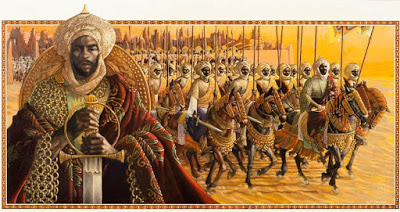




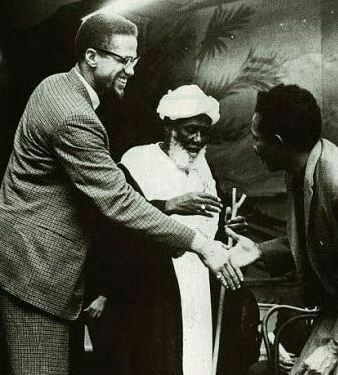


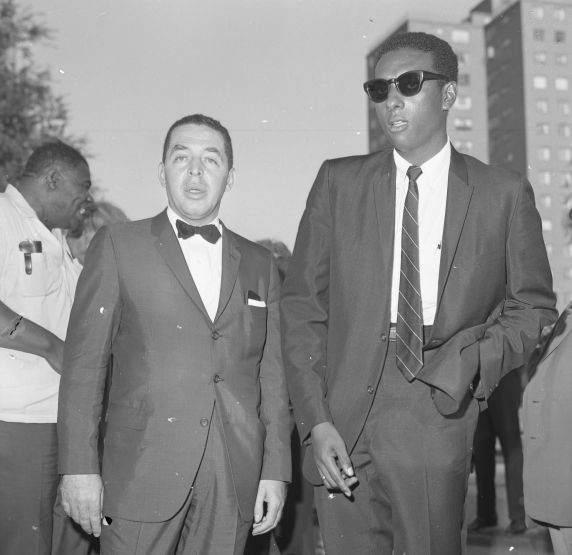
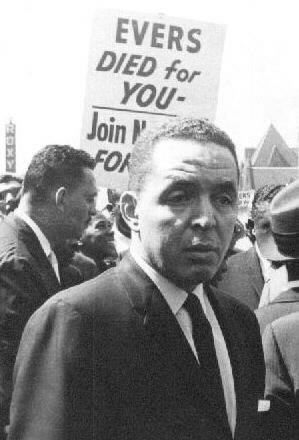


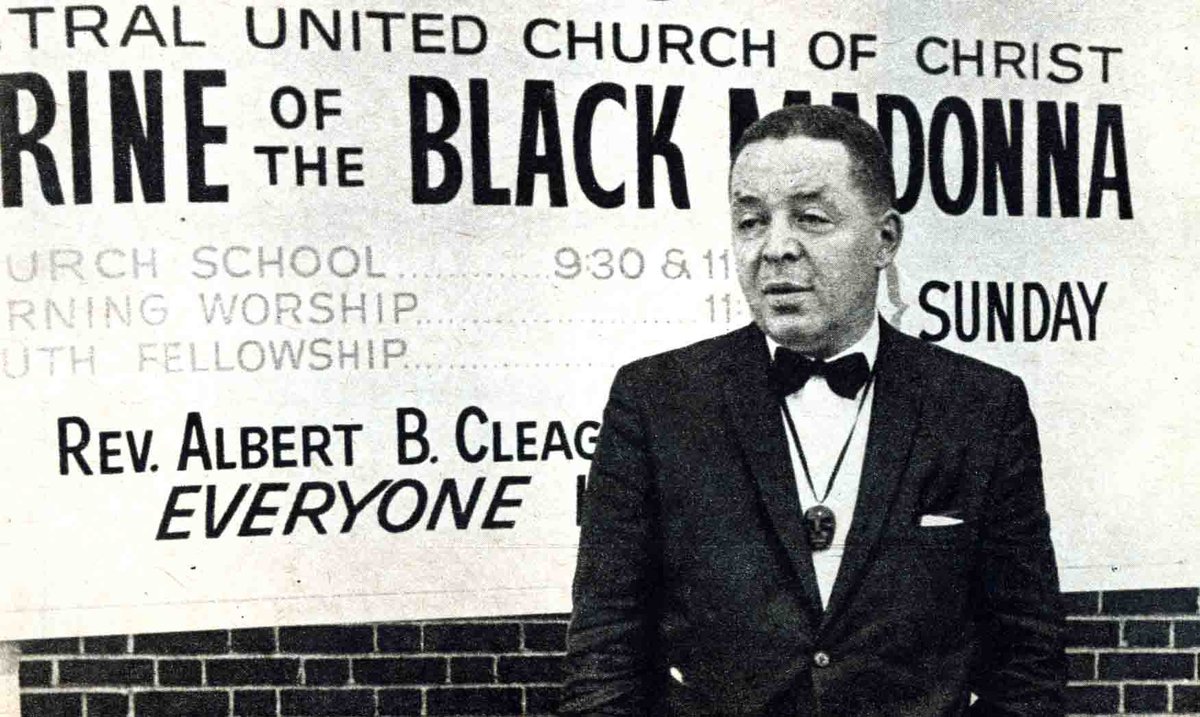


 Ma'rifatullah (Knowledge in Allah)